Industry playbooks
11 Restaurant Meme Ad Ideas With Original Examples
By Memes.ai
Updated September 6, 2026 · 6 min read
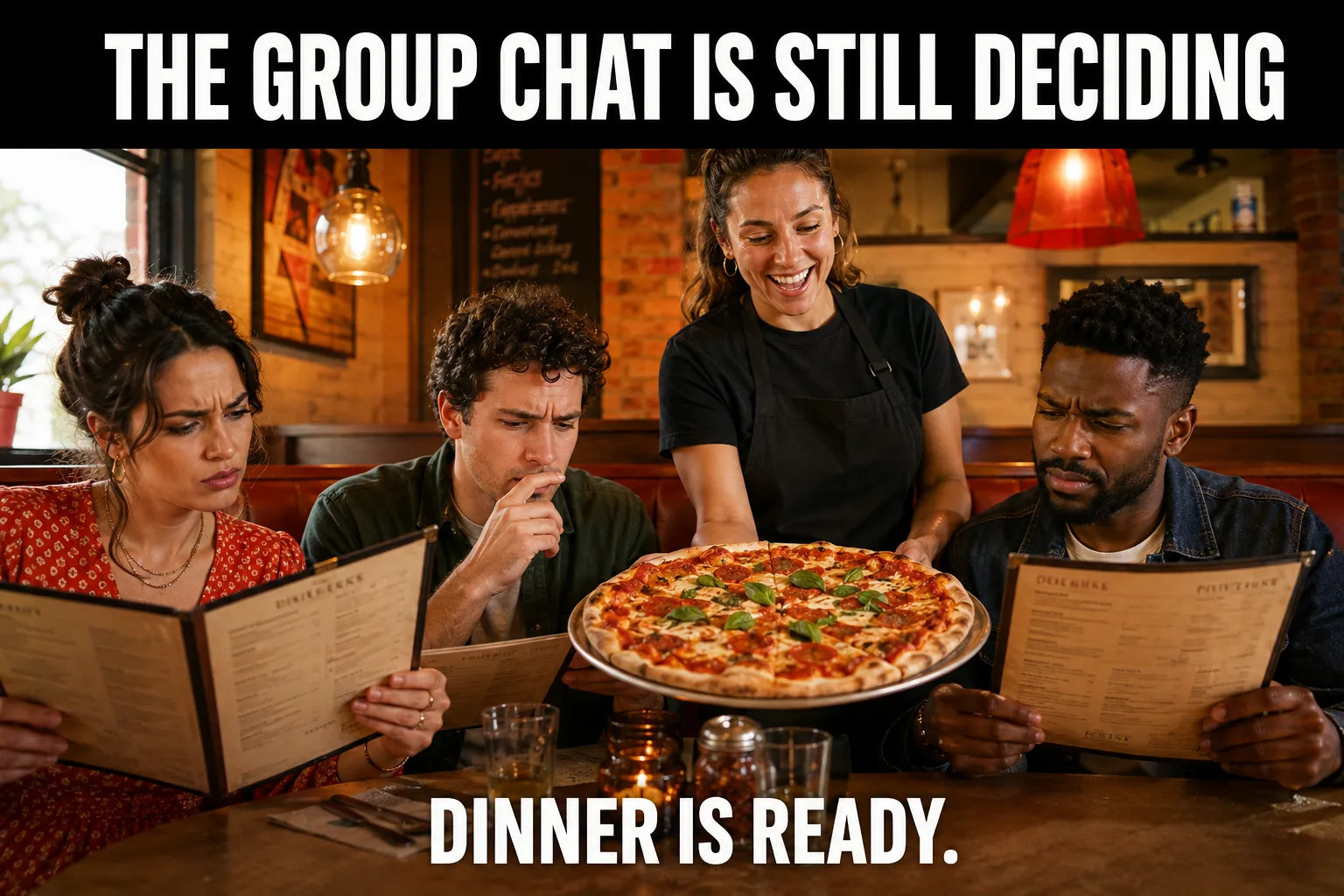
Restaurant content has a practical job: help someone decide what, where, and when to eat. A funny image can open that conversation, but the dish, location, and next step still matter. The original concept below shows a group stuck choosing dinner while the pizza is already arriving. Use these eleven ideas as creative starting points, then replace the fictional setting with your own food, staff, and accurate opening hours.
What you’ll take away
- Make the menu item and dining occasion specific.
- Use real hours, availability, and location details.
- Measure orders or bookings separately from likes.
1. The group-chat dinner deadlock
The idea — Show several people still comparing menus while one signature dish arrives. Caption idea: The group chat is still deciding / Dinner is ready.
Why it helps — This connects the joke to a real decision rather than a general love of food. It is especially easy to understand for shareable meals.
Make it your own — Choose one actual menu item and a clear ordering or reservation link. Do not imply walk-in availability unless you can support it.
2. The I-only-came-for-coffee moment
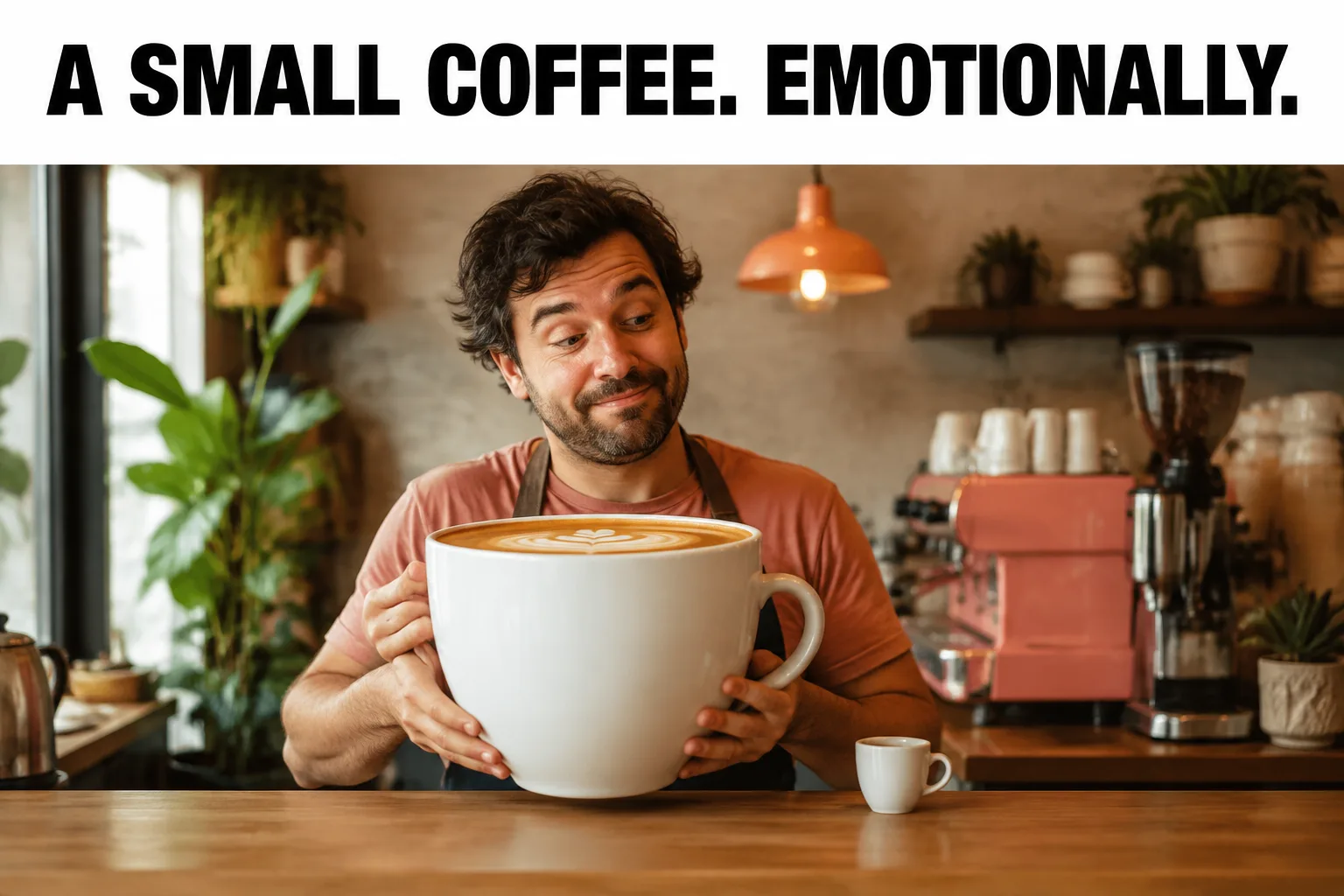
The idea — Photograph a coffee beside an unexpectedly tempting pastry. Caption idea: I only came in for coffee. The pastry had other plans.
Why it helps — The small contradiction feels familiar and lets you feature an add-on without an aggressive upsell.
Make it your own — Use the pastry available that day and state any bundle price accurately in the caption. Keep the image simple enough that both items are recognizable.
3. The late-night fridge inspection
The idea — Show a person opening an almost-empty fridge, followed by an appetizing takeout option. The setup is the search for dinner; the payoff is a real alternative.
Why it helps — Timing and availability give this idea a reason to exist. It is less useful for a business that closes before the depicted moment.
Make it your own — Match the post or ad schedule to actual service hours, and send the viewer directly to the relevant order page.
4. The person who steals everyone's fries
The idea — Build a lighthearted two-person scene: one diner says they are not hungry while reaching for the other person's fries.
Why it helps — The product becomes part of a social habit people recognize. You do not need to shame anyone or demand that viewers tag a friend.
Make it your own — Show the portion you actually serve. A caption such as Order your own side keeps the next step connected to the joke.
5. The neighboring-table envy
The idea — Frame a diner noticing a visually distinctive dish passing their table. Make the dish the focal point rather than hiding it behind text.
Why it helps — This gives a specific menu item a story. The image can help someone identify what they want before reading a long menu.
Make it your own — Name the dish in the caption and link to its menu section. Avoid implying that an unavailable special is part of the permanent menu.
6. The pre-shift versus post-rush kitchen
The idea — With staff permission, contrast a calm preparation scene with the satisfied relief after a busy service. Keep the tone appreciative.
Why it helps — Behind-the-scenes content can make the people and work visible. The interest comes from an honest process, not pretending chaos is a quality signal.
Make it your own — Keep food-handling standards and workplace dignity visible. Do not post embarrassing footage of staff or customers for a punchline.
7. The weather-versus-craving debate
The idea — Show a rainy window beside a warm bowl, or a sunny sidewalk beside a cold drink. Caption the small debate about going out or ordering in.
Why it helps — A local, immediate context makes the post timely without relying on a global meme trend.
Make it your own — Use the conditions your audience is actually experiencing. Include delivery details only when the service and area are accurate.
8. The brunch personality lineup
The idea — Create a short carousel around affectionate habits: the early planner, the coffee-first friend, and the person who orders something sweet for the table.
Why it helps — The series gives each slide a distinct reason to swipe while keeping the meal as the shared thread.
Make it your own — Make every character feel welcome. Finish with your real brunch hours and menu rather than an unrelated engagement request.
9. The regular order ritual
The idea — Show the small comfort of ordering the same dish again. Caption idea: Trying something new / Ordering my usual with confidence.
Why it helps — Routine can be a warm subject because it celebrates familiarity. It also gives returning customers something to recognize.
Make it your own — Use an anonymous fictional scenario unless a real regular has agreed to participate. Do not fabricate a quote or customer story.
10. The occasion planner's relief
The idea — Show someone with an elaborate birthday-dinner checklist finally finding a table setup that fits their group.
Why it helps — The occasion supplies the decision context. The useful information is group size, booking process, and what your venue can genuinely accommodate.
Make it your own — Publish with enough lead time for your booking pattern. Avoid fake last-table claims or invented reservation deadlines.
11. The dish that deserves a close-up
The idea — Start with an exaggerated camera zoom or delighted reaction, then show the texture of one real dish. Keep the joke in the caption.
Why it helps — Food photography does the explanatory work while humor adds a point of view. This can suit restaurants that prefer a restrained voice.
Make it your own — Use an accurate image of the served dish. Generated food can illustrate a concept, but it should not misrepresent what a diner will receive.
Put it into practice
Plan one useful restaurant test
Choose a single service window, such as weekday lunch. Make three concepts around different decisions: speed, a specific craving, and ordering for a group. Use the same accurate menu destination. Record which creative produced useful menu visits, orders, or inquiries, and note whether you could actually serve the demand. Avoid calling one concept a winner based only on likes from people outside your service area.
Common questions
Can a more formal restaurant use memes?
Yes, if the tone fits the experience. A dry observation about choosing a dish or a subtle visual contrast may suit the brand better than a loud reaction meme.
Should I use generated food images in real ads?
Use accurate photos of the food you serve when the image represents a menu item. Generated imagery can help explore concepts, but the published ad should not mislead diners about the product.
How frequently should I post restaurant memes?
Choose a pace your team can maintain alongside useful menu, location, and service information. Evaluate audience response and business outcomes rather than assuming a universal posting frequency.
Turn the brief into your own creative
Use your menu, real food photography, and one dining moment to build a specific starting concept for your restaurant.
Your starter brief
Replace the brackets with your own details.
Create three original restaurant meme concepts for [restaurant] in [location]. Service window: [hours]. Featured dish: [real dish and details]. Audience moment: [lunch rush/dinner indecision/brunch planning]. Give each a short caption, a visual direction using our actual food, and one CTA to [menu/order/reservation]. Do not invent discounts, availability, customer quotes, or performance claims.