Industry playbooks
Escape Room Social Media Post Ideas: 4 Examples
By Memes.ai
Updated October 16, 2026 · 4 min read
Escape room content can make a booking easier while keeping the puzzles secret. Explain the group format, spoiler rules and arrival process. A teaser should create a question without revealing a solution or promising that every group will finish. Below are four finished visual concepts and example captions, with image briefs you can adapt to your own brand. The artwork uses fictional businesses and AI-generated scenes. For a post about your actual people, place or service, supply authorized photographs and confirmed details.
What you’ll take away
- Start with “The story starts at the door” for one visual idea. Use “Ready before the clock starts” for a different view of the same business. Choose the example that supports the message you want a reader to understand.
- Keep puzzle solutions and security details private. Get team-photo permission and confirm age, group-size and access information with the venue.
- Use the finished captions as creative examples. The adaptation notes include practical copy templates for your own confirmed details. Match your image, message and destination to the same reader task.
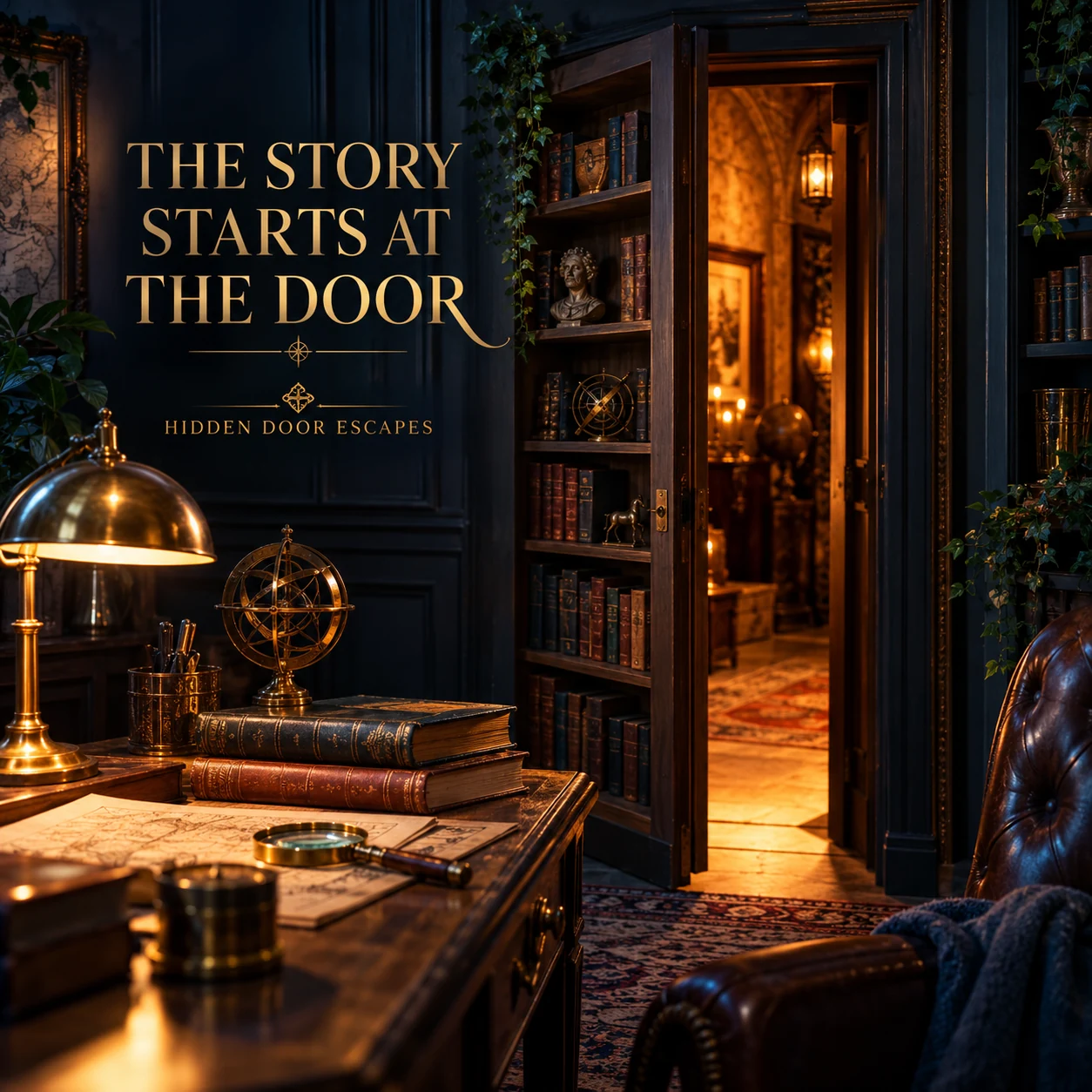
1. The story starts at the door
Finished AI-generated creative for the fictional brand HIDDEN DOOR ESCAPES. This is an illustrative concept, not a real customer, venue or campaign result. Headline: “THE STORY STARTS AT THE DOOR”.
Finished example caption — An ordinary room. A door you almost missed. Some stories begin with the question of what might be on the other side.
Why use this post — A mysterious doorway introduces atmosphere while keeping the puzzles hidden.
Make it your own — Use an approved premise and avoid images of solution-bearing props. If you need a practical service-information version, adapt this template with confirmed details: Your team's starting point in [room]: [venue-approved premise]. We are keeping the solutions secret. See format and booking information at [room page].
Image brief to adapt
Create a finished square social image for my escape room business. Scene: An atmospheric fictional study with a partly open hidden bookcase door glowing warmly beyond, brass desk lamp, a globe and textured old books with no writing, cinematic mystery editorial photo. Visual style: Cinematic premium escape-room campaign photography; midnight blue, amber lamplight and brass; intriguing fictional props, no real puzzle solutions, no horror or restraint imagery. Use this headline exactly: “THE STORY STARTS AT THE DOOR”. Replace the fictional example brand HIDDEN DOOR ESCAPES with my supplied business name. Make the scene the main visual, with a short legible headline and a small brand wordmark. Do not render placeholder fields or instructions. Do not invent a date, price, address, credential, offer or result. Use my authorized photographs when the post describes my actual people, premises, products or completed work. Review every detail before publishing.
2. Ready before the clock starts
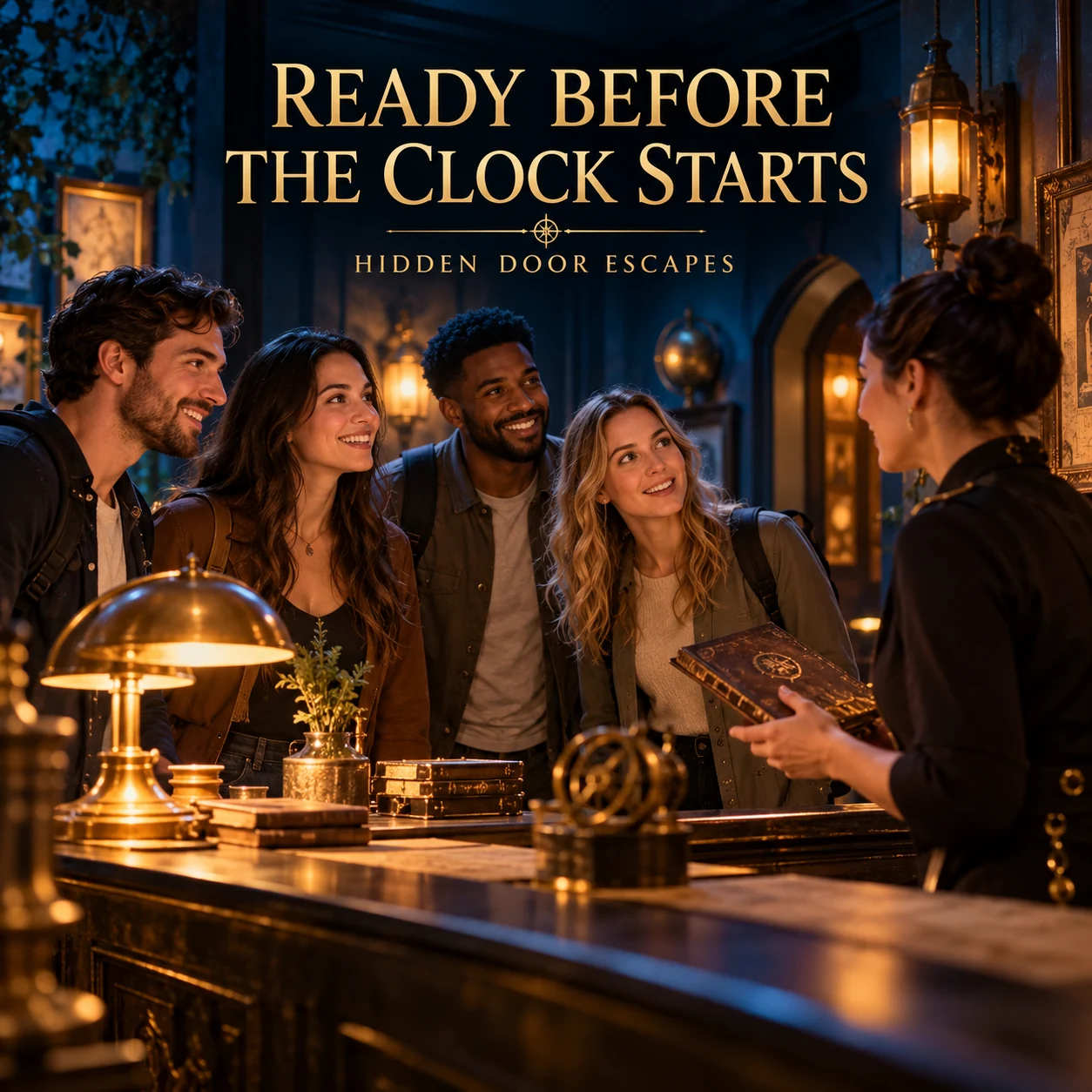
Finished AI-generated creative for the fictional brand HIDDEN DOOR ESCAPES. This is an illustrative concept, not a real customer, venue or campaign result. Headline: “READY BEFORE THE CLOCK STARTS”.
Finished example caption — The team is here. The questions have started. Get the practical details sorted before the story begins.
Why use this post — A host greeting gives first-time players a clear arrival moment.
Make it your own — Confirm the actual arrival process and do not publish access codes or private booking details. If you need a practical service-information version, adapt this template with confirmed details: Booked [room]? Check [venue-approved arrival information] and the details in your confirmation before visiting. Questions go to [official contact].
Image brief to adapt
Create a finished square social image for my escape room business. Scene: Four adult friends arriving at an elegant fictional escape-room reception, warm welcoming adult host, curious relaxed expressions, cinematic amber and blue lighting, no real venue branding except supplied wordmark. Visual style: Cinematic premium escape-room campaign photography; midnight blue, amber lamplight and brass; intriguing fictional props, no real puzzle solutions, no horror or restraint imagery. Use this headline exactly: “READY BEFORE THE CLOCK STARTS”. Replace the fictional example brand HIDDEN DOOR ESCAPES with my supplied business name. Make the scene the main visual, with a short legible headline and a small brand wordmark. Do not render placeholder fields or instructions. Do not invent a date, price, address, credential, offer or result. Use my authorized photographs when the post describes my actual people, premises, products or completed work. Review every detail before publishing.
3. Four minds. One shared question.
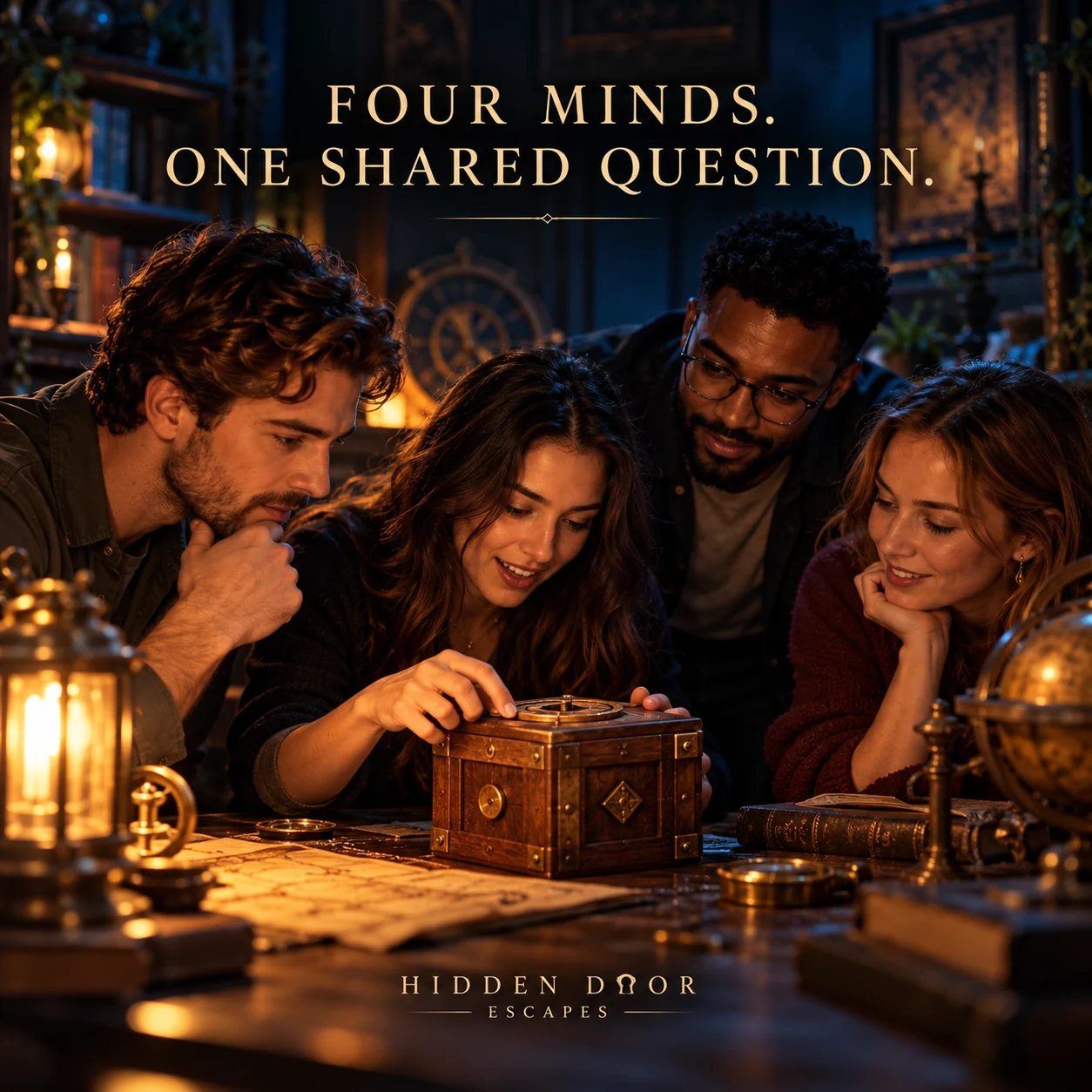
Finished AI-generated creative for the fictional brand HIDDEN DOOR ESCAPES. This is an illustrative concept, not a real customer, venue or campaign result. Headline: “FOUR MINDS. ONE SHARED QUESTION.”.
Finished example caption — Four different ways of looking. One shared question. The most interesting part might be how your team puts the pieces together.
Why use this post — A group around a puzzle makes collaboration the main idea without exposing a solution.
Make it your own — Use verified limits and avoid promising suitability for every visitor. If you need a practical service-information version, adapt this template with confirmed details: Planning for [group size]? Check the current group limits, age guidance and room information at [official page] before booking [room].
Image brief to adapt
Create a finished square social image for my escape room business. Scene: Four adult friends gathered around a table examining a simple invented wooden puzzle box together, warm lamp light, natural hands and collaborative expressions, no decipherable combination or written clues. Visual style: Cinematic premium escape-room campaign photography; midnight blue, amber lamplight and brass; intriguing fictional props, no real puzzle solutions, no horror or restraint imagery. Use this headline exactly: “FOUR MINDS. ONE SHARED QUESTION.”. Replace the fictional example brand HIDDEN DOOR ESCAPES with my supplied business name. Make the scene the main visual, with a short legible headline and a small brand wordmark. Do not render placeholder fields or instructions. Do not invent a date, price, address, credential, offer or result. Use my authorized photographs when the post describes my actual people, premises, products or completed work. Review every detail before publishing.
4. One team. A story to share.
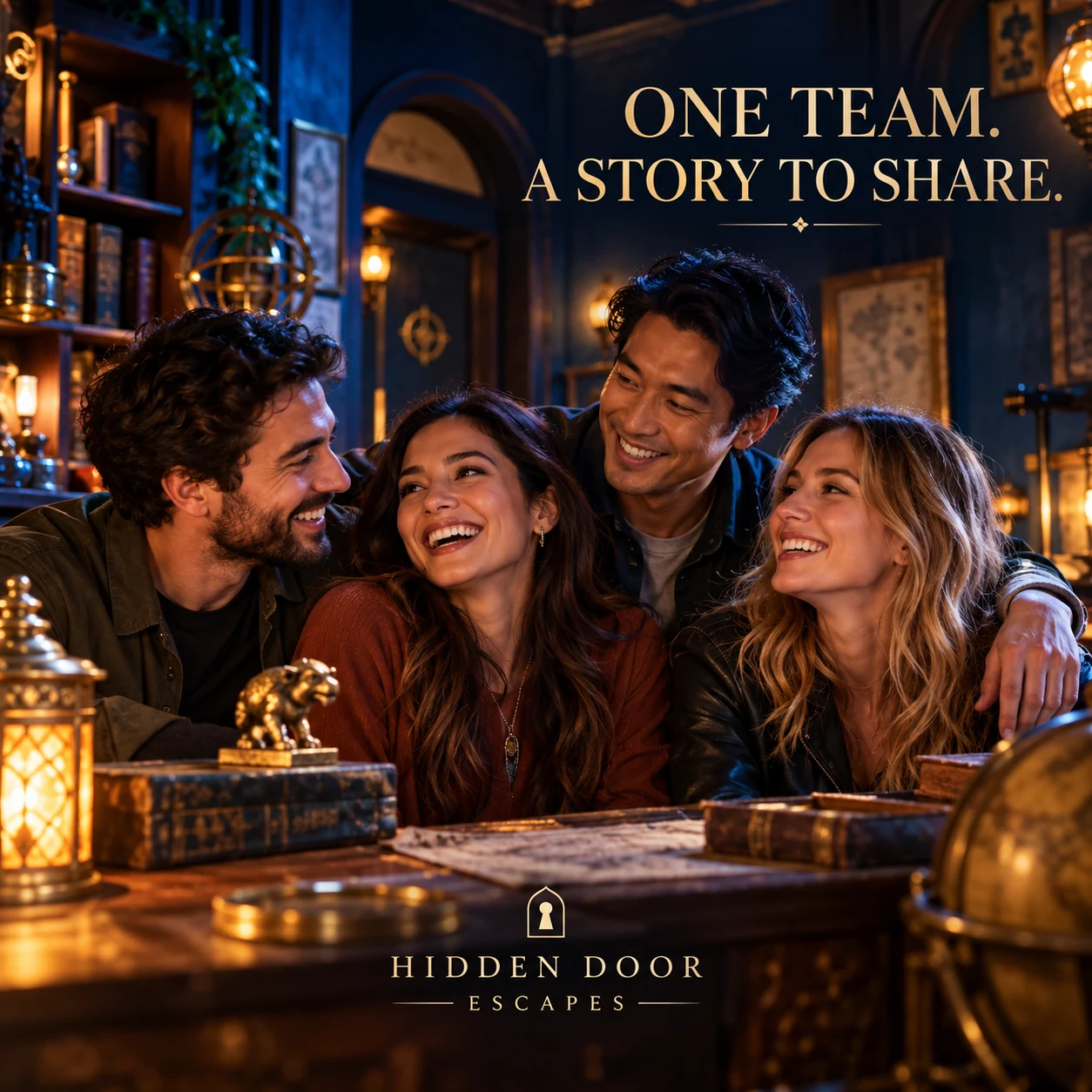
Finished AI-generated creative for the fictional brand HIDDEN DOOR ESCAPES. This is an illustrative concept, not a real customer, venue or campaign result. Headline: “ONE TEAM. A STORY TO SHARE.”.
Finished example caption — The best part of a shared challenge can be the story you tell afterward. One team, one moment worth remembering.
Why use this post — A shared reaction connects the experience with the story a group takes away.
Make it your own — Use an approved photo and caption. Include a result only when accurate and the team agrees. If you need a practical service-information version, adapt this template with confirmed details: A team moment from [venue], shared with permission. Want to plan your own visit? Start with the current room information at [link].
Image brief to adapt
Create a finished square social image for my escape room business. Scene: A warm candid group portrait of four adult friends smiling in a beautifully designed escape-room lobby after a shared activity, no score signs, no time claims, cinematic colorful light. Visual style: Cinematic premium escape-room campaign photography; midnight blue, amber lamplight and brass; intriguing fictional props, no real puzzle solutions, no horror or restraint imagery. Use this headline exactly: “ONE TEAM. A STORY TO SHARE.”. Replace the fictional example brand HIDDEN DOOR ESCAPES with my supplied business name. Make the scene the main visual, with a short legible headline and a small brand wordmark. Do not render placeholder fields or instructions. Do not invent a date, price, address, credential, offer or result. Use my authorized photographs when the post describes my actual people, premises, products or completed work. Review every detail before publishing.
Put it into practice
Build your first escape room content batch
Choose one room and verify its booking information. Publish a spoiler-free premise and a first-visit checklist. Follow with a permitted team photo or a simple question using an invented puzzle unrelated to the room. Prepare each post as a small brief: audience, one useful detail, approved caption, matching visual and a single current destination. Keep puzzle solutions and security details private. Get team-photo permission and confirm age, group-size and access information with the venue. Before publishing, read the caption beside the image, confirm that all brackets are replaced and check the destination on a phone. After a week, review the questions and enquiries each post generated. Keep the useful information current and revise confusing details before making more variants.
Common questions
How do we tease a room without spoiling it?
Share the approved premise, atmosphere and visit information. Use props only when the venue confirms they do not reveal a solution, and label invented promotional puzzles clearly.
What should a team photo caption include?
Get permission, use an approved team name or no name, and keep private bookings and personal details out. Do not invent a finish time or result.
Can I download and adapt these finished images?
Yes. Each example includes an original finished AI-generated image and a copyable image brief. Save the WebP as a visual reference, or use the brief to create a version for your own brand in Studio. The pictured businesses and scenes are fictional. Use authorized real photos for claims about your actual people, venue, products or completed work. The downloaded image is flattened; it does not contain editable text layers.
Turn the brief into your own creative
Choose a finished image and caption that fit your business task, then copy its brief into Studio to develop your own version. Use your own brand, current information and authorized real-world assets where needed.
Your starter brief
Replace the brackets with your own details.
Create a finished square social image for my escape room business. Scene: An atmospheric fictional study with a partly open hidden bookcase door glowing warmly beyond, brass desk lamp, a globe and textured old books with no writing, cinematic mystery editorial photo. Visual style: Cinematic premium escape-room campaign photography; midnight blue, amber lamplight and brass; intriguing fictional props, no real puzzle solutions, no horror or restraint imagery. Use this headline exactly: “THE STORY STARTS AT THE DOOR”. Replace the fictional example brand HIDDEN DOOR ESCAPES with my supplied business name. Make the scene the main visual, with a short legible headline and a small brand wordmark. Do not render placeholder fields or instructions. Do not invent a date, price, address, credential, offer or result. Use my authorized photographs when the post describes my actual people, premises, products or completed work. Review every detail before publishing.
Copy your adapted brief, open Studio, and paste it into your creative workflow. Review the result before using it.
Create your version in Studio