

Social media
How to Build a Social Media Content Calendar
By Memes.ai
Updated September 6, 2026 · 4 min read
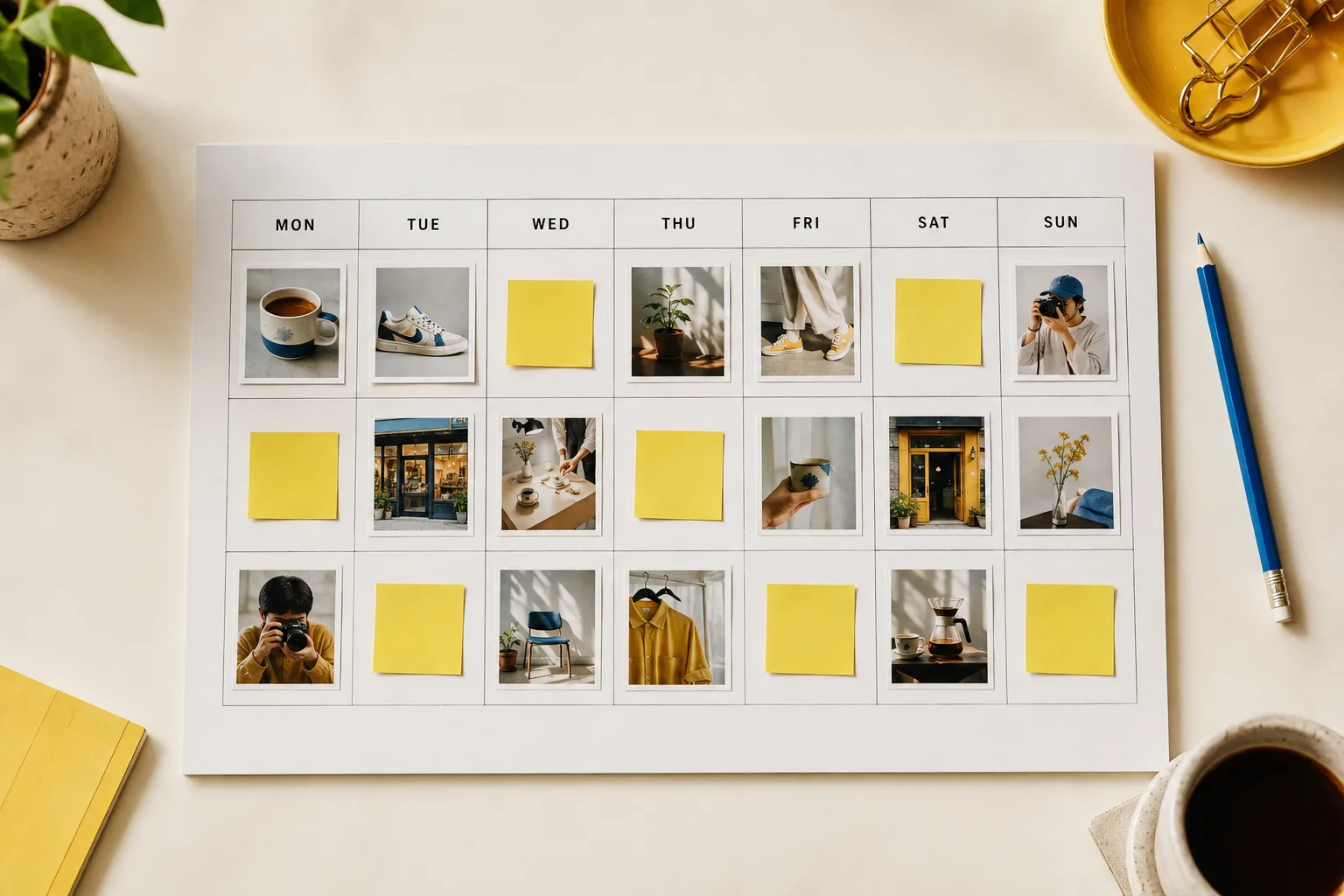
A content calendar is a plan for what you will publish, why it belongs, and who will finish it. It does not need to be a complicated spreadsheet. Use the workflow below to turn a realistic weekly rhythm into a calendar your team can maintain.
What you’ll take away
- Schedule only what your team can produce and review.
- Record the audience, purpose, owner, asset, and next step.
- Leave room to respond to real customer questions.
1. Choose one business outcome for the month
The idea — Decide whether the calendar primarily supports awareness, inquiries, repeat visits, or a launch.
Why it helps — A shared outcome prevents a calendar from becoming a collection of unrelated posts.
Make it your own — Write the outcome at the top of the plan. Use a measurable action you can actually observe, such as qualified inquiries.
2. Pick a sustainable publishing rhythm
The idea — Start with the number of useful posts you can consistently prepare.
Why it helps — A smaller completed plan is easier to learn from than an ambitious calendar full of placeholders.
Make it your own — Estimate writing, asset creation, review, and publishing time. Reserve time for replies as part of the workload.
3. Assign a purpose to each slot
The idea — A simple week could include Monday education, Wednesday demonstration, and Friday invitation.
Why it helps — Repeated purposes reduce blank-page decisions while allowing different topics.
Make it your own — For a shoe shop: teach fit checks, demonstrate one material, then invite shoppers to try the relevant model.
4. Add the fields that prevent confusion
The idea — Track date, channel, topic, audience, format, owner, asset link, caption, CTA, and status.
Why it helps — These fields show what is missing before a publishing deadline.
Make it your own — Use statuses such as brief, draft, review, ready, and published. Give every post one accountable owner.
5. Work backward from fixed dates
The idea — Place confirmed launches, events, closures, and offer deadlines first.
Why it helps — A real deadline changes when information becomes useful to customers.
Make it your own — Schedule an explanation before the announcement needs a response. Verify hours, availability, and destination links.
6. Batch production without duplicating posts
The idea — Capture related photos and demonstrations in one session.
Why it helps — Batching reduces setup effort, but each post still needs its own reason to exist.
Make it your own — Turn one product session into a fit tutorial, detail shot, and customer question. Avoid repeating the same caption across all three.
7. Review the next week before it starts
The idea — Check copy, claims, visual legibility, links, and whether the plan still fits current operations.
Why it helps — A calendar can outlive the availability or context that made a post accurate.
Make it your own — Move unfinished posts deliberately. Do not publish stale offers just to fill a slot.
8. Record the lesson after publication
The idea — Add the relevant result and one observation to the published row.
Why it helps — The next calendar becomes more useful when it reflects what audiences actually did.
Make it your own — Compare similar post purposes. A tutorial save and a purchase are different outcomes, so avoid ranking everything by likes.
Put it into practice
A simple three-post calendar
Monday: answer ‘Which size fits my desk?’ with a measured product photo. Wednesday: show a 20-second setup demonstration. Friday: invite viewers to see the two available sizes. Assign one owner, one asset, and one destination to each. On the following Monday, review whether the questions became more specific and whether visitors reached the matching product pages.
Common questions
How far ahead should I plan?
Plan a useful outline for the month and finalize the next week in more detail. Businesses with launches or seasonal deadlines may need a longer lead time.
Can I reuse the same post on different channels?
Reuse the idea, then adapt the opening, format, and next step to the channel. Check that the image crop and destination still work in each placement.
Turn the brief into your own creative
Use your own product details and the brief above to create a first visual, then refine the caption and next step.
Your starter brief
Replace the brackets with your own details.
Build a four-week content calendar for [business]. We can produce [number] posts per week for [channels]. Our goal is [outcome], our confirmed dates are [dates], and these facts must remain accurate: [facts]. Include purpose, topic, visual brief, owner placeholder, CTA, and review deadline for every row.