Industry playbooks
Candle Brand Content: Describe a Scent Without Invented Claims
By Memes.ai
Updated October 16, 2026 · 4 min read
A candle image cannot transmit a scent. It can give an approved scent description a visual setting. Start with the actual product notes, then decide whether a post should describe the aroma, show the vessel, build an atmosphere or direct the reader to care information. The examples use a fictional unlit amber candle and cedar-and-linen scene. They do not establish the ingredients, burn performance or benefits of any real candle. Replace that concept with your own verified product description before making a sales claim.
What you’ll take away
- Use the maker's approved scent notes as the input; props alone do not prove ingredients.
- Keep atmosphere language separate from therapeutic or performance claims.
- Show the real vessel and approved care information when the post represents a product for sale.
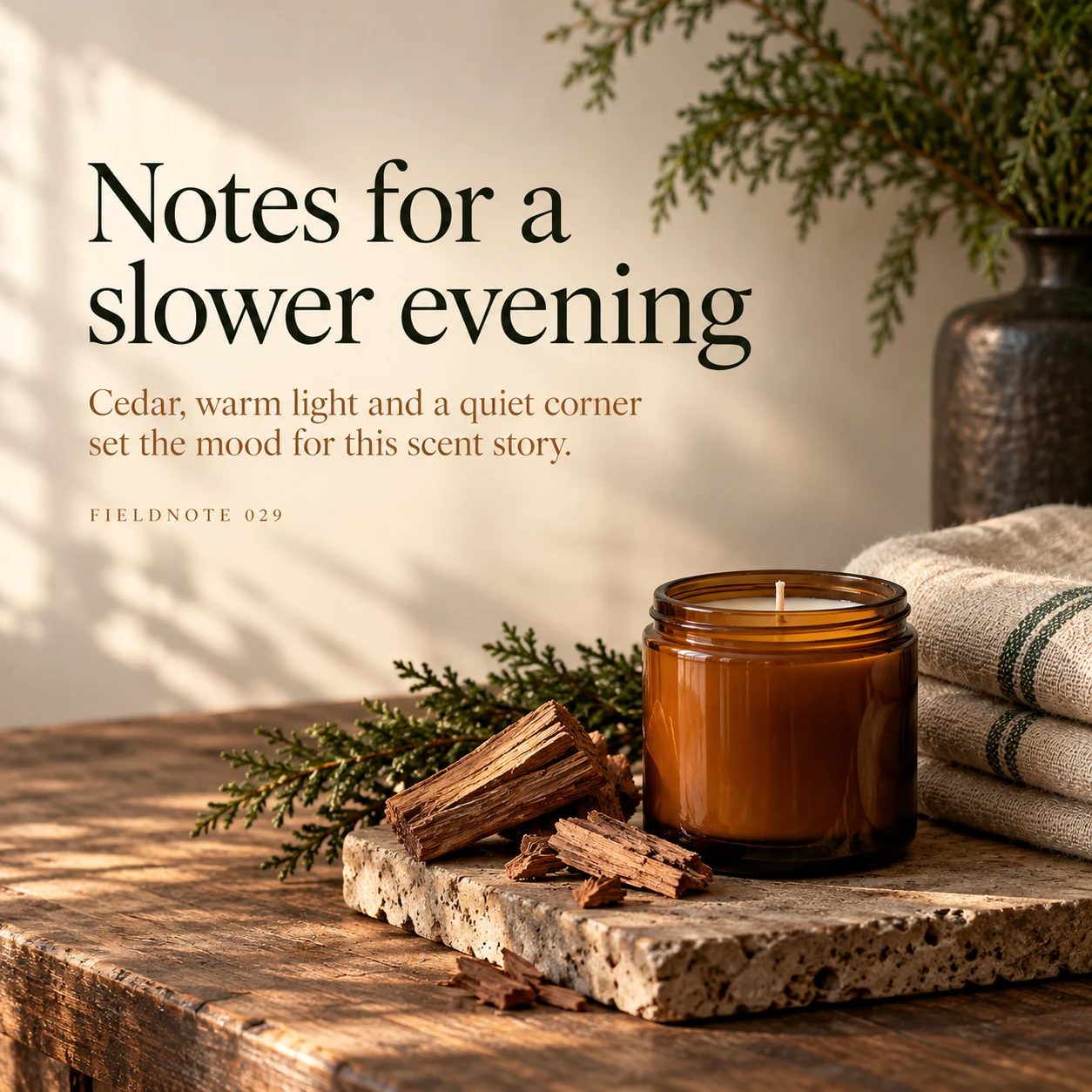
1. Notes for a slower evening
Original AI-generated fictional campaign concept. No real customer or measured result is represented.
Finished example caption — Cedar, warm light and a quiet corner set the mood for this scent story.
Why use this post — Cedar props and a quiet setting give the fictional scent story a visual vocabulary. The message describes an occasion rather than promising that a candle changes someone's health or mood.
Make it your own — Replace the fictional notes with the maker's exact approved scent description. Do not show a botanical as an ingredient unless that statement is supported.
Image brief to adapt
Generate one complete polished square campaign image, 1080×1080. The exact scene is: unlit amber candle beside cedar pieces and folded linen. Context: a fictional candle atelier with an unlit amber jar, cedar pieces and folded linen. The message is “Notes for a slower evening”; support this finished caption: “Cedar, warm light and a quiet corner set the mood for this scent story.”. Environmental wide shot with the key subject in the lower right and generous clean upper-left negative space. Art direction: natural editorial photography with tactile materials and honest business detail; palette warm ivory, forest green and copper; refined natural lighting, deliberate depth and texture, commercially credible proportions, clean edges and ample breathing room. Use exactly this headline: “Notes for a slower evening”. Add the small fictional wordmark “FIELDNOTE 029”. Headline must be immediately readable at a phone size, with high contrast and a safe inset of at least8% from every edge. The scene is the main visual, not a text-only card. No additional text, UI screenshot, testimonial, metrics, sale badge, fake website, QR code or placeholder field. No watermarks or unrelated logos. No therapeutic benefits, burn-time claims or unsafe flame scenes. Produce finished actual raster artwork ready to download and inspect; no wireframe, simple geometric substitute or diagram.
2. A closer look at the vessel
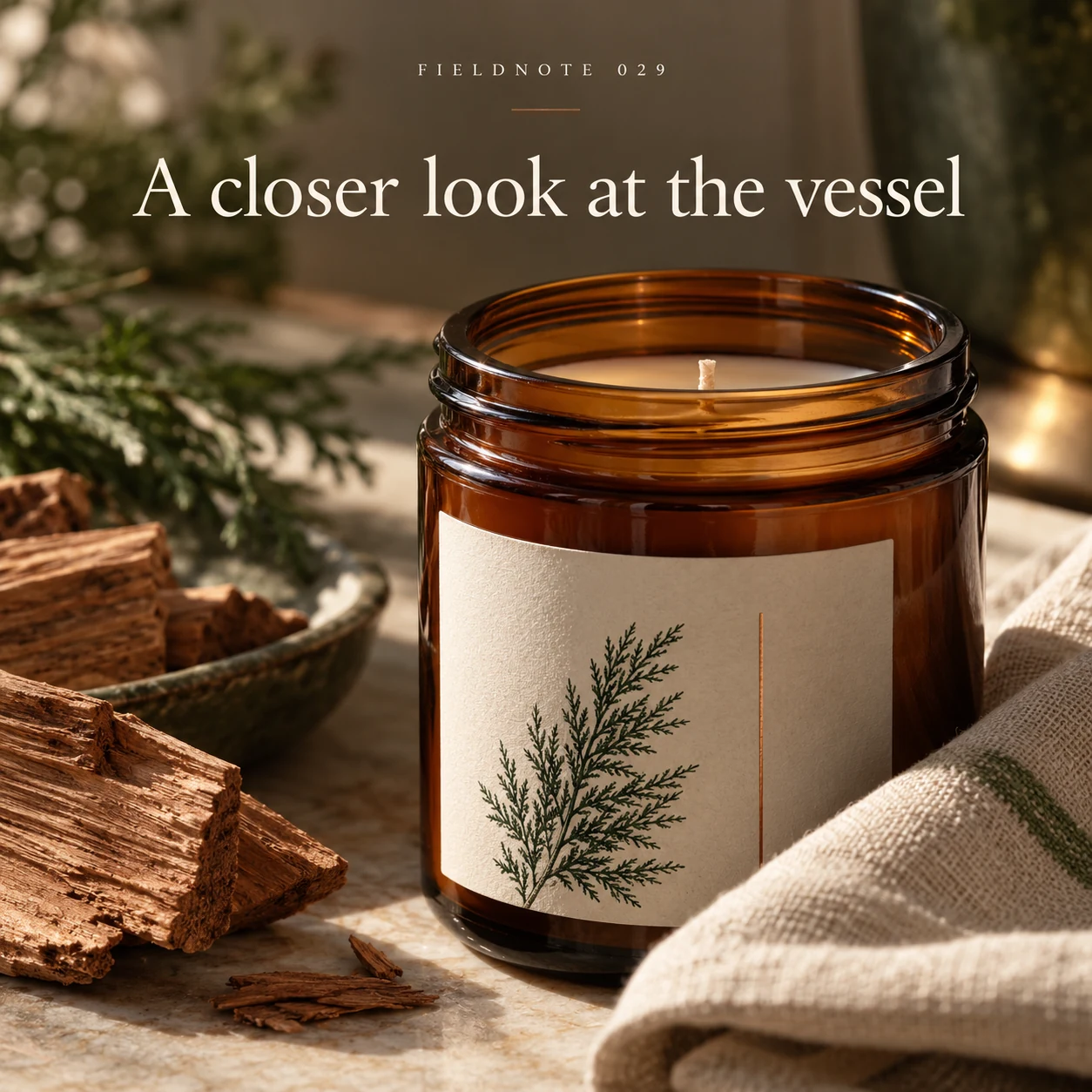
Original AI-generated fictional campaign concept. No real customer or measured result is represented.
Finished example caption — The container becomes part of the room, even before the candle is lit.
Why use this post — The vessel is a visible part of the product. A close view can answer design questions without inventing its material, size or heat behavior.
Make it your own — Photograph the actual jar and label. Keep its proportions and packaging accurate and remove unsupported material claims.
Image brief to adapt
Generate one complete polished square campaign image, 1080×1080. The exact scene is: close view of vessel rim and original label. Context: a fictional candle atelier with an unlit amber jar, cedar pieces and folded linen. The message is “A closer look at the vessel”; support this finished caption: “The container becomes part of the room, even before the candle is lit.”. Close editorial still life or detail crop showing the relevant physical object and its texture, with the headline in a quiet top band. Art direction: natural editorial photography with tactile materials and honest business detail; palette warm ivory, forest green and copper; refined natural lighting, deliberate depth and texture, commercially credible proportions, clean edges and ample breathing room. Use exactly this headline: “A closer look at the vessel”. Add the small fictional wordmark “FIELDNOTE 029”. Headline must be immediately readable at a phone size, with high contrast and a safe inset of at least8% from every edge. The scene is the main visual, not a text-only card. No additional text, UI screenshot, testimonial, metrics, sale badge, fake website, QR code or placeholder field. No watermarks or unrelated logos. No therapeutic benefits, burn-time claims or unsafe flame scenes. Produce finished actual raster artwork ready to download and inspect; no wireframe, simple geometric substitute or diagram.
3. From notes to atmosphere
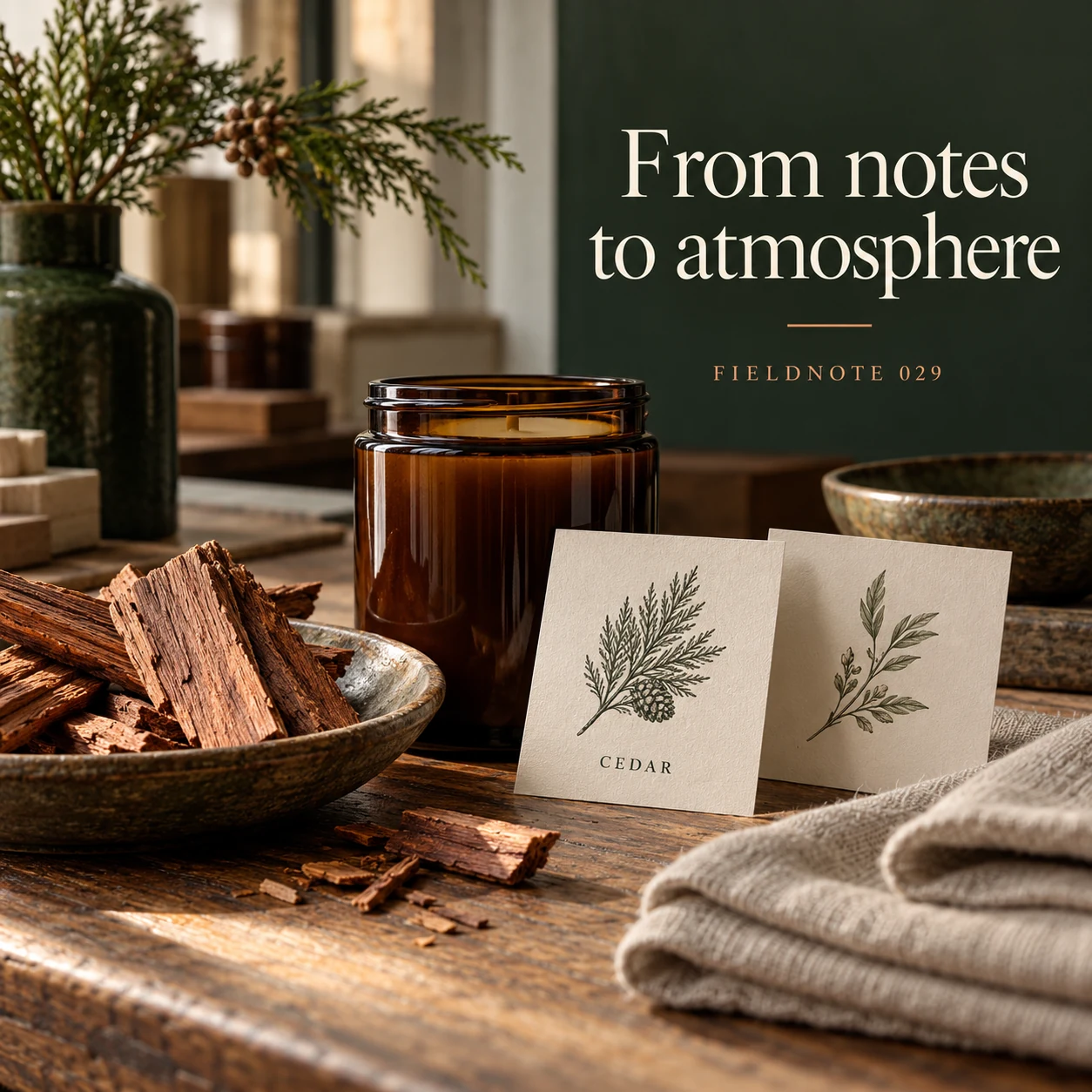
Original AI-generated fictional campaign concept. No real customer or measured result is represented.
Finished example caption — Describe the scent in familiar notes so a shopper has a place to start.
Why use this post — A post about notes can connect a few familiar descriptors to an approved product description. It does not need an elaborate origin story.
Make it your own — Select two or three approved descriptors and keep their wording consistent with the product page. Do not turn a note into an allergy or wellness claim.
Image brief to adapt
Generate one complete polished square campaign image, 1080×1080. The exact scene is: maker arranging cedar and plain scent-note card beside candle. Context: a fictional candle atelier with an unlit amber jar, cedar pieces and folded linen. The message is “From notes to atmosphere”; support this finished caption: “Describe the scent in familiar notes so a shopper has a place to start.”. Natural eye-level composition with a restrained side panel for type. Preserve the exact stated scene; do not add a person to an object-only scene. If the scene includes people, use adult models and the explicit stated action only. Art direction: natural editorial photography with tactile materials and honest business detail; palette warm ivory, forest green and copper; refined natural lighting, deliberate depth and texture, commercially credible proportions, clean edges and ample breathing room. Use exactly this headline: “From notes to atmosphere”. Add the small fictional wordmark “FIELDNOTE 029”. Headline must be immediately readable at a phone size, with high contrast and a safe inset of at least8% from every edge. The scene is the main visual, not a text-only card. No additional text, UI screenshot, testimonial, metrics, sale badge, fake website, QR code or placeholder field. No watermarks or unrelated logos. No therapeutic benefits, burn-time claims or unsafe flame scenes. Produce finished actual raster artwork ready to download and inspect; no wireframe, simple geometric substitute or diagram.
4. Read before lighting
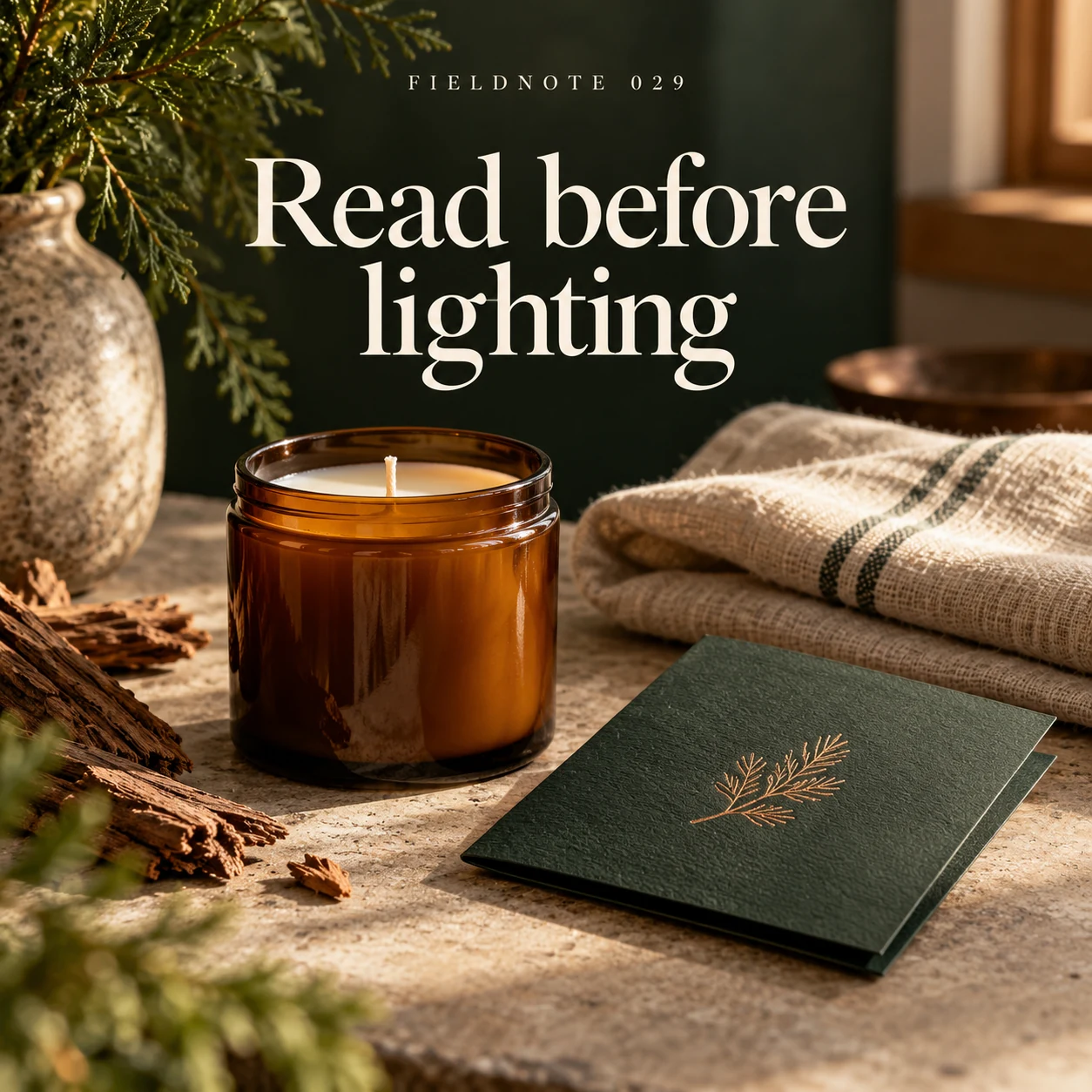
Original AI-generated fictional campaign concept. No real customer or measured result is represented.
Finished example caption — The care card deserves a place beside the candle, not at the bottom of the box.
Why use this post — A care-information post gives the reader a route to the actual maker instructions. It should not infer safe use from a styled photograph.
Make it your own — Use the actual maker care page or supplied care card. The illustration remains unlit and does not demonstrate a burning procedure.
Image brief to adapt
Generate one complete polished square campaign image, 1080×1080. The exact scene is: unlit candle beside a closed care-instruction folder. Context: a fictional candle atelier with an unlit amber jar, cedar pieces and folded linen. The message is “Read before lighting”; support this finished caption: “The care card deserves a place beside the candle, not at the bottom of the box.”. Confident final hero composition using a clear foreground subject and supporting background context; close the sequence with a purposeful visual invitation. Art direction: natural editorial photography with tactile materials and honest business detail; palette warm ivory, forest green and copper; refined natural lighting, deliberate depth and texture, commercially credible proportions, clean edges and ample breathing room. Use exactly this headline: “Read before lighting”. Add the small fictional wordmark “FIELDNOTE 029”. Headline must be immediately readable at a phone size, with high contrast and a safe inset of at least8% from every edge. The scene is the main visual, not a text-only card. No additional text, UI screenshot, testimonial, metrics, sale badge, fake website, QR code or placeholder field. No watermarks or unrelated logos. No therapeutic benefits, burn-time claims or unsafe flame scenes. Produce finished actual raster artwork ready to download and inspect; no wireframe, simple geometric substitute or diagram.
Put it into practice
Build a useful four-image scent brief
Make a scent-to-scene sheet for one real candle. Copy its approved scent description into the first column. In the second column choose visual cues that represent the description without claiming ingredients. In the third list the actual vessel and label references. In the fourth record the approved product and care destinations. Build one atmosphere image and one product-detail image from those inputs. Check that a reader can distinguish the fictional example from your actual product facts. Review all generated label text before use.
Common questions
Are scent notes the same as ingredients?
Do not assume that a note or a pictured botanical is an ingredient statement. Use the maker's product documentation for ingredients and the approved scent description for aroma language.
Can I describe a candle as relaxing or therapeutic?
This guide does not establish a health benefit. Describe the intended scene or occasion without promising an effect on a person. Use only claims the business can support and approve.
Should the example candle be lit?
The supplied concepts use an unlit candle. A real use demonstration needs the maker's actual product and instructions; a generated flame scene is not evidence of safe operation.
Turn the brief into your own creative
Choose the example that answers your customer's question. Copy the brief into Studio, supply your own approved facts and authorized references, and review the resulting image before using it.
Your starter brief
Replace the brackets with your own details.
Generate one complete polished square campaign image, 1080×1080. The exact scene is: unlit amber candle beside cedar pieces and folded linen. Context: a fictional candle atelier with an unlit amber jar, cedar pieces and folded linen. The message is “Notes for a slower evening”; support this finished caption: “Cedar, warm light and a quiet corner set the mood for this scent story.”. Environmental wide shot with the key subject in the lower right and generous clean upper-left negative space. Art direction: natural editorial photography with tactile materials and honest business detail; palette warm ivory, forest green and copper; refined natural lighting, deliberate depth and texture, commercially credible proportions, clean edges and ample breathing room. Use exactly this headline: “Notes for a slower evening”. Add the small fictional wordmark “FIELDNOTE 029”. Headline must be immediately readable at a phone size, with high contrast and a safe inset of at least8% from every edge. The scene is the main visual, not a text-only card. No additional text, UI screenshot, testimonial, metrics, sale badge, fake website, QR code or placeholder field. No watermarks or unrelated logos. No therapeutic benefits, burn-time claims or unsafe flame scenes. Produce finished actual raster artwork ready to download and inspect; no wireframe, simple geometric substitute or diagram.
Copy your adapted brief, open Studio, and paste it into your creative workflow. Review the result before using it.
Create your version in Studio