Industry playbooks
Chiropractic Social Media Ideas: Four Practical Clinic Posts
By Memes.ai
Updated October 16, 2026 · 4 min read
Chiropractic social content can answer administrative questions without recommending care. A useful post says what question it serves, where the reader should go and which team member keeps the information current. The four examples below form a fictional communication pack for FIELDNOTE 033: booking, asking about forms, finding the appropriate conversation and checking current instructions. They do not show patients or describe clinical procedures. The completed routing exercise gives the practice operator something to review beyond a reception photograph.
What you’ll take away
- Choose one administrative question and one actual destination for each post.
- Keep appointment/forms questions separate from questions that require a care professional; do not collect health details in public comments.
- Give every published instruction an owner and current source. A generated image, completed draft or broad search metric does not approve clinic facts.
1. Book through the current route
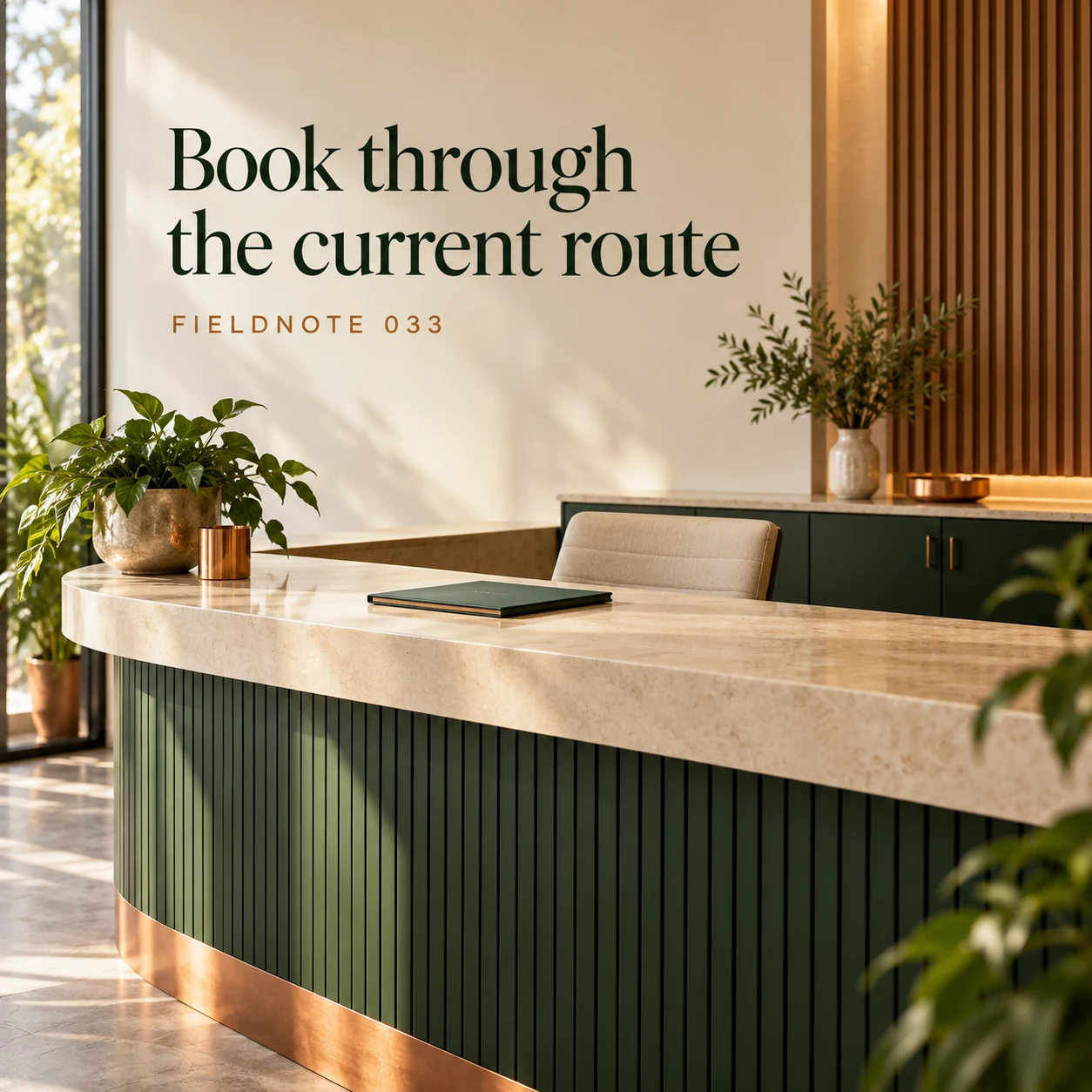
Original AI-generated fictional campaign concept. No real customer or measured result is represented.
Finished example caption — At the fictional FIELDNOTE 033 clinic, reception starts the booking conversation. Ask about the current appointment route and arrival information. A public comment does not confirm an appointment.
Why use this post — The opening defines an administrative action and avoids presenting a public interaction as an appointment. It has a usable contact purpose rather than a generic welcoming scene.
Make it your own — Supply your actual booking channel and current arrival-information page in the readable caption. Do not invent response times, slots or a booking confirmation.
Image brief to adapt
Create one complete polished square1080×1080 campaign image. Exact scene: an unoccupied fictional clinic reception desk with one plain closed booking folder, no person, no medical equipment. Natural editorial photography, warm ivory, forest green and copper, refined natural light, credible anatomy and object proportions. Keep the scene dominant with a clear quiet headline area. Render exactly the headline “Book through the current route” and the small fictional wordmark “FIELDNOTE 033”. No extra text, placeholder, QR code, UI, testimonial, patient, readable record, clinical procedure, treatment result, diagnosis or efficacy implication. Keep all typography legible at phone size and inset at least8% from edges. This is a clearly fictional teaching concept, not an actual clinic photo, booking confirmation or clinical advice. Produce actual polished raster artwork, no wireframe or text-only card.
2. Ask how forms are shared
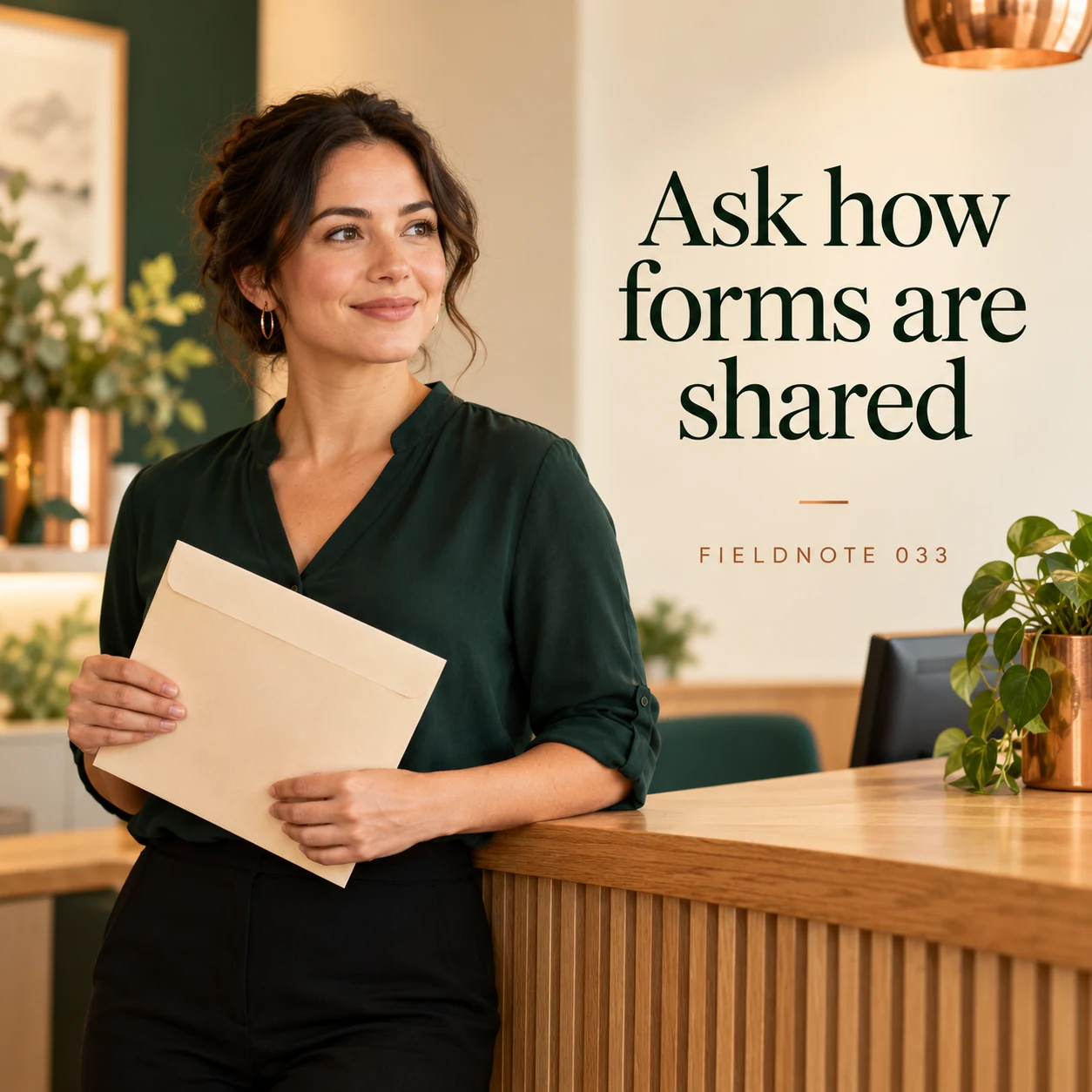
Original AI-generated fictional campaign concept. No real customer or measured result is represented.
Finished example caption — Need to ask about pre-visit forms? Contact the fictional FIELDNOTE 033 reception team through its stated private route. Please keep personal health details out of public comments.
Why use this post — Forms are an information-transfer question. A closed envelope can illustrate the process without showing a patient's documents or prescribing what the forms must contain.
Make it your own — Use the practice's approved private forms-request process. Do not list universal medical preparation requirements or show real records.
Image brief to adapt
Create one complete polished square1080×1080 campaign image. Exact scene: an adult receptionist holding a closed plain forms envelope beside an oak counter, no patient or readable personal data. Natural editorial photography, warm ivory, forest green and copper, refined natural light, credible anatomy and object proportions. Keep the scene dominant with a clear quiet headline area. Render exactly the headline “Ask how forms are shared” and the small fictional wordmark “FIELDNOTE 033”. No extra text, placeholder, QR code, UI, testimonial, patient, readable record, clinical procedure, treatment result, diagnosis or efficacy implication. Keep all typography legible at phone size and inset at least8% from edges. This is a clearly fictional teaching concept, not an actual clinic photo, booking confirmation or clinical advice. Produce actual polished raster artwork, no wireframe or text-only card.
3. Find the right kind of question
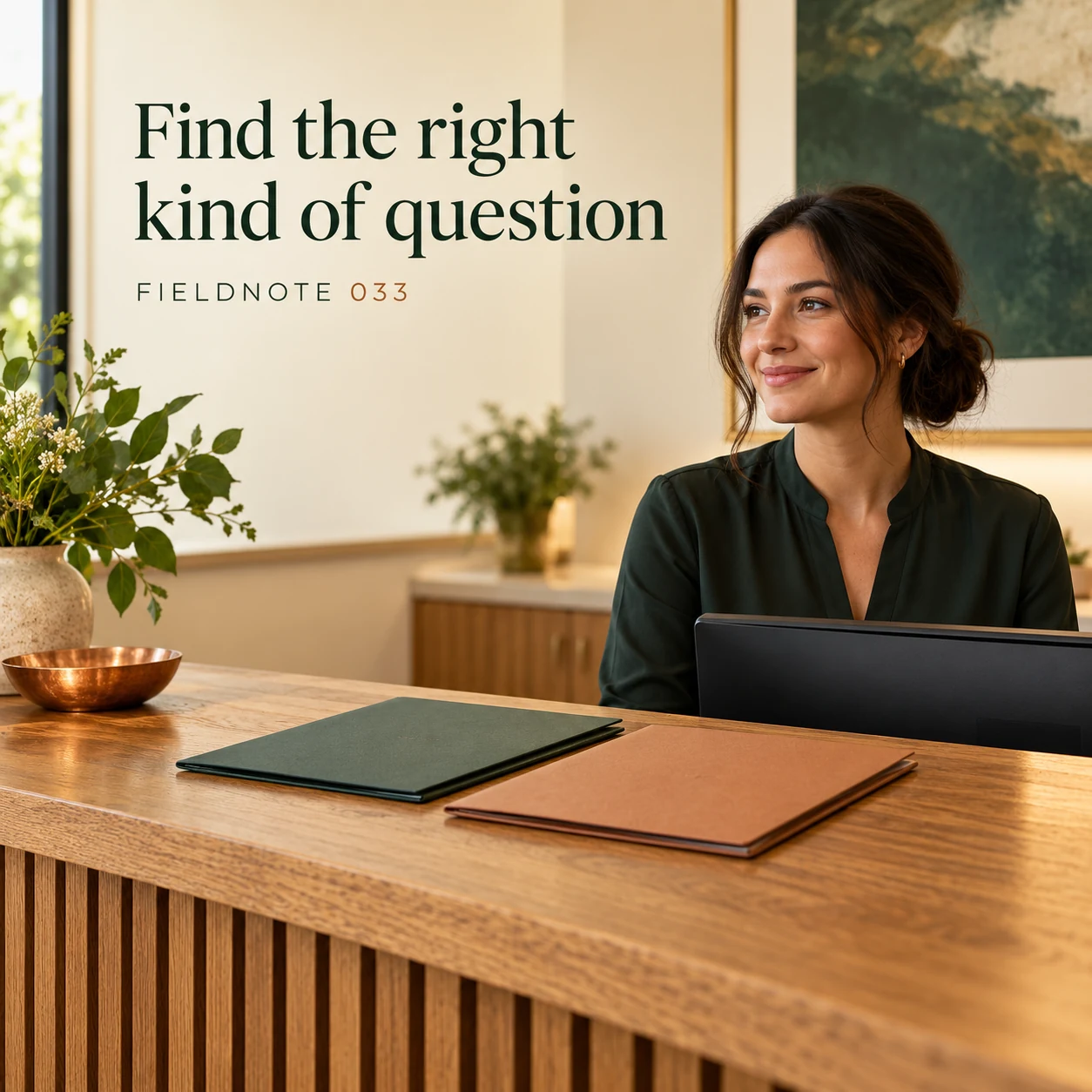
Original AI-generated fictional campaign concept. No real customer or measured result is represented.
Finished example caption — A booking question and a question about your care need different conversations. At fictional FIELDNOTE 033, ask reception how to reach the appropriate team member; this post does not assess symptoms.
Why use this post — The third caption distinguishes the type of conversation rather than assessing the person's health. The actual practice decides which approved route and staff role handle it.
Make it your own — Ask the practice to approve the routing language and responsible role. Do not invite symptom descriptions, diagnose a condition or decide what care a reader needs.
Image brief to adapt
Create one complete polished square1080×1080 campaign image. Exact scene: two closed plain folders on an oak reception counter with an adult receptionist behind them, no patient, chart, treatment device or diagnostic imagery. Natural editorial photography, warm ivory, forest green and copper, refined natural light, credible anatomy and object proportions. Keep the scene dominant with a clear quiet headline area. Render exactly the headline “Find the right kind of question” and the small fictional wordmark “FIELDNOTE 033”. No extra text, placeholder, QR code, UI, testimonial, patient, readable record, clinical procedure, treatment result, diagnosis or efficacy implication. Keep all typography legible at phone size and inset at least8% from edges. This is a clearly fictional teaching concept, not an actual clinic photo, booking confirmation or clinical advice. Produce actual polished raster artwork, no wireframe or text-only card.
4. Check the latest visit details
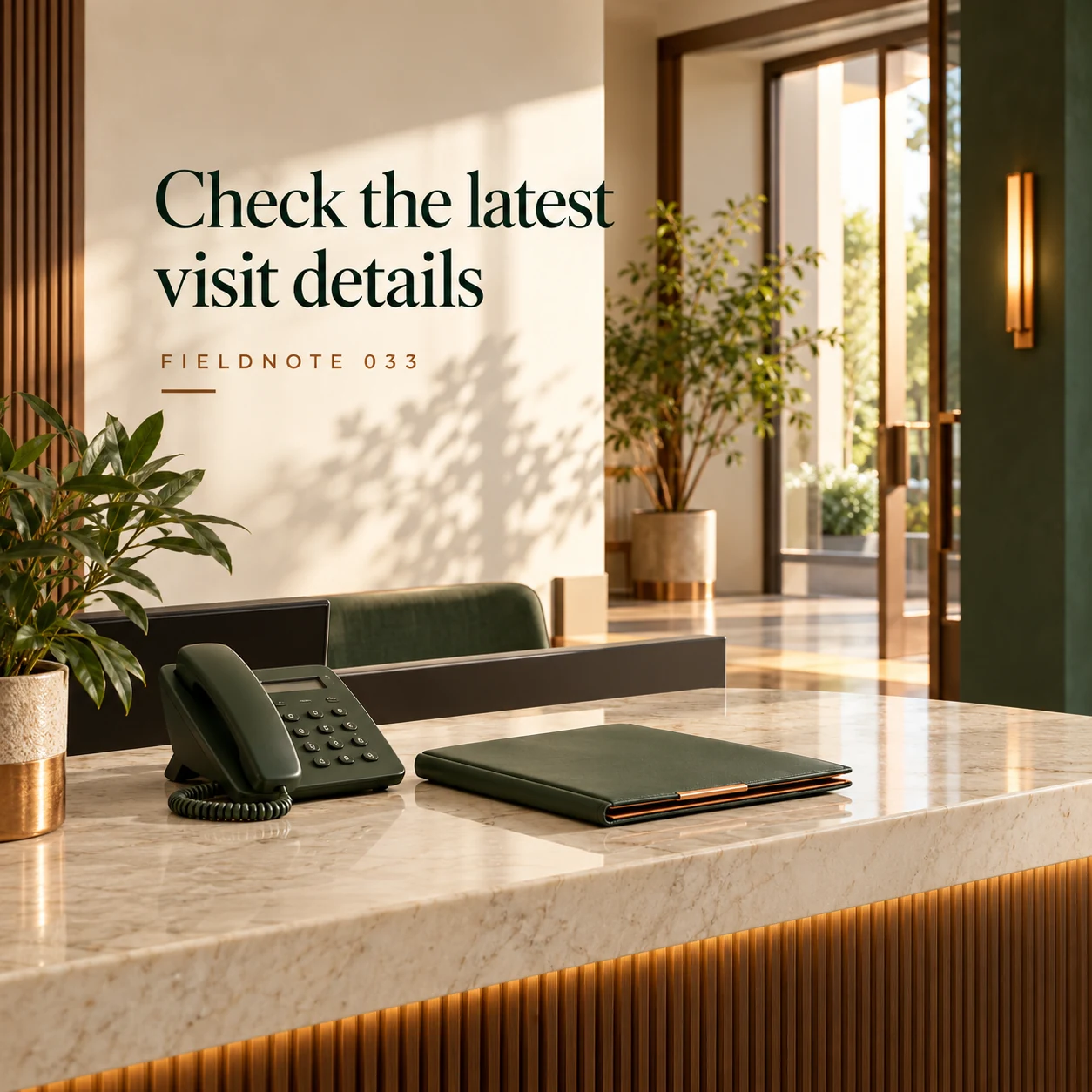
Original AI-generated fictional campaign concept. No real customer or measured result is represented.
Finished example caption — Before visiting fictional FIELDNOTE 033, check its current contact page and the instructions supplied for your appointment. An older social image may no longer reflect the current process.
Why use this post — A saved image can become stale. The final concept points to current instructions and gives the communications operator a reason to review the record instead of treating artwork as the permanent source.
Make it your own — Have operations approve contact/hours facts and the clinical team approve any care-related routing language. Review old posts when the process changes and use the actual current destination.
Image brief to adapt
Create one complete polished square1080×1080 campaign image. Exact scene: a plain telephone and closed contact-information folder beside an empty clinic entrance desk, no people or medical imagery. Natural editorial photography, warm ivory, forest green and copper, refined natural light, credible anatomy and object proportions. Keep the scene dominant with a clear quiet headline area. Render exactly the headline “Check the latest visit details” and the small fictional wordmark “FIELDNOTE 033”. No extra text, placeholder, QR code, UI, testimonial, patient, readable record, clinical procedure, treatment result, diagnosis or efficacy implication. Keep all typography legible at phone size and inset at least8% from edges. This is a clearly fictional teaching concept, not an actual clinic photo, booking confirmation or clinical advice. Produce actual polished raster artwork, no wireframe or text-only card.
Put it into practice
Apply the workflow to one actual business image
Build this fictional communication worksheet: (1) Question—How do I ask about an appointment? Public post—“Book through the current route.” Destination—clinic-approved booking channel; owner—reception lead. (2) Question—How are forms provided? Public post—“Ask how forms are shared.” Destination—practice-approved private forms contact; owner—operations lead. (3) Question—Who can answer a question about my care? Public post—“Find the right kind of question.” Destination—clinic-approved route to the appropriate team member; owner—clinical lead. (4) Question—Are these instructions current? Public post—“Check the latest visit details.” Destination—current official visit information; owner—communications lead. These are fictional role labels, not actual clinic channels. The worksheet is incomplete for publication until the practice supplies and approves every real destination and owner. It gives no symptom, treatment, referral, coverage or clinical preparation advice.
Common questions
Can these posts explain treatment benefits?
This pack is limited to administrative communication and routing. It does not establish a benefit, treatment recommendation or outcome. Any actual clinical content requires the responsible professional's separate review and supporting evidence.
Who approves arrival and forms instructions?
The actual practice should name the responsible operations owner, confirm its current channels and have the appropriate clinical reviewer approve care-related routing language. Do not copy a universal document list or assume that another practice follows the same process.
Should the picture show a patient?
These fictional concepts use an empty reception area, an adult receptionist and closed generic materials. They do not need a patient or a personal care story. Actual identifiable images and records require the practice's applicable permission and review process.
Turn the brief into your own creative
Use the example as a starting point. Supply approved business facts and authorized references in Studio, then compare the finished image with the brief before using it.
Your starter brief
Replace the brackets with your own details.
Create one complete polished square1080×1080 campaign image. Exact scene: an unoccupied fictional clinic reception desk with one plain closed booking folder, no person, no medical equipment. Natural editorial photography, warm ivory, forest green and copper, refined natural light, credible anatomy and object proportions. Keep the scene dominant with a clear quiet headline area. Render exactly the headline “Book through the current route” and the small fictional wordmark “FIELDNOTE 033”. No extra text, placeholder, QR code, UI, testimonial, patient, readable record, clinical procedure, treatment result, diagnosis or efficacy implication. Keep all typography legible at phone size and inset at least8% from edges. This is a clearly fictional teaching concept, not an actual clinic photo, booking confirmation or clinical advice. Produce actual polished raster artwork, no wireframe or text-only card.
Copy your adapted brief, open Studio, and paste it into your creative workflow. Review the result before using it.
Create your version in Studio