Industry playbooks
Flooring Social Media Ideas: Explain a Useful Sample Comparison
By Memes.ai
Updated October 16, 2026 · 4 min read
A flooring sample is a piece to compare, not a picture of the finished room. A useful showroom post explains what a customer can observe and which questions still belong to the supplier. These fictional concepts connect a sample to room light, neighboring materials and the actual product record without promising a match, installation result or care method.
What you’ll take away
- Keep each sample tied to the actual product it represents.
- Compare the real sample with the room's light and adjacent materials.
- A small sample or generated room cannot establish a complete pattern, installation or performance.
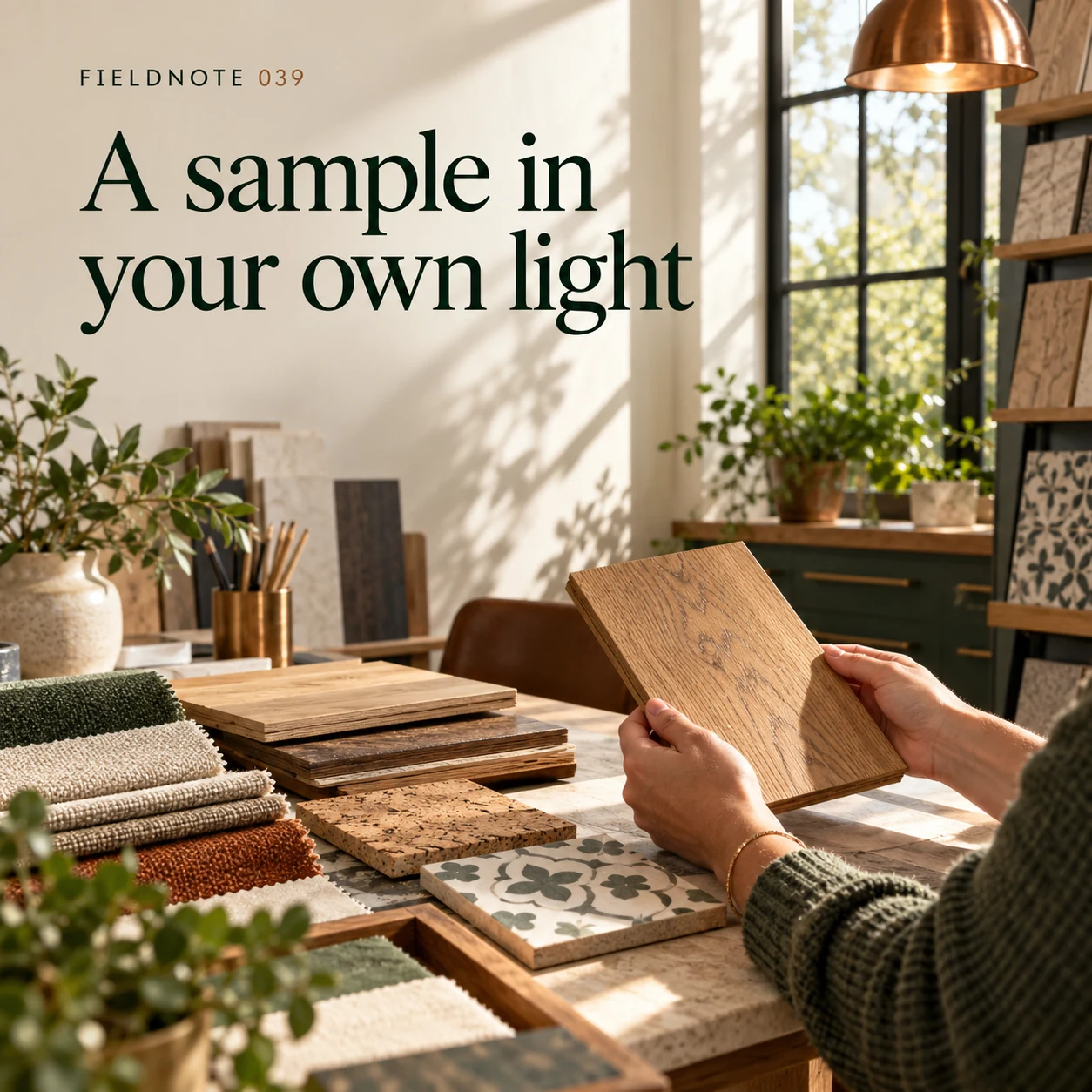
1. A sample in your own light
Original AI-generated fictional campaign concept. No real customer or measured result is represented.
Finished example caption — Take the room's colors and lighting into the flooring conversation.
Why use this post — A sample near a window opens a lighting comparison. The image alone does not prove how the actual product will look in every setting.
Make it your own — Use authorized photographs of the actual sample and record its product identity. Check it in the intended setting rather than treating a screen color as exact.
Image brief to adapt
Generate one complete polished square campaign image, 1080×1080. The exact scene is: flooring sample held near window light. Context: a fictional flooring showroom with oak, cork and patterned tile samples beside fabric swatches. The message is “A sample in your own light”; support this finished caption: “Take the room's colors and lighting into the flooring conversation.”. Environmental wide shot with the key subject in the lower right and generous clean upper-left negative space. Art direction: natural editorial photography with tactile materials and honest business detail; palette warm ivory, forest green and copper; refined natural lighting, deliberate depth and texture, commercially credible proportions, clean edges and ample breathing room. Use exactly this headline: “A sample in your own light”. Add the small fictional wordmark “FIELDNOTE 039”. Headline must be immediately readable at a phone size, with high contrast and a safe inset of at least8% from every edge. The scene is the main visual, not a text-only card. No additional text, UI screenshot, testimonial, metrics, sale badge, fake website, QR code or placeholder field. No watermarks or unrelated logos. No slip-resistance, waterproof, installation-time or material claims without source. Produce finished actual raster artwork ready to download and inspect; no wireframe, simple geometric substitute or diagram.
2. Details underfoot
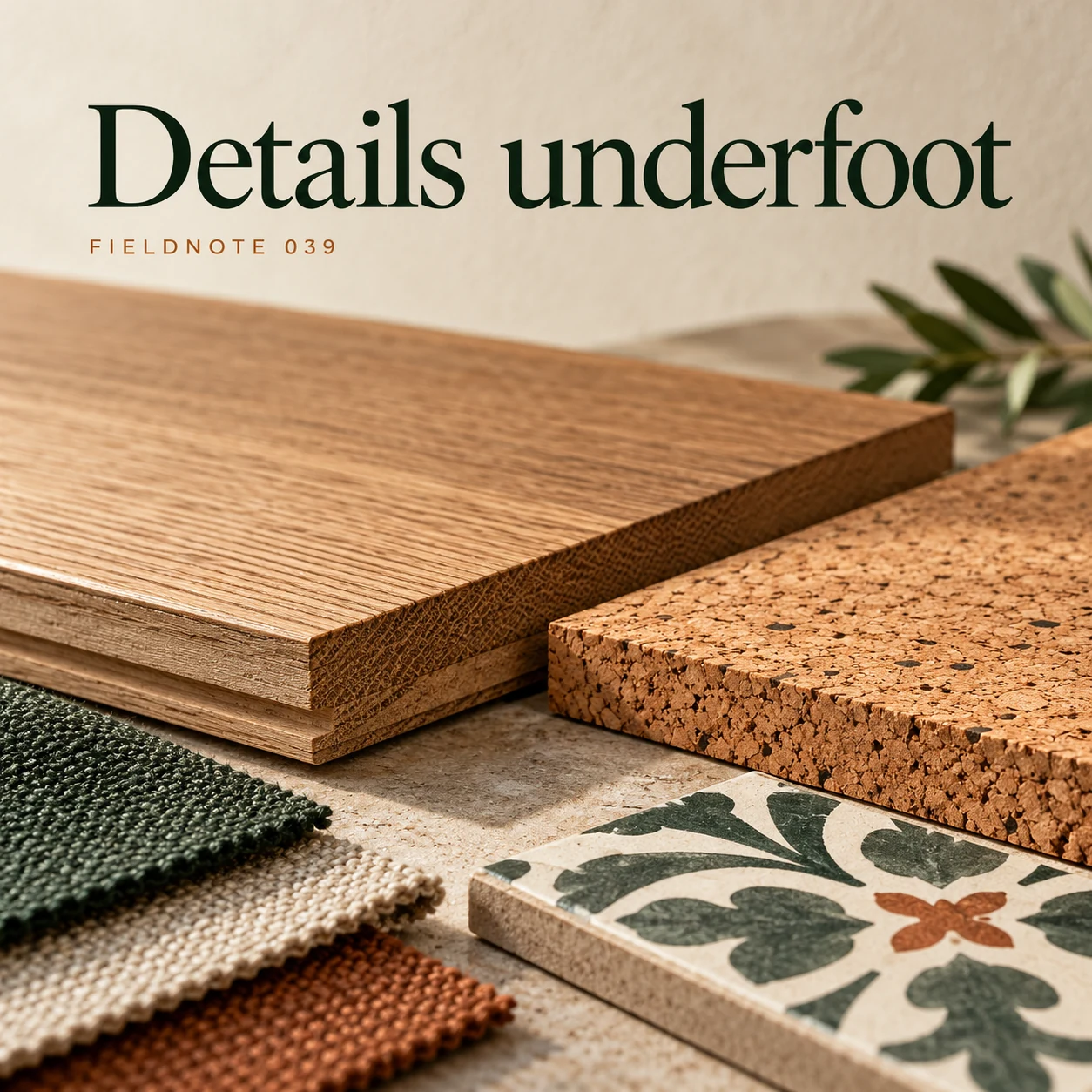
Original AI-generated fictional campaign concept. No real customer or measured result is represented.
Finished example caption — A close view makes the surface pattern and edge easier to discuss.
Why use this post — An edge and surface view helps a reader identify what to ask about. It cannot establish wear, grip or technical suitability.
Make it your own — Describe only visible supported details. Keep technical characteristics tied to the actual specification.
Image brief to adapt
Generate one complete polished square campaign image, 1080×1080. The exact scene is: close view of oak and cork surface edges. Context: a fictional flooring showroom with oak, cork and patterned tile samples beside fabric swatches. The message is “Details underfoot”; support this finished caption: “A close view makes the surface pattern and edge easier to discuss.”. Close editorial still life or detail crop showing the relevant physical object and its texture, with the headline in a quiet top band. Art direction: natural editorial photography with tactile materials and honest business detail; palette warm ivory, forest green and copper; refined natural lighting, deliberate depth and texture, commercially credible proportions, clean edges and ample breathing room. Use exactly this headline: “Details underfoot”. Add the small fictional wordmark “FIELDNOTE 039”. Headline must be immediately readable at a phone size, with high contrast and a safe inset of at least8% from every edge. The scene is the main visual, not a text-only card. No additional text, UI screenshot, testimonial, metrics, sale badge, fake website, QR code or placeholder field. No watermarks or unrelated logos. No slip-resistance, waterproof, installation-time or material claims without source. Produce finished actual raster artwork ready to download and inspect; no wireframe, simple geometric substitute or diagram.
3. Bring the room together
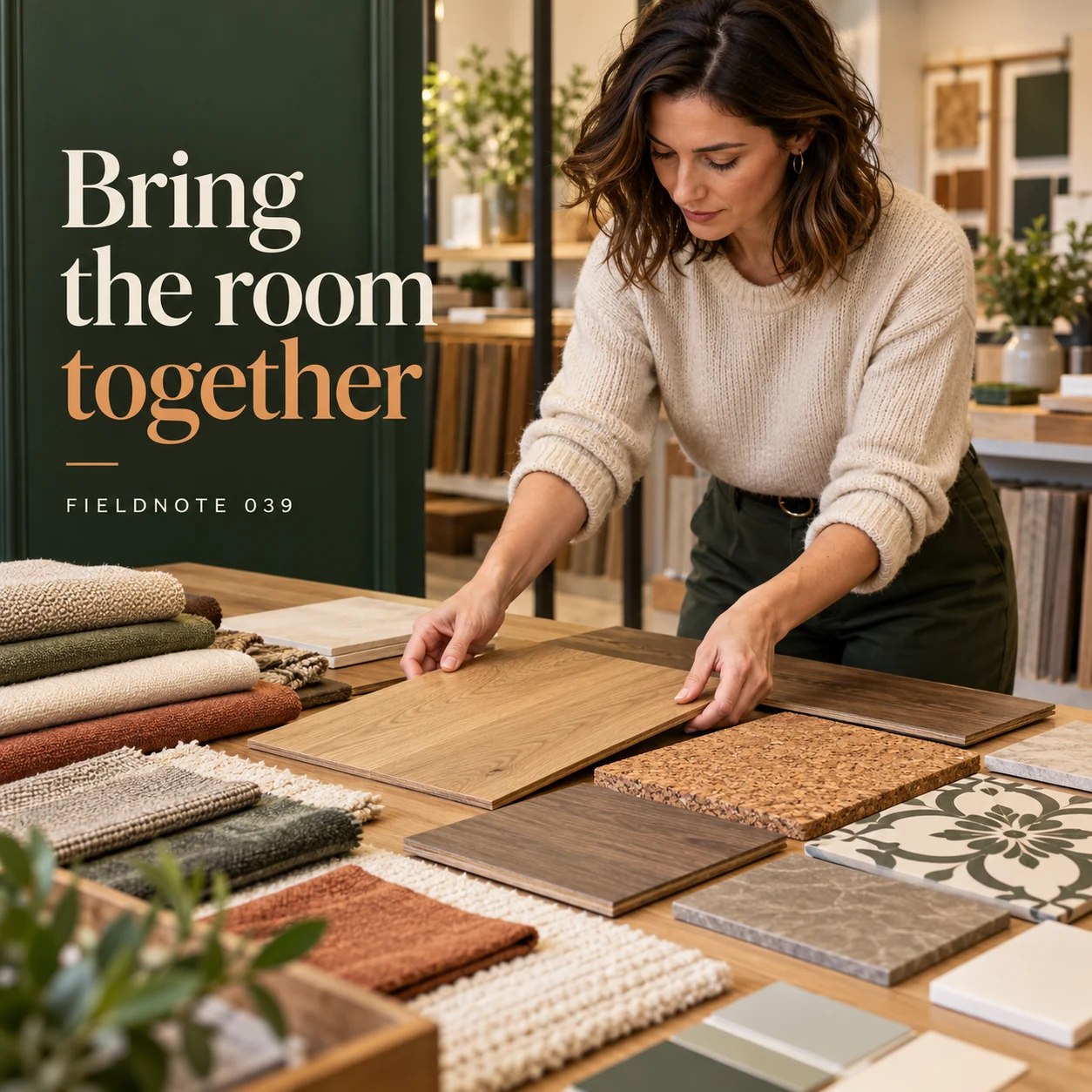
Original AI-generated fictional campaign concept. No real customer or measured result is represented.
Finished example caption — Flooring sits beside walls, furniture and everyday life. Compare the full picture.
Why use this post — Fabric and wall swatches make the adjacent choices explicit rather than judging flooring in isolation.
Make it your own — Gather the customer's permitted actual room references. Separate decorative preference from suitability or installation decisions.
Image brief to adapt
Generate one complete polished square campaign image, 1080×1080. The exact scene is: adult arranging floor samples beside fabric and wall swatches. Context: a fictional flooring showroom with oak, cork and patterned tile samples beside fabric swatches. The message is “Bring the room together”; support this finished caption: “Flooring sits beside walls, furniture and everyday life. Compare the full picture.”. Natural eye-level composition with a restrained side panel for type. Preserve the exact stated scene; do not add a person to an object-only scene. If the scene includes people, use adult models and the explicit stated action only. Art direction: natural editorial photography with tactile materials and honest business detail; palette warm ivory, forest green and copper; refined natural lighting, deliberate depth and texture, commercially credible proportions, clean edges and ample breathing room. Use exactly this headline: “Bring the room together”. Add the small fictional wordmark “FIELDNOTE 039”. Headline must be immediately readable at a phone size, with high contrast and a safe inset of at least8% from every edge. The scene is the main visual, not a text-only card. No additional text, UI screenshot, testimonial, metrics, sale badge, fake website, QR code or placeholder field. No watermarks or unrelated logos. No slip-resistance, waterproof, installation-time or material claims without source. Produce finished actual raster artwork ready to download and inspect; no wireframe, simple geometric substitute or diagram.
4. Questions before the choice
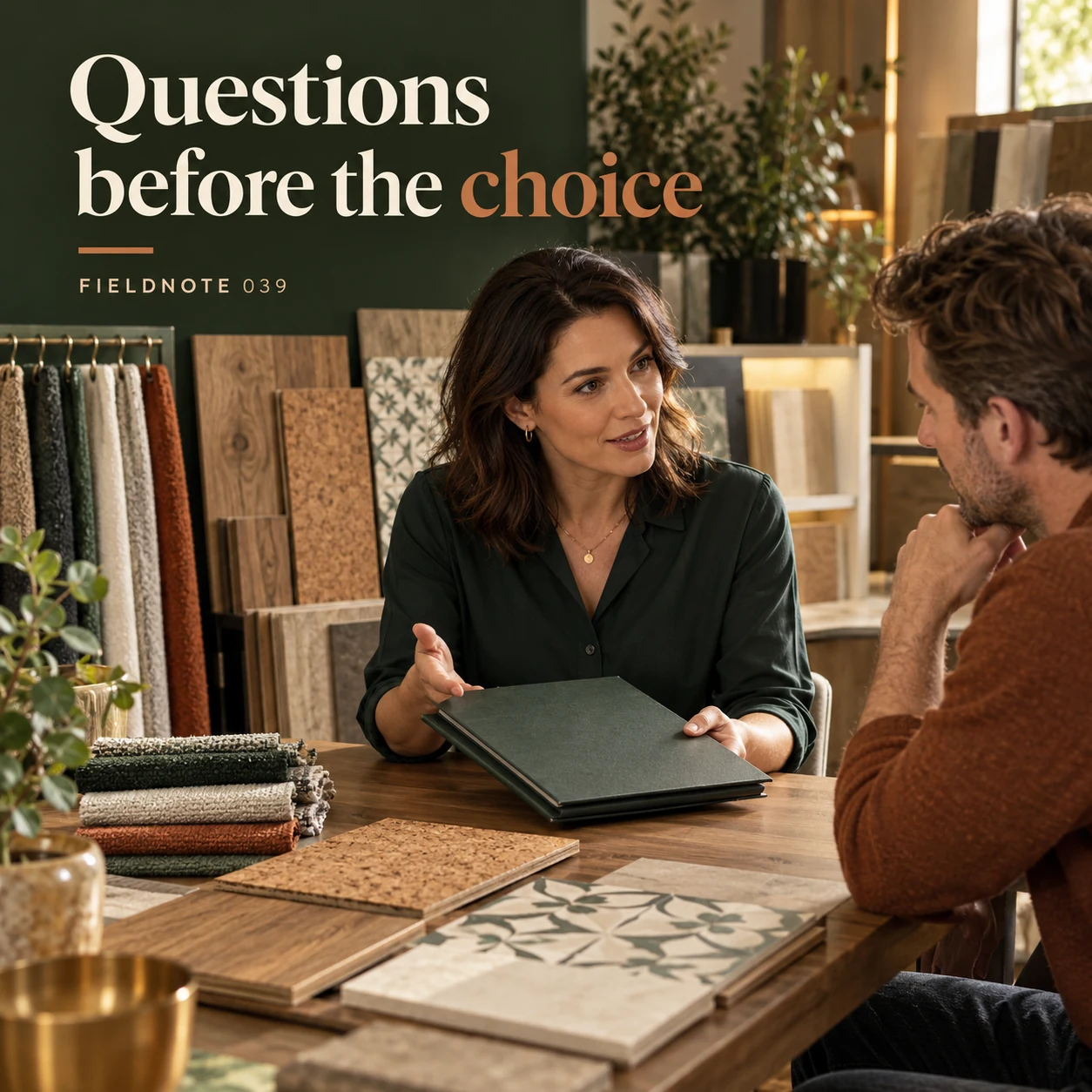
Original AI-generated fictional campaign concept. No real customer or measured result is represented.
Finished example caption — Ask the supplier about confirmed care and installation requirements before deciding.
Why use this post — The adviser conversation moves unresolved specifications and care questions to the responsible supplier.
Make it your own — Ask the actual supplier what the sample shows and does not show, and where to read current product-specific requirements.
Image brief to adapt
Generate one complete polished square campaign image, 1080×1080. The exact scene is: showroom adviser discussing closed specification folder. Context: a fictional flooring showroom with oak, cork and patterned tile samples beside fabric swatches. The message is “Questions before the choice”; support this finished caption: “Ask the supplier about confirmed care and installation requirements before deciding.”. Confident final hero composition using a clear foreground subject and supporting background context; close the sequence with a purposeful visual invitation. Art direction: natural editorial photography with tactile materials and honest business detail; palette warm ivory, forest green and copper; refined natural lighting, deliberate depth and texture, commercially credible proportions, clean edges and ample breathing room. Use exactly this headline: “Questions before the choice”. Add the small fictional wordmark “FIELDNOTE 039”. Headline must be immediately readable at a phone size, with high contrast and a safe inset of at least8% from every edge. The scene is the main visual, not a text-only card. No additional text, UI screenshot, testimonial, metrics, sale badge, fake website, QR code or placeholder field. No watermarks or unrelated logos. No slip-resistance, waterproof, installation-time or material claims without source. Produce finished actual raster artwork ready to download and inspect; no wireframe, simple geometric substitute or diagram.
Put it into practice
Apply the workflow to one actual business image
Create this original fictional comparison card: room—an invented reading corner; neighboring references—warm ivory wall and blue fabric; sample A—an original oak-look concept; sample B—an original cork-look concept; observations—compare visible pattern and color in the actual room's light; unresolved questions—what portion of the full pattern does the sample show, and which product-specific care/installation information applies? No real material, property or specification is asserted. Pair the card with the swatch arrangement. For a real post, supply actual sample identities and photos, check the supplier's information and keep final suitability decisions with the relevant professional.
Put it into practice
Work through the next practical customer question
Sample-request example—an invented fabric shop presents a small swatch envelope as a concept. Caption: “See the material closer; read the current sample contents and request information first.” A real shop supplies the exact included swatches, availability, cost and delivery terms through its actual current route. The sample is not a complete product and does not guarantee a color match in every room. Do not copy another retailer's refund, size or delivery promise.
Common questions
Does one small sample show the whole floor pattern?
Do not assume so. Check what the actual sample represents and inspect the supplier's current product information.
Can a generated room prove a color match?
No. Use the actual sample and approved real references in the intended setting. A concept image cannot guarantee the final appearance.
Should a social caption decide installation requirements?
No. Link the actual product-specific information and direct suitability and installation questions to the responsible supplier or professional.
Do these worked cases establish the actual business's terms or results?
No. They are original fictional teaching examples. Use the actual approved business records, source references and appropriate reviewer for a real adaptation.
Does adding an example require another page or a new image?
No. Use the existing owner when it already supplies the same reader workflow. These text additions preserve its current images; any added real asset needs its own provenance and visual review.
Turn the brief into your own creative
Use the example as a starting point. Supply approved business facts and authorized references in Studio, then compare the finished image with the brief before using it.
Your starter brief
Replace the brackets with your own details.
Generate one complete polished square campaign image, 1080×1080. The exact scene is: flooring sample held near window light. Context: a fictional flooring showroom with oak, cork and patterned tile samples beside fabric swatches. The message is “A sample in your own light”; support this finished caption: “Take the room's colors and lighting into the flooring conversation.”. Environmental wide shot with the key subject in the lower right and generous clean upper-left negative space. Art direction: natural editorial photography with tactile materials and honest business detail; palette warm ivory, forest green and copper; refined natural lighting, deliberate depth and texture, commercially credible proportions, clean edges and ample breathing room. Use exactly this headline: “A sample in your own light”. Add the small fictional wordmark “FIELDNOTE 039”. Headline must be immediately readable at a phone size, with high contrast and a safe inset of at least8% from every edge. The scene is the main visual, not a text-only card. No additional text, UI screenshot, testimonial, metrics, sale badge, fake website, QR code or placeholder field. No watermarks or unrelated logos. No slip-resistance, waterproof, installation-time or material claims without source. Produce finished actual raster artwork ready to download and inspect; no wireframe, simple geometric substitute or diagram.
Copy your adapted brief, open Studio, and paste it into your creative workflow. Review the result before using it.
Create your version in Studio