Industry playbooks
Painting Company Posts: Explain the Color Consultation
By Memes.ai
Updated October 16, 2026 · 4 min read
A painting company can show how to prepare a color conversation without claiming that a screen image predicts the finished wall. These fictional posts use samples, room materials and a project discussion as visual cues. They are not completed-job photographs. A useful enquiry records which room and surfaces are involved, what the owner wants to discuss and which references are available. The actual contractor must confirm its consultation process and the actual product information.
What you’ll take away
- Separate the communication brief from a paint specification: an image can introduce a discussion without choosing a finish.
- Record room context and existing materials; do not invent coverage, drying time or a result from an AI scene.
- Use actual samples and the responsible professional's process for real color decisions. A generated swatch is illustrative.
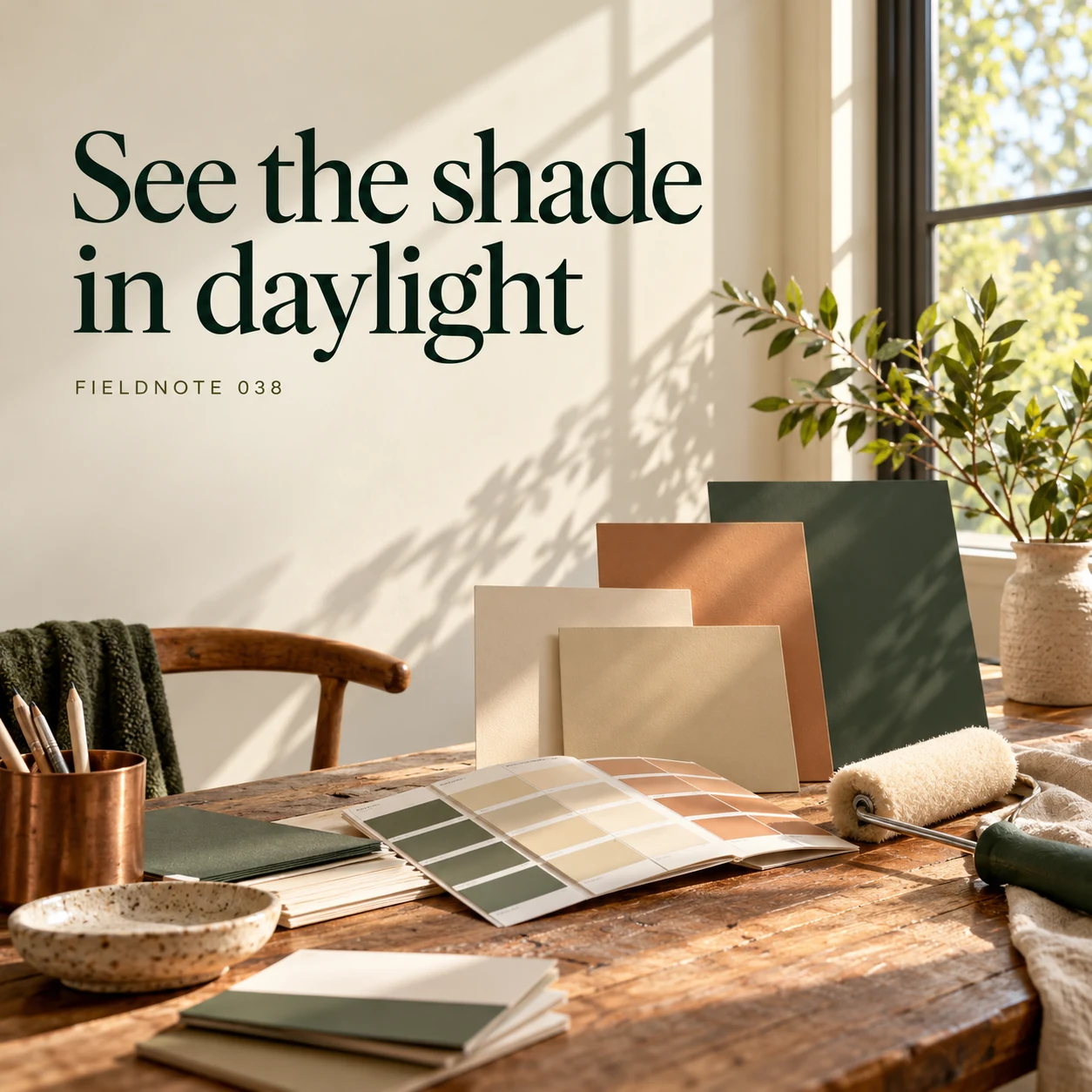
1. See the shade in daylight
Original AI-generated fictional campaign concept. No real customer or measured result is represented.
Finished example caption — A color sample can look different as the light changes through the room.
Why use this post — A sample near a wall introduces the effect of room context. It does not establish an exact color match or the behavior of a named paint.
Make it your own — Use authorized room and sample photographs when describing a real project. Identify digital treatments as concepts and arrange physical review through your actual process.
Image brief to adapt
Generate one complete polished square campaign image, 1080×1080. The exact scene is: paint samples viewed against wall in daylight. Context: a fictional paint consultation table with warm wall swatches, roller and daylight sample boards. The message is “See the shade in daylight”; support this finished caption: “A color sample can look different as the light changes through the room.”. Environmental wide shot with the key subject in the lower right and generous clean upper-left negative space. Art direction: natural editorial photography with tactile materials and honest business detail; palette warm ivory, forest green and copper; refined natural lighting, deliberate depth and texture, commercially credible proportions, clean edges and ample breathing room. Use exactly this headline: “See the shade in daylight”. Add the small fictional wordmark “FIELDNOTE 038”. Headline must be immediately readable at a phone size, with high contrast and a safe inset of at least8% from every edge. The scene is the main visual, not a text-only card. No additional text, UI screenshot, testimonial, metrics, sale badge, fake website, QR code or placeholder field. No watermarks or unrelated logos. No invented project photos, coverage, durability or completion-time promise. Produce finished actual raster artwork ready to download and inspect; no wireframe, simple geometric substitute or diagram.
2. Start with the surfaces
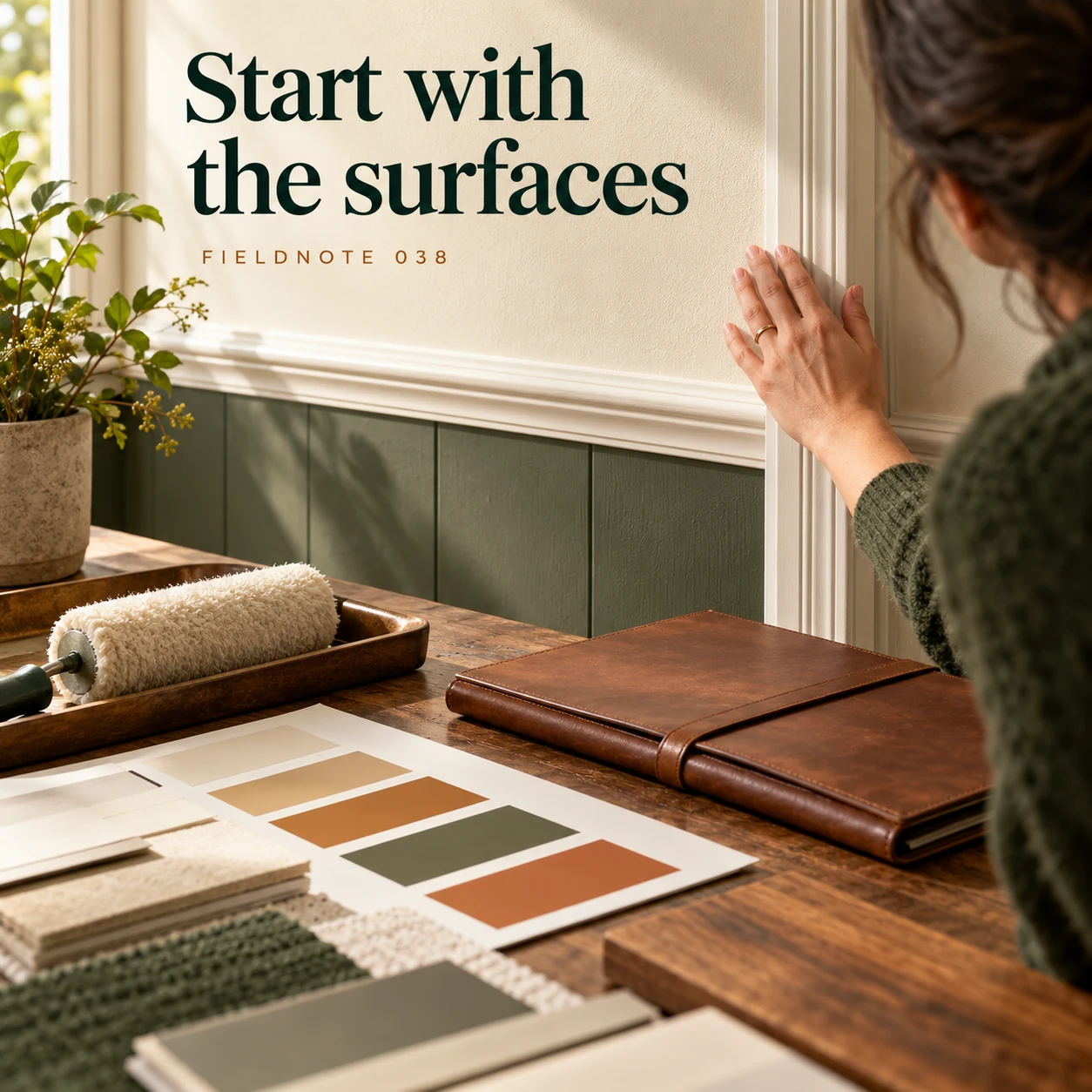
Original AI-generated fictional campaign concept. No real customer or measured result is represented.
Finished example caption — Walls, trim and existing finishes give the conversation a practical starting point.
Why use this post — Walls and trim may be separate parts of the enquiry. Naming them helps the contractor understand the discussion without assuming that both are included in the work.
Make it your own — List the surfaces the customer wants to discuss. Do not diagnose their condition, promise preparation work or include them in a price without assessment.
Image brief to adapt
Generate one complete polished square campaign image, 1080×1080. The exact scene is: adult examining wall and trim beside a closed project folio. Context: a fictional paint consultation table with warm wall swatches, roller and daylight sample boards. The message is “Start with the surfaces”; support this finished caption: “Walls, trim and existing finishes give the conversation a practical starting point.”. Close editorial still life or detail crop showing the relevant physical object and its texture, with the headline in a quiet top band. Art direction: natural editorial photography with tactile materials and honest business detail; palette warm ivory, forest green and copper; refined natural lighting, deliberate depth and texture, commercially credible proportions, clean edges and ample breathing room. Use exactly this headline: “Start with the surfaces”. Add the small fictional wordmark “FIELDNOTE 038”. Headline must be immediately readable at a phone size, with high contrast and a safe inset of at least8% from every edge. The scene is the main visual, not a text-only card. No additional text, UI screenshot, testimonial, metrics, sale badge, fake website, QR code or placeholder field. No watermarks or unrelated logos. No invented project photos, coverage, durability or completion-time promise. Produce finished actual raster artwork ready to download and inspect; no wireframe, simple geometric substitute or diagram.
3. Keep the room in view
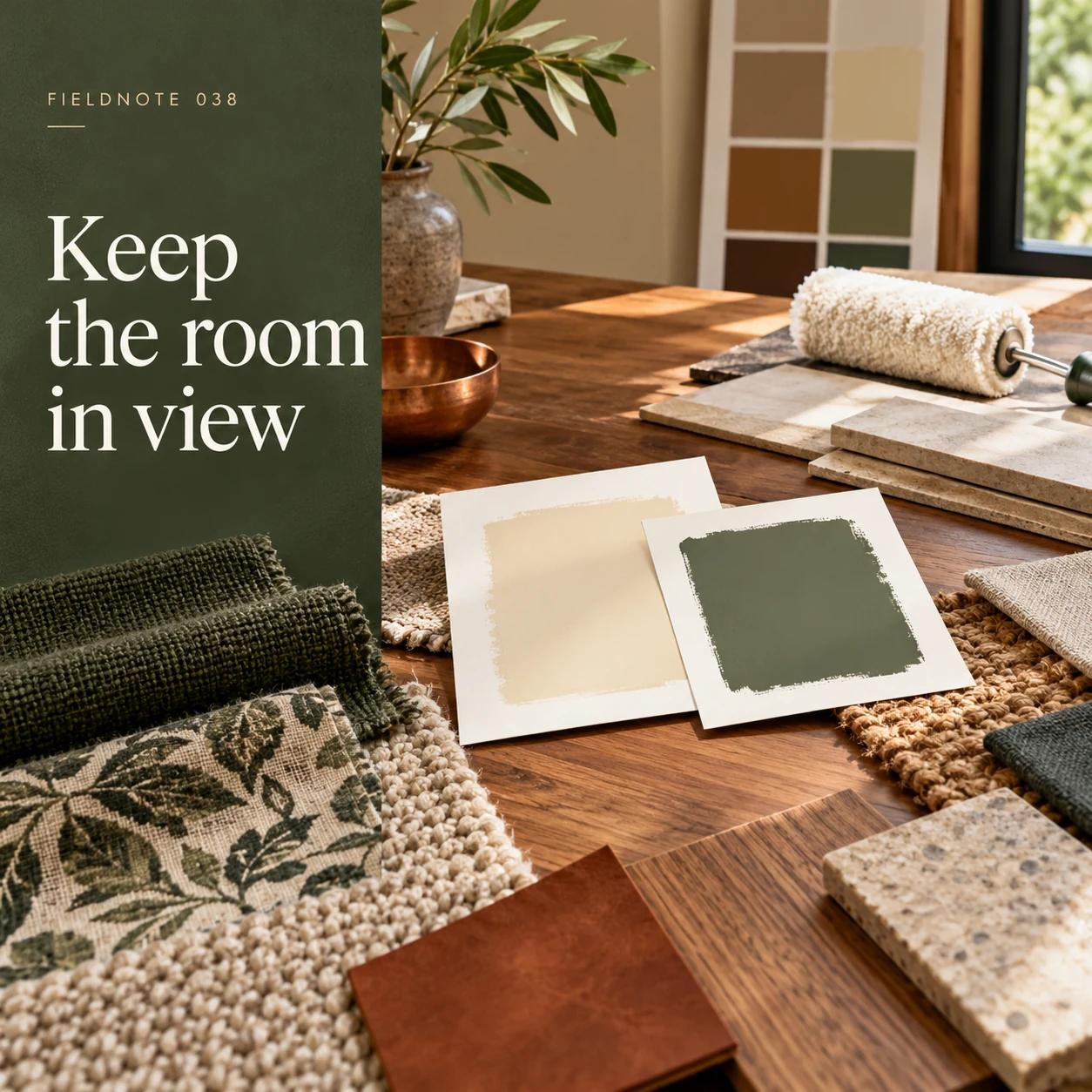
Original AI-generated fictional campaign concept. No real customer or measured result is represented.
Finished example caption — Bring the room's materials into the color discussion, not just a tiny swatch.
Why use this post — Adjacent materials show why a color brief contains more than a favorite swatch. The fictional arrangement must not be mistaken for a customer's approved scheme.
Make it your own — Ask for approved reference photos of fixed finishes and relevant furnishings. Exclude people, personal documents and unrelated rooms.
Image brief to adapt
Generate one complete polished square campaign image, 1080×1080. The exact scene is: fabric and flooring samples around two paint swatches. Context: a fictional paint consultation table with warm wall swatches, roller and daylight sample boards. The message is “Keep the room in view”; support this finished caption: “Bring the room's materials into the color discussion, not just a tiny swatch.”. Natural eye-level composition with a restrained side panel for type. Preserve the exact stated scene; do not add a person to an object-only scene. If the scene includes people, use adult models and the explicit stated action only. Art direction: natural editorial photography with tactile materials and honest business detail; palette warm ivory, forest green and copper; refined natural lighting, deliberate depth and texture, commercially credible proportions, clean edges and ample breathing room. Use exactly this headline: “Keep the room in view”. Add the small fictional wordmark “FIELDNOTE 038”. Headline must be immediately readable at a phone size, with high contrast and a safe inset of at least8% from every edge. The scene is the main visual, not a text-only card. No additional text, UI screenshot, testimonial, metrics, sale badge, fake website, QR code or placeholder field. No watermarks or unrelated logos. No invented project photos, coverage, durability or completion-time promise. Produce finished actual raster artwork ready to download and inspect; no wireframe, simple geometric substitute or diagram.
4. From preference to project brief
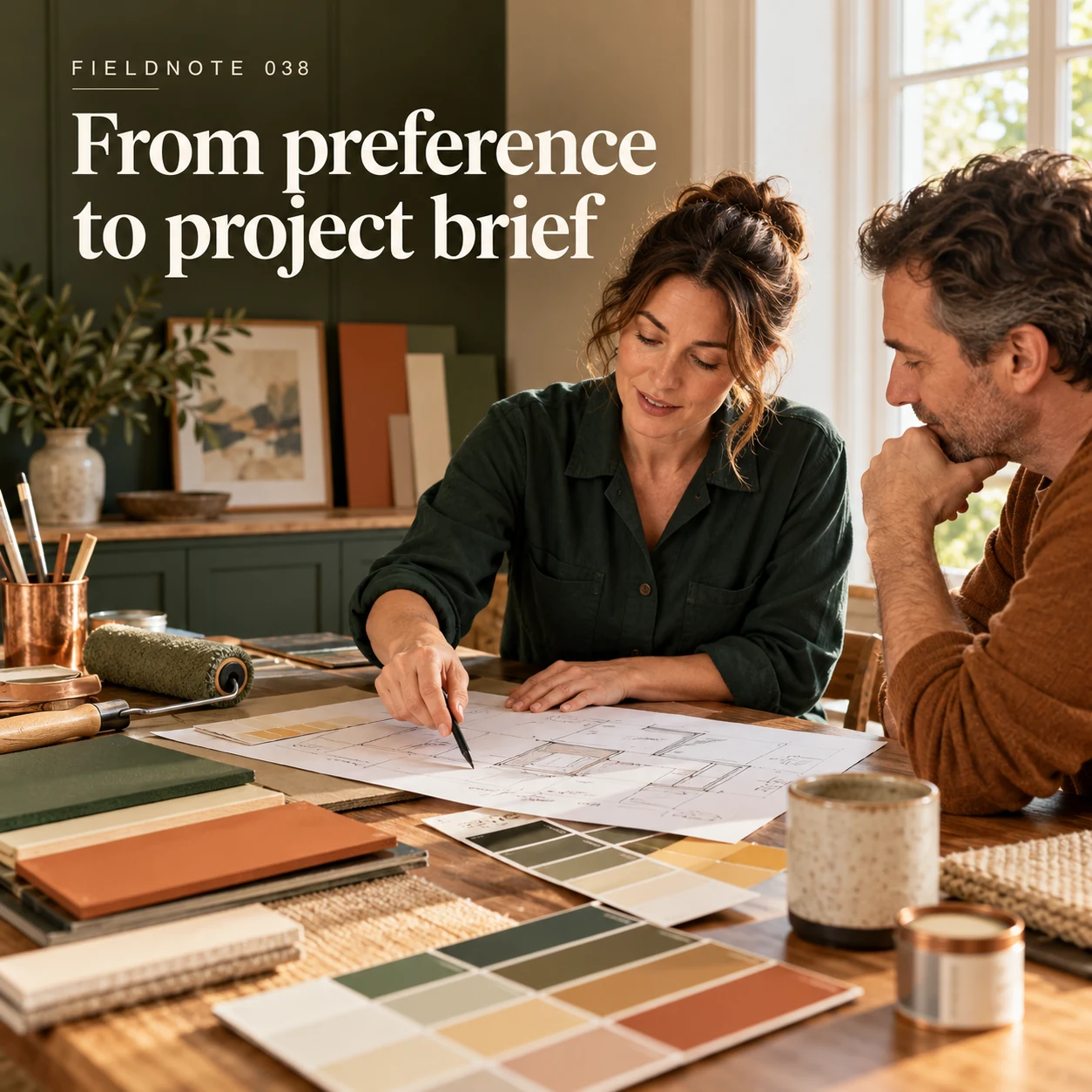
Original AI-generated fictional campaign concept. No real customer or measured result is represented.
Finished example caption — A useful enquiry names the rooms, surfaces and finish questions to discuss.
Why use this post — The final image shifts from mood to a usable enquiry. A room, surface list and open questions are facts the business can discuss before a scope is agreed.
Make it your own — Use a private enquiry route. Ask which spaces are involved and what decision the customer needs help with, then state what your actual consultation covers.
Image brief to adapt
Generate one complete polished square campaign image, 1080×1080. The exact scene is: adult decorator reviewing a room sketch with homeowner. Context: a fictional paint consultation table with warm wall swatches, roller and daylight sample boards. The message is “From preference to project brief”; support this finished caption: “A useful enquiry names the rooms, surfaces and finish questions to discuss.”. Confident final hero composition using a clear foreground subject and supporting background context; close the sequence with a purposeful visual invitation. Art direction: natural editorial photography with tactile materials and honest business detail; palette warm ivory, forest green and copper; refined natural lighting, deliberate depth and texture, commercially credible proportions, clean edges and ample breathing room. Use exactly this headline: “From preference to project brief”. Add the small fictional wordmark “FIELDNOTE 038”. Headline must be immediately readable at a phone size, with high contrast and a safe inset of at least8% from every edge. The scene is the main visual, not a text-only card. No additional text, UI screenshot, testimonial, metrics, sale badge, fake website, QR code or placeholder field. No watermarks or unrelated logos. No invented project photos, coverage, durability or completion-time promise. Produce finished actual raster artwork ready to download and inspect; no wireframe, simple geometric substitute or diagram.
Put it into practice
Apply the workflow to one actual business image
Write this fictional enquiry: “We want to discuss the living-room walls and existing white trim. The oak floor will stay. We have two physical sample cards and can supply a room photograph. We need to understand the next step for discussing color and finish; no work scope or completion date is agreed.” Mark it as fictional. Pair it with example four, then check that the image does not add a named paint, a completed transformation or a price. Replace the sample only with a customer's authorized facts for real use.
Common questions
Can I show an AI room image as the result of our paint color?
Use it only as a clearly labeled concept. A generated room does not prove a paint match, finish or completed job. Use authorized actual project records when representing your work.
What should a color-consultation enquiry ask for?
Name the room, surfaces and existing materials, plus the decision to discuss. Ask for references through the business's actual process. Keep assessment, product selection and the final scope with the responsible professional.
Should we copy the manufacturer consultation prices or terms?
No. The cited service establishes that this preparation task exists. Its prices, hours and eligibility belong to that provider. State only your own confirmed process and terms.
Turn the brief into your own creative
Use the example as a starting point. Supply approved business facts and authorized references in Studio, then compare the finished image with the brief before using it.
Your starter brief
Replace the brackets with your own details.
Generate one complete polished square campaign image, 1080×1080. The exact scene is: paint samples viewed against wall in daylight. Context: a fictional paint consultation table with warm wall swatches, roller and daylight sample boards. The message is “See the shade in daylight”; support this finished caption: “A color sample can look different as the light changes through the room.”. Environmental wide shot with the key subject in the lower right and generous clean upper-left negative space. Art direction: natural editorial photography with tactile materials and honest business detail; palette warm ivory, forest green and copper; refined natural lighting, deliberate depth and texture, commercially credible proportions, clean edges and ample breathing room. Use exactly this headline: “See the shade in daylight”. Add the small fictional wordmark “FIELDNOTE 038”. Headline must be immediately readable at a phone size, with high contrast and a safe inset of at least8% from every edge. The scene is the main visual, not a text-only card. No additional text, UI screenshot, testimonial, metrics, sale badge, fake website, QR code or placeholder field. No watermarks or unrelated logos. No invented project photos, coverage, durability or completion-time promise. Produce finished actual raster artwork ready to download and inspect; no wireframe, simple geometric substitute or diagram.
Copy your adapted brief, open Studio, and paste it into your creative workflow. Review the result before using it.
Create your version in Studio