Industry playbooks
Translation Service Posts: Explain a Useful Project Brief
By Memes.ai
Updated October 16, 2026 · 5 min read
A translation-service post should help a buyer describe the project they want to discuss. “Please translate this” leaves important questions open: who will read it, where it will appear and which source version is ready. These four fictional concepts introduce a usable project-enquiry sheet. The images show invented materials, not a client's documents. The actual language professional must confirm the service, scope and delivery requirements; this guide supplies communication examples rather than a translation or legal acceptance advice.
What you’ll take away
- State the intended reader and use before selecting the visual treatment.
- Separate the actual source file and approved reference terms from the public social example.
- Ask the provider to confirm scope, delivery and review requirements. Do not infer certification or acceptance from a polished image.
1. Start with the audience
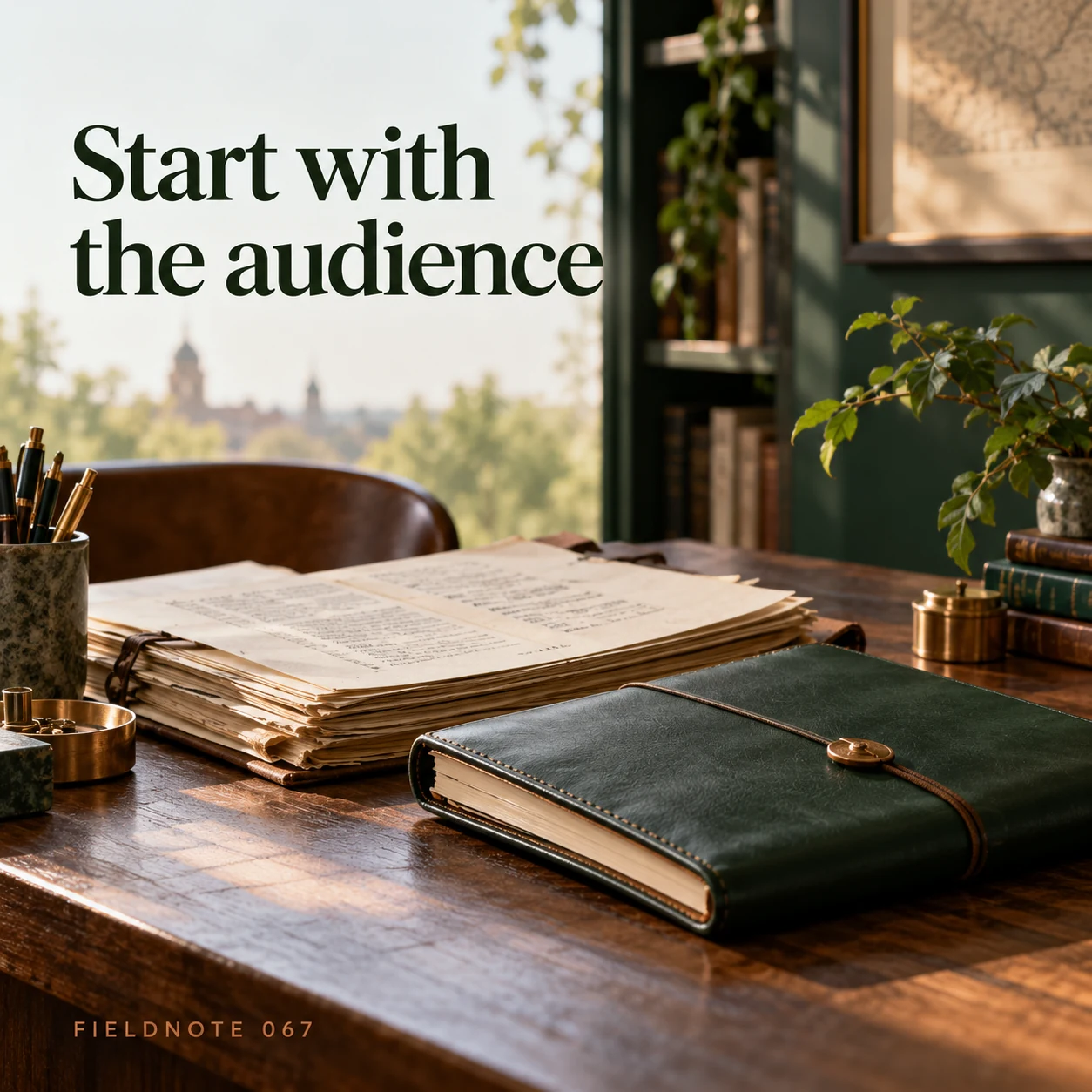
Original AI-generated fictional campaign concept. No real customer or measured result is represented.
Finished example caption — The reader and use of a document shape a translation brief.
Why use this post — Audience and use explain the task behind the words. A sales description and an internal note can require different discussion even when they have the same source language.
Make it your own — Name the actual intended audience, target market and use in the private enquiry. Ask the provider which language variant and service are appropriate; do not choose on behalf of the buyer.
Image brief to adapt
Generate one complete polished square campaign image, 1080×1080. The exact scene is: closed audience brief beside original document folio. Context: a fictional language-service desk with original bilingual-looking typesetting kept unreadable and paper folios. The message is “Start with the audience”; support this finished caption: “The reader and use of a document shape a translation brief.”. Environmental wide shot with the key subject in the lower right and generous clean upper-left negative space. Art direction: natural editorial photography with tactile materials and honest business detail; palette warm ivory, forest green and copper; refined natural lighting, deliberate depth and texture, commercially credible proportions, clean edges and ample breathing room. Use exactly this headline: “Start with the audience”. Add the small fictional wordmark “FIELDNOTE 067”. Headline must be immediately readable at a phone size, with high contrast and a safe inset of at least8% from every edge. The scene is the main visual, not a text-only card. No additional text, UI screenshot, testimonial, metrics, sale badge, fake website, QR code or placeholder field. No watermarks or unrelated logos. No certified translation, legal acceptance or language-quality claims without evidence. Produce finished actual raster artwork ready to download and inspect; no wireframe, simple geometric substitute or diagram.
2. Name the source material
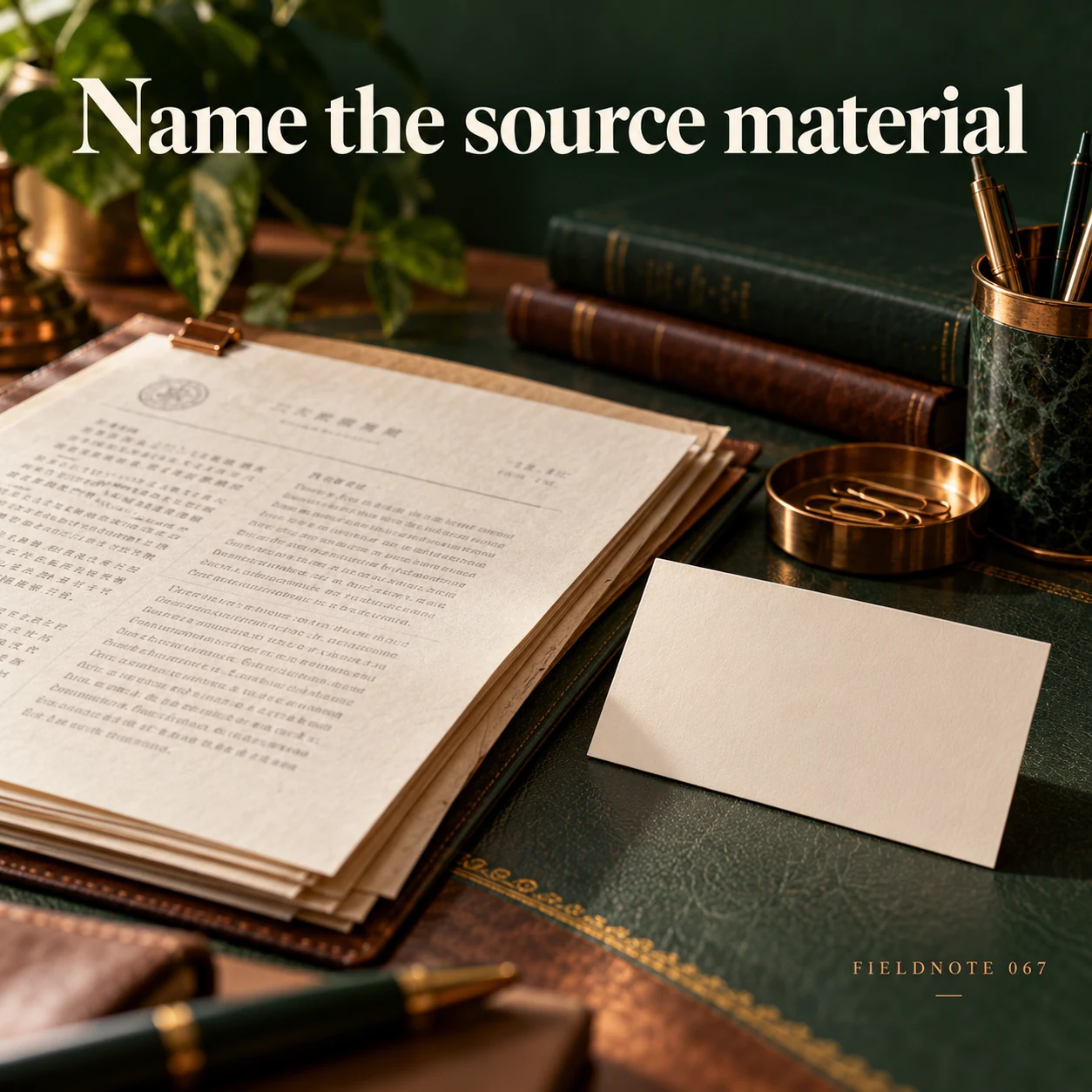
Original AI-generated fictional campaign concept. No real customer or measured result is represented.
Finished example caption — Format, length and source language belong in the initial enquiry.
Why use this post — A clear source version lets the provider understand what is being requested. A social image should not expose the actual document or imply that its appearance proves scope.
Make it your own — Identify the source language, file type, approximate length and version when known. Use a sanitized sample in public content and send real material only through the approved route.
Image brief to adapt
Generate one complete polished square campaign image, 1080×1080. The exact scene is: plain document sample and unprinted language-information card. Context: a fictional language-service desk with original bilingual-looking typesetting kept unreadable and paper folios. The message is “Name the source material”; support this finished caption: “Format, length and source language belong in the initial enquiry.”. Close editorial still life or detail crop showing the relevant physical object and its texture, with the headline in a quiet top band. Art direction: natural editorial photography with tactile materials and honest business detail; palette warm ivory, forest green and copper; refined natural lighting, deliberate depth and texture, commercially credible proportions, clean edges and ample breathing room. Use exactly this headline: “Name the source material”. Add the small fictional wordmark “FIELDNOTE 067”. Headline must be immediately readable at a phone size, with high contrast and a safe inset of at least8% from every edge. The scene is the main visual, not a text-only card. No additional text, UI screenshot, testimonial, metrics, sale badge, fake website, QR code or placeholder field. No watermarks or unrelated logos. No certified translation, legal acceptance or language-quality claims without evidence. Produce finished actual raster artwork ready to download and inspect; no wireframe, simple geometric substitute or diagram.
3. Context belongs beside the words
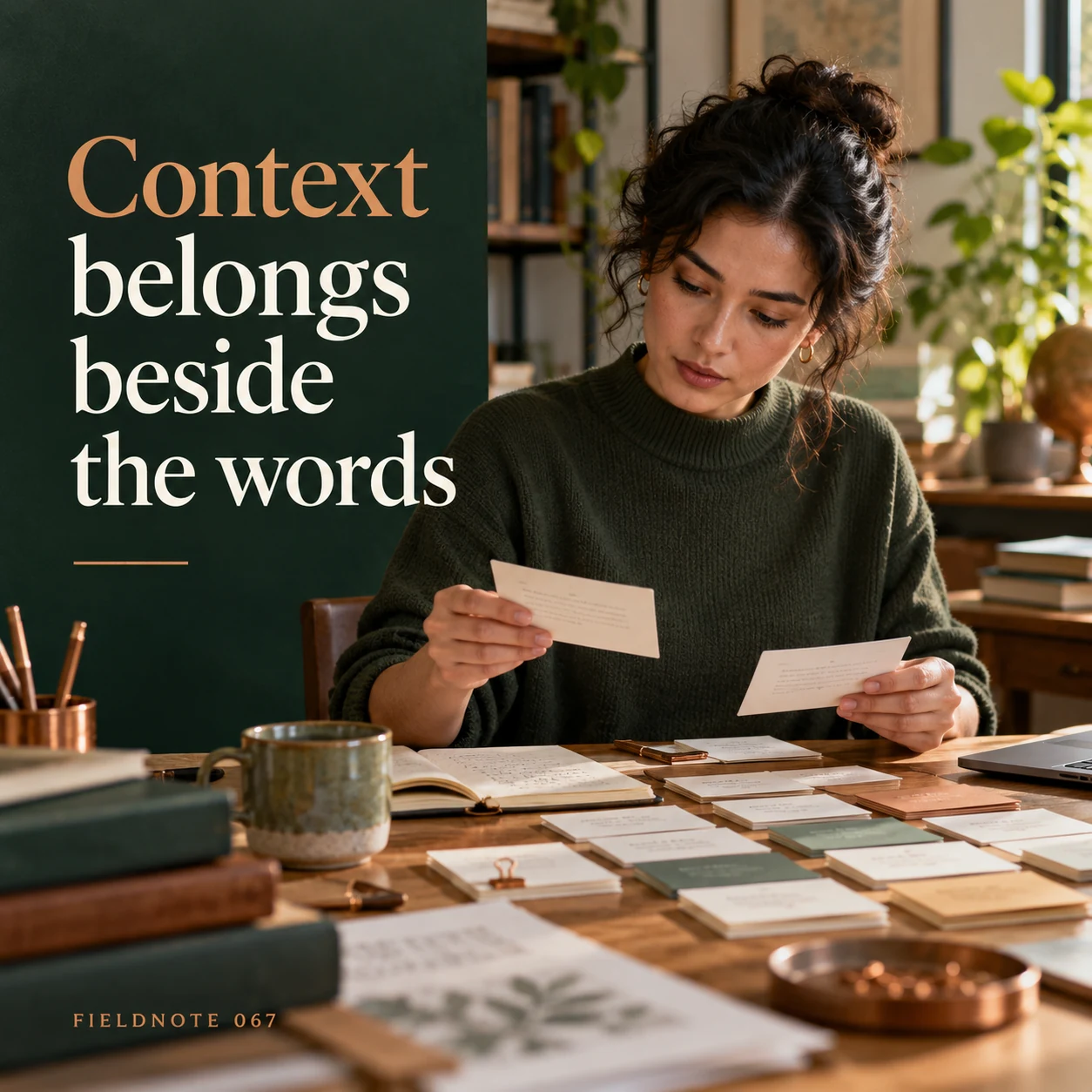
Original AI-generated fictional campaign concept. No real customer or measured result is represented.
Finished example caption — Reference terms and intended tone can give the translator useful context.
Why use this post — Approved terminology and tone references give the provider context. They should remain separate from unsupported claims about how the translation will perform.
Make it your own — Supply permitted reference terms, prior approved wording and style guidance if available. Mark open questions instead of inventing equivalent terminology.
Image brief to adapt
Generate one complete polished square campaign image, 1080×1080. The exact scene is: adult translator reviewing approved terminology cards. Context: a fictional language-service desk with original bilingual-looking typesetting kept unreadable and paper folios. The message is “Context belongs beside the words”; support this finished caption: “Reference terms and intended tone can give the translator useful context.”. Natural eye-level composition with a restrained side panel for type. Preserve the exact stated scene; do not add a person to an object-only scene. If the scene includes people, use adult models and the explicit stated action only. Art direction: natural editorial photography with tactile materials and honest business detail; palette warm ivory, forest green and copper; refined natural lighting, deliberate depth and texture, commercially credible proportions, clean edges and ample breathing room. Use exactly this headline: “Context belongs beside the words”. Add the small fictional wordmark “FIELDNOTE 067”. Headline must be immediately readable at a phone size, with high contrast and a safe inset of at least8% from every edge. The scene is the main visual, not a text-only card. No additional text, UI screenshot, testimonial, metrics, sale badge, fake website, QR code or placeholder field. No watermarks or unrelated logos. No certified translation, legal acceptance or language-quality claims without evidence. Produce finished actual raster artwork ready to download and inspect; no wireframe, simple geometric substitute or diagram.
4. Confirm the required service

Original AI-generated fictional campaign concept. No real customer or measured result is represented.
Finished example caption — Ask about review, delivery format and any formal requirements before commissioning.
Why use this post — The final post moves from an enquiry to questions for agreement. It avoids treating an initial request as a confirmed commission or certified finished document.
Make it your own — Ask who confirms the deliverable format and review step. If formal acceptance is required, name that requirement as a question for the responsible provider or receiving organization.
Image brief to adapt
Generate one complete polished square campaign image, 1080×1080. The exact scene is: client and translator discussing closed delivery-format folder. Context: a fictional language-service desk with original bilingual-looking typesetting kept unreadable and paper folios. The message is “Confirm the required service”; support this finished caption: “Ask about review, delivery format and any formal requirements before commissioning.”. Confident final hero composition using a clear foreground subject and supporting background context; close the sequence with a purposeful visual invitation. Art direction: natural editorial photography with tactile materials and honest business detail; palette warm ivory, forest green and copper; refined natural lighting, deliberate depth and texture, commercially credible proportions, clean edges and ample breathing room. Use exactly this headline: “Confirm the required service”. Add the small fictional wordmark “FIELDNOTE 067”. Headline must be immediately readable at a phone size, with high contrast and a safe inset of at least8% from every edge. The scene is the main visual, not a text-only card. No additional text, UI screenshot, testimonial, metrics, sale badge, fake website, QR code or placeholder field. No watermarks or unrelated logos. No certified translation, legal acceptance or language-quality claims without evidence. Produce finished actual raster artwork ready to download and inspect; no wireframe, simple geometric substitute or diagram.
Put it into practice
Apply the workflow to one actual business image
Use this fictional completed enquiry: “We have a final English product-description file for a desk lamp. We want to discuss a French version for adult retail shoppers in France, to appear on our product page. The source is one editable text document labeled LampDescription-v1. We can provide approved product terms and a reference image. Please confirm scope, delivery format, review and a feasible schedule; no deadline or price is agreed.” The product and project are invented. Pair the sheet with example one. Do not add translated words, certification or a service promise to the illustration. For real use, replace it with approved facts and the provider's actual private route.
Put it into practice
Work through the next practical customer question
Localization brief example—an invented English draft says, “Bring the next idea to the table.” Its intended meaning is an invitation to discuss a creative concept, not a literal furniture instruction. For another audience, ask an appropriate language reviewer to propose the wording, confirm the actual local offer and destination, then review line breaks in the exported image. This case supplies no translated phrase or native-fluency claim. A correct phrase does not make an unavailable local product or obsolete contact route true.
Common questions
Which audience and use facts help the translator?
Describe who will read the text, the target market or language variant to discuss, the medium and intended purpose. Add the actual source version and permitted references through the provider's route. The professional should confirm what further detail is needed.
Can this post promise certified acceptance?
No. A creative example does not establish certification, official acceptance or language quality. Ask the provider and, where relevant, the receiving organization about their actual requirements before commissioning.
Who confirms file and review requirements?
The buyer and responsible language professional should agree them for the actual project. Supply the source version and expected use, then ask about the deliverable and review. Studio's image completion is not that agreement.
Do these worked cases establish the actual business's terms or results?
No. They are original fictional teaching examples. Use the actual approved business records, source references and appropriate reviewer for a real adaptation.
Does adding an example require another page or a new image?
No. Use the existing owner when it already supplies the same reader workflow. These text additions preserve its current images; any added real asset needs its own provenance and visual review.
Turn the brief into your own creative
Use the example as a starting point. Supply approved business facts and authorized references in Studio, then compare the finished image with the brief before using it.
Your starter brief
Replace the brackets with your own details.
Generate one complete polished square campaign image, 1080×1080. The exact scene is: closed audience brief beside original document folio. Context: a fictional language-service desk with original bilingual-looking typesetting kept unreadable and paper folios. The message is “Start with the audience”; support this finished caption: “The reader and use of a document shape a translation brief.”. Environmental wide shot with the key subject in the lower right and generous clean upper-left negative space. Art direction: natural editorial photography with tactile materials and honest business detail; palette warm ivory, forest green and copper; refined natural lighting, deliberate depth and texture, commercially credible proportions, clean edges and ample breathing room. Use exactly this headline: “Start with the audience”. Add the small fictional wordmark “FIELDNOTE 067”. Headline must be immediately readable at a phone size, with high contrast and a safe inset of at least8% from every edge. The scene is the main visual, not a text-only card. No additional text, UI screenshot, testimonial, metrics, sale badge, fake website, QR code or placeholder field. No watermarks or unrelated logos. No certified translation, legal acceptance or language-quality claims without evidence. Produce finished actual raster artwork ready to download and inspect; no wireframe, simple geometric substitute or diagram.
Copy your adapted brief, open Studio, and paste it into your creative workflow. Review the result before using it.
Create your version in Studio