Industry playbooks
Catering Social Media Ideas: Build a Useful Event Enquiry
By Memes.ai
Updated October 16, 2026 · 4 min read
A catering enquiry needs more than a menu photograph. The organizer and caterer must know which event they are discussing and what “service” means for that request. Delivery, arranging the food, remaining on site and cleanup are separate questions. These four fictional concepts show how to open that conversation. They do not depict an actual catered event, establish available capacity or demonstrate allergy-safe food. Keep menu facts, dietary discussions and service commitments with the responsible catering team.
What you’ll take away
- Describe the gathering before asking for a menu or price.
- Ask separately about delivery, setup, service and cleanup; do not assume one word includes them all.
- Keep dietary and personal event details in the actual private enquiry, with the caterer confirming what it can provide.
1. Start with the gathering
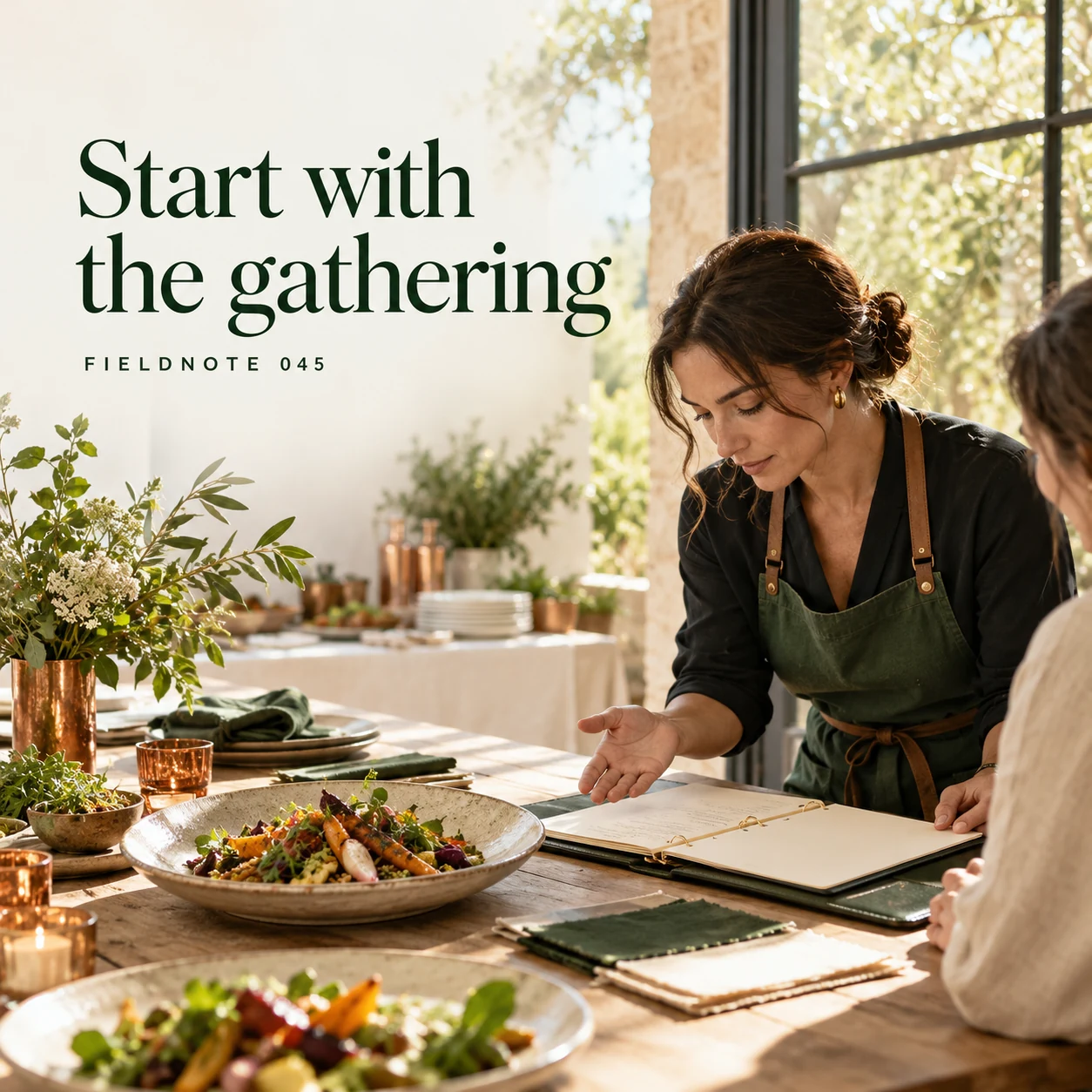
Original AI-generated fictional campaign concept. No real customer or measured result is represented.
Finished example caption — Guest numbers and event format give a catering conversation its shape.
Why use this post — Guest context and format help define the discussion. The fictional place setting is a visual introduction, not evidence that a caterer can serve a particular group.
Make it your own — Use the actual event type, date or date range, location and estimated guest count in a private request. Label estimates and ask which details the caterer needs next.
Image brief to adapt
Generate one complete polished square campaign image, 1080×1080. The exact scene is: organizer discussing closed event folio beside sample plate. Context: a fictional catering prep table with plated vegetable dishes and a blank event folder. The message is “Start with the gathering”; support this finished caption: “Guest numbers and event format give a catering conversation its shape.”. Environmental wide shot with the key subject in the lower right and generous clean upper-left negative space. Art direction: natural editorial photography with tactile materials and honest business detail; palette warm ivory, forest green and copper; refined natural lighting, deliberate depth and texture, commercially credible proportions, clean edges and ample breathing room. Use exactly this headline: “Start with the gathering”. Add the small fictional wordmark “FIELDNOTE 045”. Headline must be immediately readable at a phone size, with high contrast and a safe inset of at least8% from every edge. The scene is the main visual, not a text-only card. No additional text, UI screenshot, testimonial, metrics, sale badge, fake website, QR code or placeholder field. No watermarks or unrelated logos. No dietary, allergy, capacity or availability claims without caterer confirmation. Produce finished actual raster artwork ready to download and inspect; no wireframe, simple geometric substitute or diagram.
2. A menu has a setting
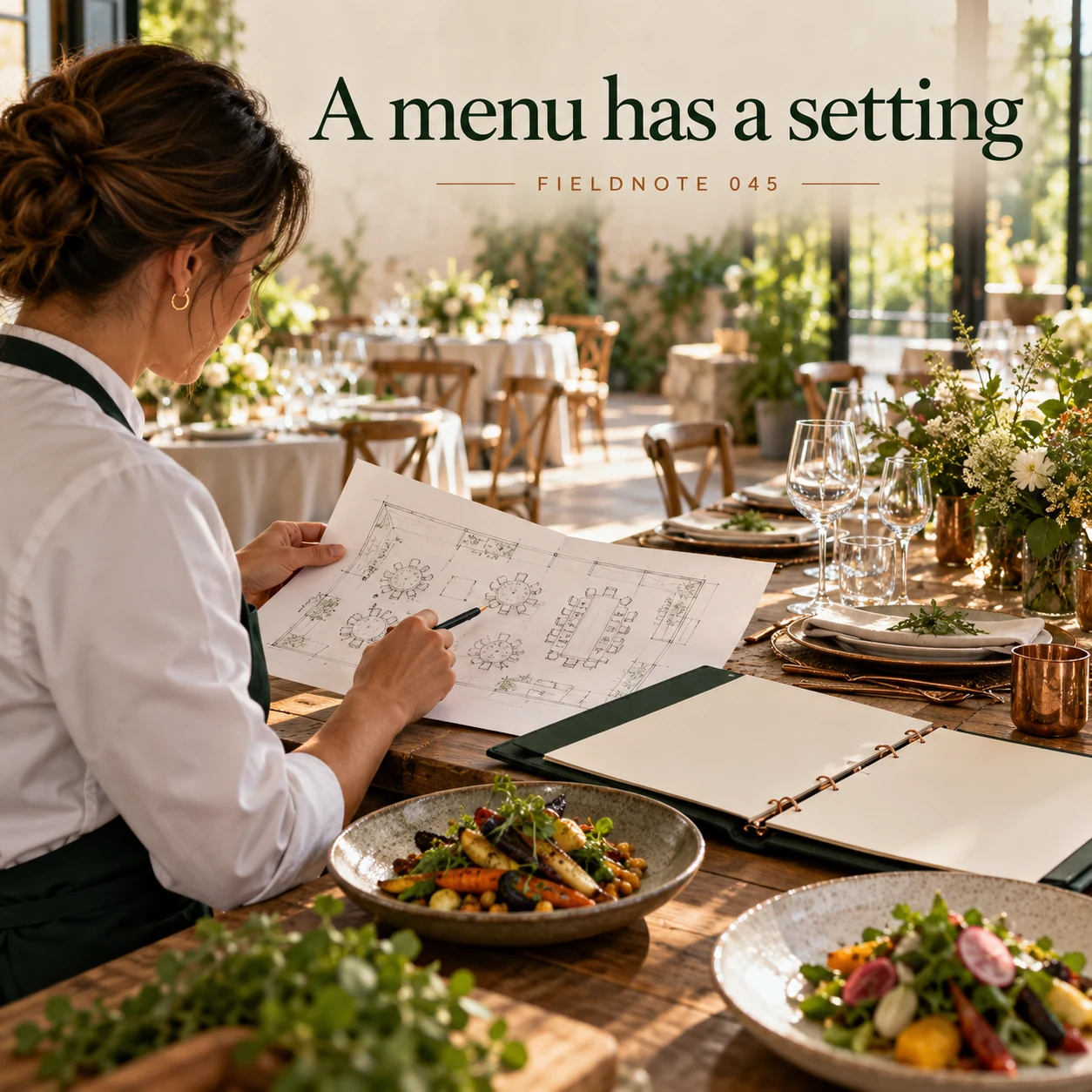
Original AI-generated fictional campaign concept. No real customer or measured result is represented.
Finished example caption — The venue and service style belong beside the food in the brief.
Why use this post — Venue context changes the service questions. A styled table cannot show which equipment, facilities or responsibilities are actually included.
Make it your own — Ask what the proposed service includes: delivery only, arranging the food, staff remaining on site and cleanup. Let the actual provider confirm venue and equipment requirements.
Image brief to adapt
Generate one complete polished square campaign image, 1080×1080. The exact scene is: adult caterer reviewing venue sketch with empty table settings. Context: a fictional catering prep table with plated vegetable dishes and a blank event folder. The message is “A menu has a setting”; support this finished caption: “The venue and service style belong beside the food in the brief.”. Close editorial still life or detail crop showing the relevant physical object and its texture, with the headline in a quiet top band. Art direction: natural editorial photography with tactile materials and honest business detail; palette warm ivory, forest green and copper; refined natural lighting, deliberate depth and texture, commercially credible proportions, clean edges and ample breathing room. Use exactly this headline: “A menu has a setting”. Add the small fictional wordmark “FIELDNOTE 045”. Headline must be immediately readable at a phone size, with high contrast and a safe inset of at least8% from every edge. The scene is the main visual, not a text-only card. No additional text, UI screenshot, testimonial, metrics, sale badge, fake website, QR code or placeholder field. No watermarks or unrelated logos. No dietary, allergy, capacity or availability claims without caterer confirmation. Produce finished actual raster artwork ready to download and inspect; no wireframe, simple geometric substitute or diagram.
3. Give dietary questions a place
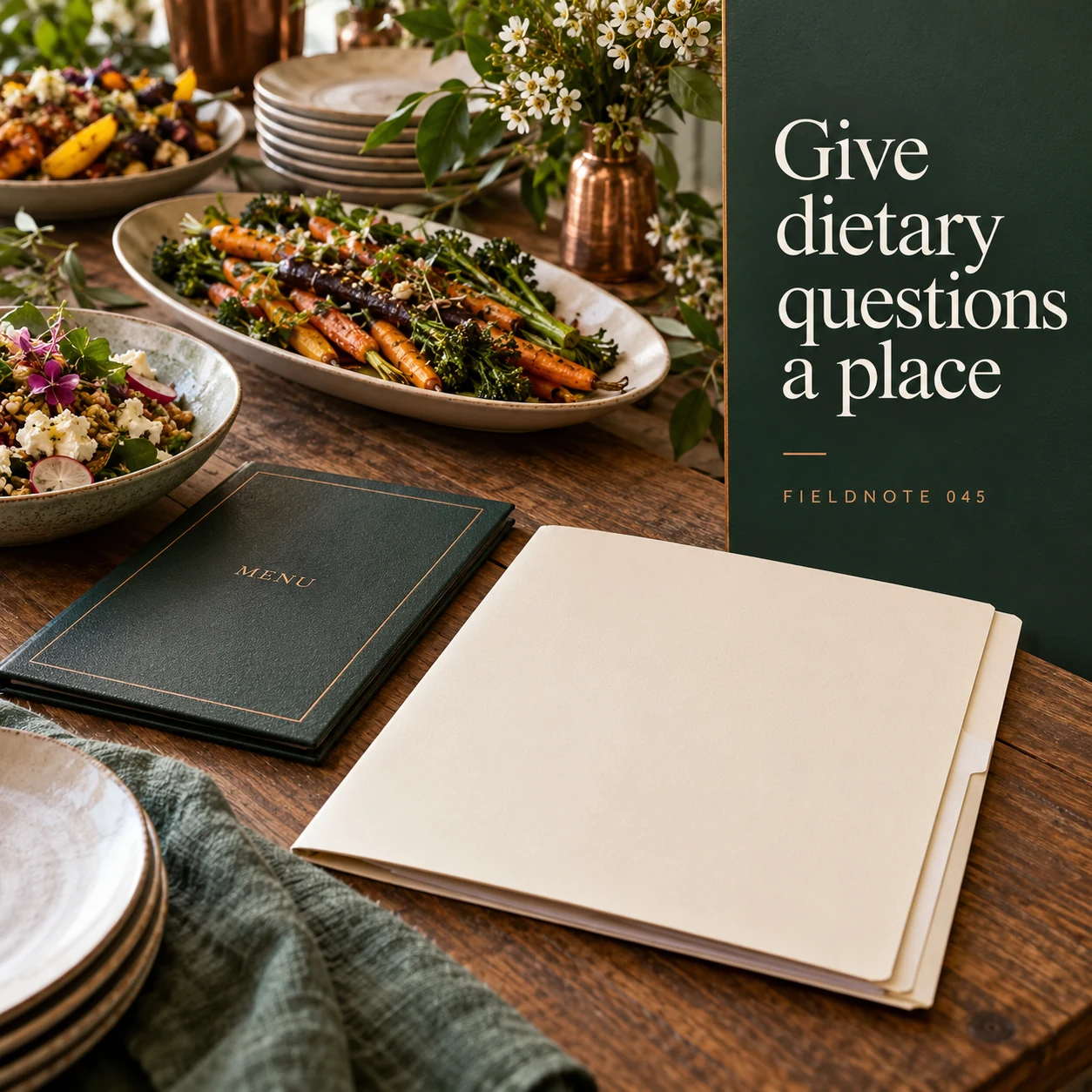
Original AI-generated fictional campaign concept. No real customer or measured result is represented.
Finished example caption — Discuss individual dietary requirements directly with the caterer before confirming.
Why use this post — A separate dietary-question step keeps those needs visible without treating a picture or broad menu label as an accommodation promise.
Make it your own — Ask the caterer how to discuss dietary requirements through its approved route. Do not call an illustrated dish allergen-free or assume a request can be accommodated.
Image brief to adapt
Generate one complete polished square campaign image, 1080×1080. The exact scene is: plain dietary-question folder kept beside closed menu. Context: a fictional catering prep table with plated vegetable dishes and a blank event folder. The message is “Give dietary questions a place”; support this finished caption: “Discuss individual dietary requirements directly with the caterer before confirming.”. Natural eye-level composition with a restrained side panel for type. Preserve the exact stated scene; do not add a person to an object-only scene. If the scene includes people, use adult models and the explicit stated action only. Art direction: natural editorial photography with tactile materials and honest business detail; palette warm ivory, forest green and copper; refined natural lighting, deliberate depth and texture, commercially credible proportions, clean edges and ample breathing room. Use exactly this headline: “Give dietary questions a place”. Add the small fictional wordmark “FIELDNOTE 045”. Headline must be immediately readable at a phone size, with high contrast and a safe inset of at least8% from every edge. The scene is the main visual, not a text-only card. No additional text, UI screenshot, testimonial, metrics, sale badge, fake website, QR code or placeholder field. No watermarks or unrelated logos. No dietary, allergy, capacity or availability claims without caterer confirmation. Produce finished actual raster artwork ready to download and inspect; no wireframe, simple geometric substitute or diagram.
4. Put the plan in one place
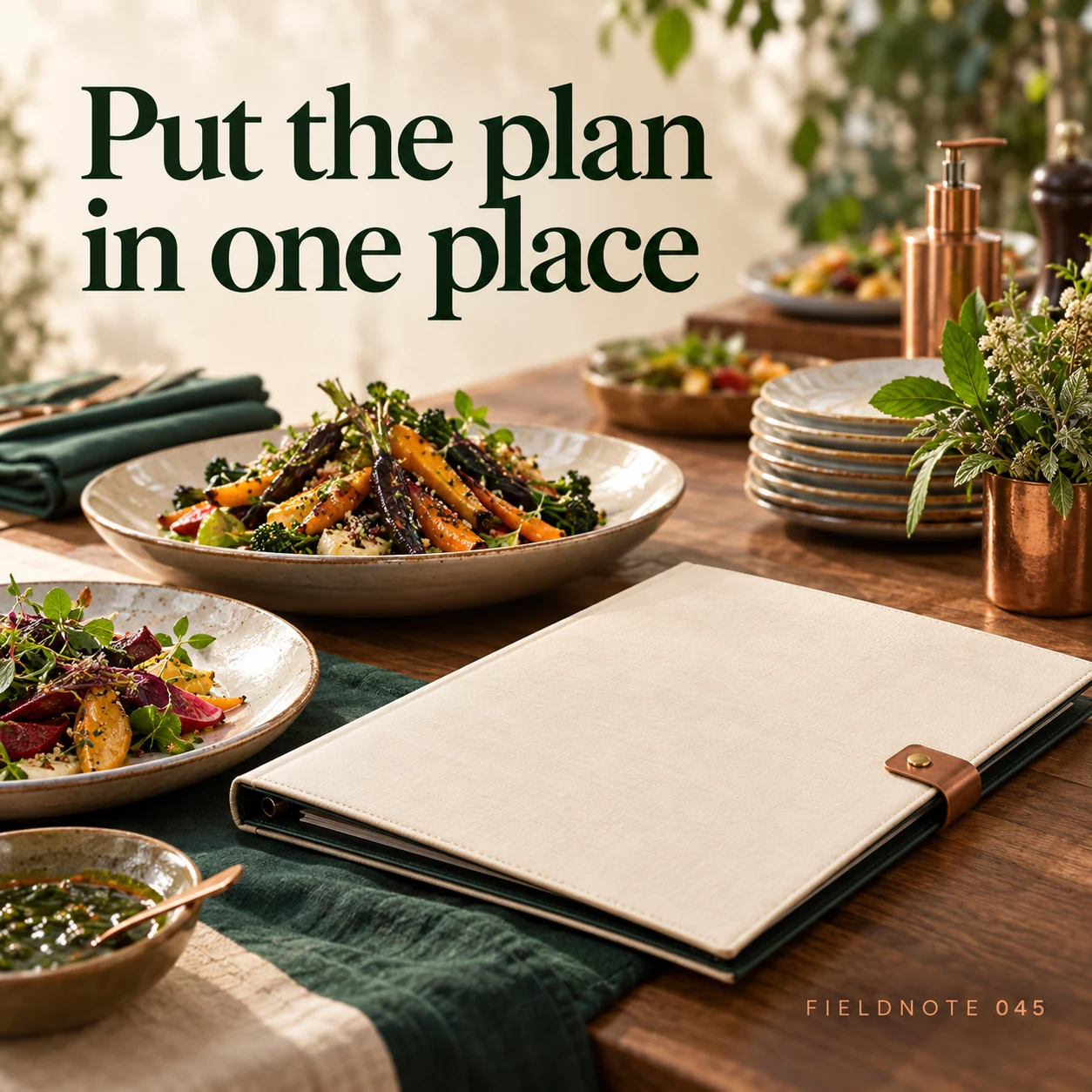
Original AI-generated fictional campaign concept. No real customer or measured result is represented.
Finished example caption — Keep the agreed event details together so the next conversation starts clearly.
Why use this post — One agreed record can distinguish what has been discussed from what has actually been confirmed. The post itself is not a contract or order acceptance.
Make it your own — Record the final scope and responsible contacts through the business's normal process. Keep proposed terms separate from confirmed arrangements and do not post guest lists.
Image brief to adapt
Generate one complete polished square campaign image, 1080×1080. The exact scene is: agreed-event folio beside original catering setup sample. Context: a fictional catering prep table with plated vegetable dishes and a blank event folder. The message is “Put the plan in one place”; support this finished caption: “Keep the agreed event details together so the next conversation starts clearly.”. Confident final hero composition using a clear foreground subject and supporting background context; close the sequence with a purposeful visual invitation. Art direction: natural editorial photography with tactile materials and honest business detail; palette warm ivory, forest green and copper; refined natural lighting, deliberate depth and texture, commercially credible proportions, clean edges and ample breathing room. Use exactly this headline: “Put the plan in one place”. Add the small fictional wordmark “FIELDNOTE 045”. Headline must be immediately readable at a phone size, with high contrast and a safe inset of at least8% from every edge. The scene is the main visual, not a text-only card. No additional text, UI screenshot, testimonial, metrics, sale badge, fake website, QR code or placeholder field. No watermarks or unrelated logos. No dietary, allergy, capacity or availability claims without caterer confirmation. Produce finished actual raster artwork ready to download and inspect; no wireframe, simple geometric substitute or diagram.
Put it into practice
Apply the workflow to one actual business image
Read this fictional completed enquiry: “We are planning an adult team lunch for approximately 24 people in a meeting room at the invented Fieldnote Hall. The date and menu are not confirmed. We want to discuss a buffet-style meal and need to know whether your proposal includes delivery, table setup, staff during lunch and cleanup. We can provide venue details privately. Please tell us how to raise dietary requirements and who confirms the final headcount and scope.” No booking, accommodation, capacity or price is promised. Pair it with example two. Ask the catering reviewer to mark what is known, estimated and still open before using the structure for a real enquiry.
Common questions
Which event facts should the caterer receive?
Describe the event type, proposed date or range, venue and estimated headcount through the approved private route. Ask separately about delivery, setup, on-site service and cleanup. The actual caterer determines which further information is needed.
Who verifies dietary requirements?
Discuss them directly through the caterer's approved process before confirming an order. This creative guide cannot establish ingredients, preparation conditions or whether a requirement can be accommodated. A styled dish is not evidence.
Can a styled table imply actual capacity?
No. The images are fictional concepts. Only the actual provider can confirm available service scope, staffing, equipment and capacity for the particular event.
Turn the brief into your own creative
Use the example as a starting point. Supply approved business facts and authorized references in Studio, then compare the finished image with the brief before using it.
Your starter brief
Replace the brackets with your own details.
Generate one complete polished square campaign image, 1080×1080. The exact scene is: organizer discussing closed event folio beside sample plate. Context: a fictional catering prep table with plated vegetable dishes and a blank event folder. The message is “Start with the gathering”; support this finished caption: “Guest numbers and event format give a catering conversation its shape.”. Environmental wide shot with the key subject in the lower right and generous clean upper-left negative space. Art direction: natural editorial photography with tactile materials and honest business detail; palette warm ivory, forest green and copper; refined natural lighting, deliberate depth and texture, commercially credible proportions, clean edges and ample breathing room. Use exactly this headline: “Start with the gathering”. Add the small fictional wordmark “FIELDNOTE 045”. Headline must be immediately readable at a phone size, with high contrast and a safe inset of at least8% from every edge. The scene is the main visual, not a text-only card. No additional text, UI screenshot, testimonial, metrics, sale badge, fake website, QR code or placeholder field. No watermarks or unrelated logos. No dietary, allergy, capacity or availability claims without caterer confirmation. Produce finished actual raster artwork ready to download and inspect; no wireframe, simple geometric substitute or diagram.
Copy your adapted brief, open Studio, and paste it into your creative workflow. Review the result before using it.
Create your version in Studio