
Social media
6 Instagram Story Ideas With Simple Sequences
By Memes.ai
Updated September 6, 2026 · 4 min read
A Story sequence can answer a quick question, show a process, or invite a small response. Give each frame one job and make the sequence understandable without sound. These six ideas provide a beginning, a useful middle, and a relevant next step.
What you’ll take away
- Plan the sequence before choosing stickers or effects.
- Keep essential text readable in the placement preview.
- Make the response or destination match the story.
1. The three-frame process
The idea — Frame one shows ingredients or materials, frame two shows the action, and frame three shows the finished item.
Why it helps — A short sequence gives viewers enough context to follow the work.
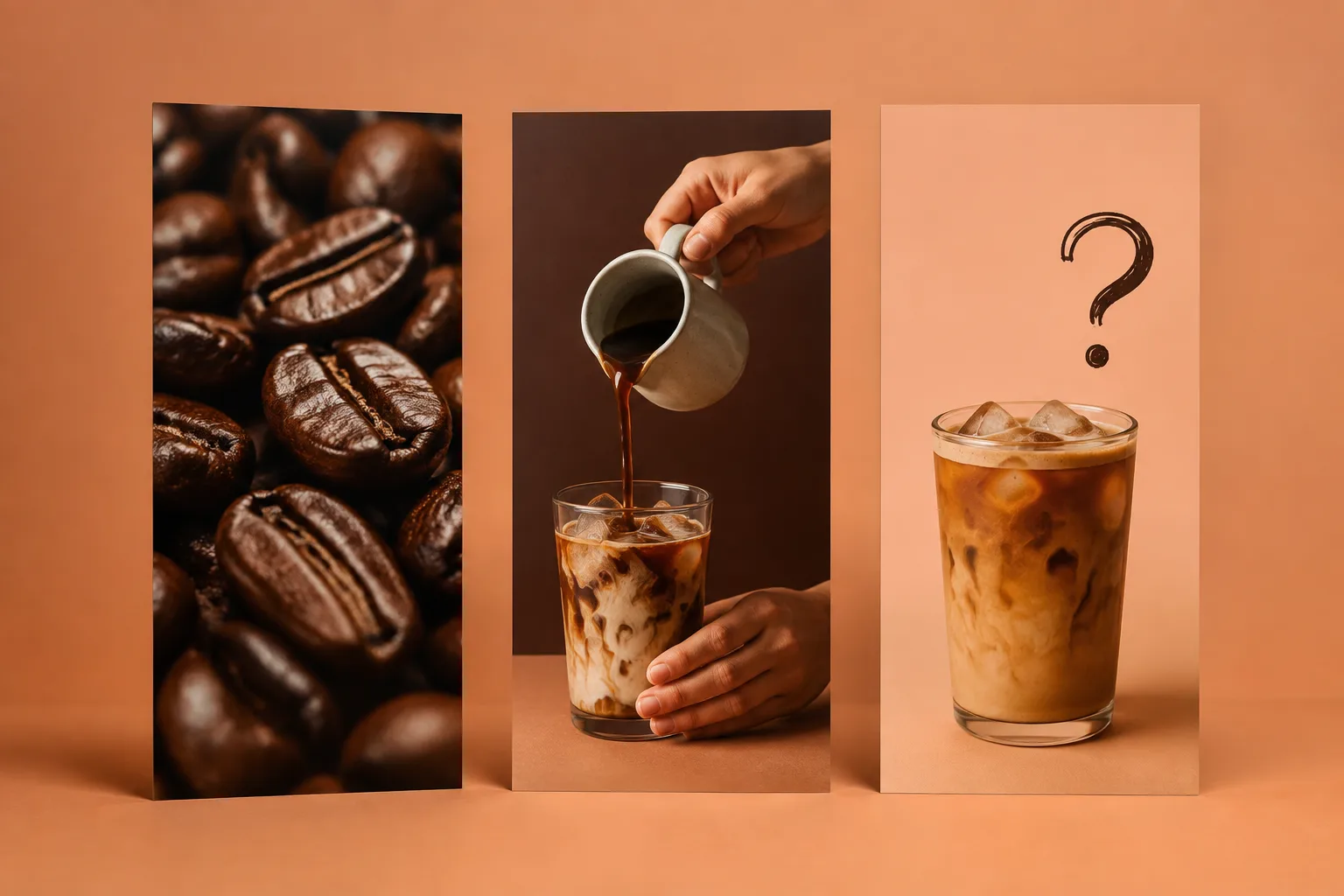
Make it your own — For coffee, show the beans, pour, and drink. Add a concise explanation that still works with sound off.
2. The bounded preference question
The idea — Introduce two actual options, show the difference, and ask which the viewer prefers.
Why it helps — A narrow choice is easier to respond to than an open-ended request.
Make it your own — Use options that exist or are genuinely under consideration. Share what you learned afterward.
3. The question and answer
The idea — Display one customer question, answer it visibly, and offer the next relevant detail.
Why it helps — The sequence gives a clear payoff to the first frame.
Make it your own — Use a question you can answer accurately. Keep a complete answer in the Story rather than only teasing a link.
4. The quick product tour
The idea — Show the outside, one useful detail, and the product in context.
Why it helps — The viewer can understand the item without a full catalog presentation.
Make it your own — Keep the same actual product across frames. Use a destination that matches the model shown.
5. The day-of reminder
The idea — State the real event or availability, explain what to expect, and show how to participate.
Why it helps — A timely reminder is useful when people can act on it.
Make it your own — Verify the date, location, capacity, and link. Avoid leaving outdated instructions in a permanent collection.
6. The tiny tutorial
The idea — Show a task, demonstrate the key step, and recap the result.
Why it helps — A small completed lesson can be more useful than a broad inspirational quote.
Make it your own — Choose a step that can be seen clearly in a few frames. Add the important instruction as text.
Put it into practice
Build a coffee sequence
Frame one: show two beans and name the actual options. Frame two: show one being prepared with a short flavor description you can support. Frame three: ask which option the viewer wants to learn about, or link to the current menu. Keep the question connected to the demonstration instead of asking for an unrelated engagement action.
Common questions
How should I adapt these examples?
Keep the structure, then replace the fictional details with your own audience, accurate offer, and real next step. The image and destination should tell the same story.
How do I decide whether the content worked?
Choose the intended action before publishing, then review relevant responses and downstream behavior. Views alone do not establish that a business goal was achieved.
Turn the brief into your own creative
Use the reusable brief with your actual product or service to develop an original creative concept.
Your starter brief
Replace the brackets with your own details.
Write a three-frame Instagram Story for [business] about [question or process]. Include a context frame, a useful demonstration, and one relevant response or destination. Give short on-screen text and a visual brief for each. Use these current facts: [facts].