Ad creative
Product Scale Images: Help People Understand Size
By Memes.ai
Updated October 16, 2026 · 4 min read
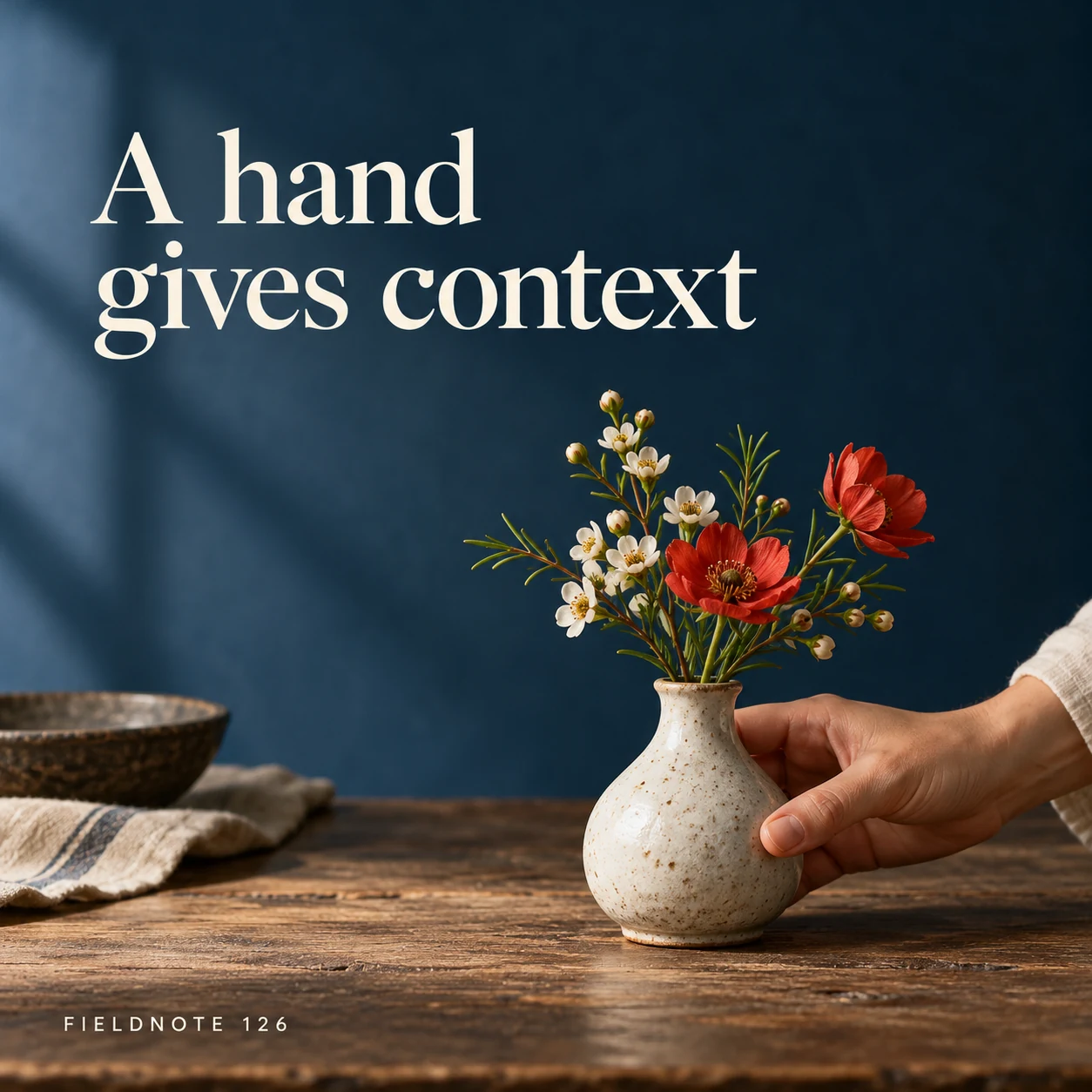
A product can look large in an empty frame and small in a wide room. Plan the scale cue before making the social image. The four examples use a fictional ceramic vase to show a hand reference, a room view, a level comparison and the place where confirmed measurements belong. They are illustrations of a shot plan. Use actual product photographs and verified dimensions when a customer is deciding whether the real item fits. A generated hand, ruler or room is not measurement evidence.
What you’ll take away
- Choose a familiar reference and an honest viewpoint for the actual object.
- Keep context separate from measurement: a hand helps explain a view, while a verified dimension supplies precision.
- Send readers to the same product and size shown in the post.
1. A hand gives context
Original AI-generated fictional campaign concept. No real customer or measured result is represented.
Finished example caption — A familiar hand can help someone picture the vase without replacing its dimensions.
Why use this post — A hand supplies a familiar visual relationship. It can make the composition understandable, but hands vary in size and a generated view cannot certify the object.
Make it your own — Use your actual item with an authorized person or permitted reference. Keep the verified dimensions in the product information; do not infer them from a generated hand.
Image brief to adapt
Generate one complete polished square campaign image, 1080×1080. The exact scene is: adult hand gently holding a small ceramic vase. Context: a fictional small ceramic vase with table, adult hand and original flowers. The message is “A hand gives context”; support this finished caption: “A familiar hand can help someone picture the vase without replacing its dimensions.”. Environmental wide shot with the key subject in the lower right and generous clean upper-left negative space. Art direction: art-directed studio campaign photography with strong shape, disciplined typography and useful visual hierarchy; palette ink blue, cream and vermilion; refined natural lighting, deliberate depth and texture, commercially credible proportions, clean edges and ample breathing room. Use exactly this headline: “A hand gives context”. Add the small fictional wordmark “FIELDNOTE 126”. Headline must be immediately readable at a phone size, with high contrast and a safe inset of at least8% from every edge. The scene is the main visual, not a text-only card. No additional text, UI screenshot, testimonial, metrics, sale badge, fake website, QR code or placeholder field. No watermarks or unrelated logos. Use real dimensions only when supplied; no misleading scale. Produce finished actual raster artwork ready to download and inspect; no wireframe, simple geometric substitute or diagram.
2. Show it in the room
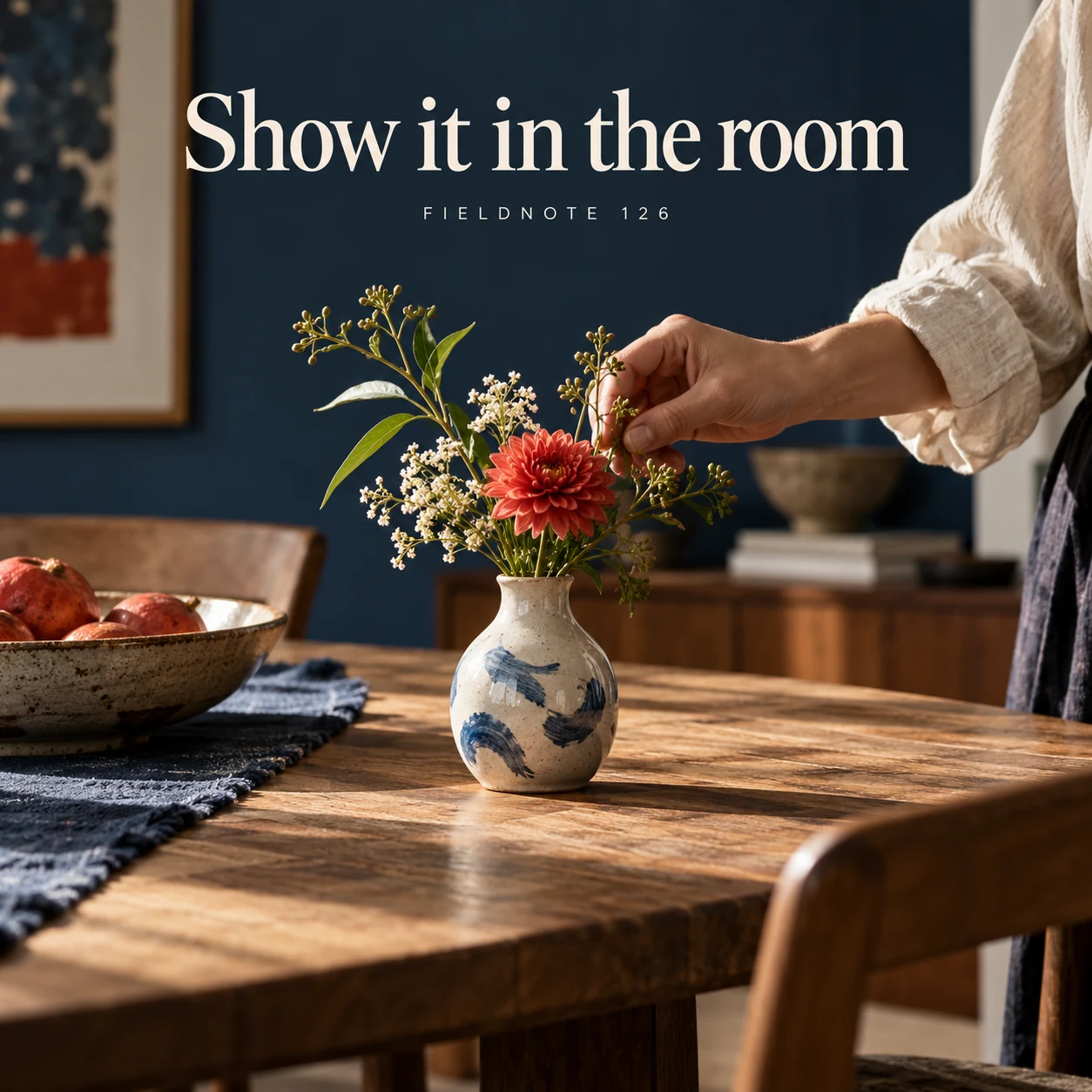
Original AI-generated fictional campaign concept. No real customer or measured result is represented.
Finished example caption — The surrounding space gives the object a different kind of scale reference.
Why use this post — A room view shows where the object sits in a scene. It answers a context question that a tight crop leaves open.
Make it your own — Show a real feasible setting or clearly label the room as a concept. Do not change the item's scale to make the room more attractive.
Image brief to adapt
Generate one complete polished square campaign image, 1080×1080. The exact scene is: small vase on a wide dining table. Context: a fictional small ceramic vase with table, adult hand and original flowers. The message is “Show it in the room”; support this finished caption: “The surrounding space gives the object a different kind of scale reference.”. Close editorial still life or detail crop showing the relevant physical object and its texture, with the headline in a quiet top band. Art direction: art-directed studio campaign photography with strong shape, disciplined typography and useful visual hierarchy; palette ink blue, cream and vermilion; refined natural lighting, deliberate depth and texture, commercially credible proportions, clean edges and ample breathing room. Use exactly this headline: “Show it in the room”. Add the small fictional wordmark “FIELDNOTE 126”. Headline must be immediately readable at a phone size, with high contrast and a safe inset of at least8% from every edge. The scene is the main visual, not a text-only card. No additional text, UI screenshot, testimonial, metrics, sale badge, fake website, QR code or placeholder field. No watermarks or unrelated logos. Use real dimensions only when supplied; no misleading scale. Produce finished actual raster artwork ready to download and inspect; no wireframe, simple geometric substitute or diagram.
3. Keep the angle honest
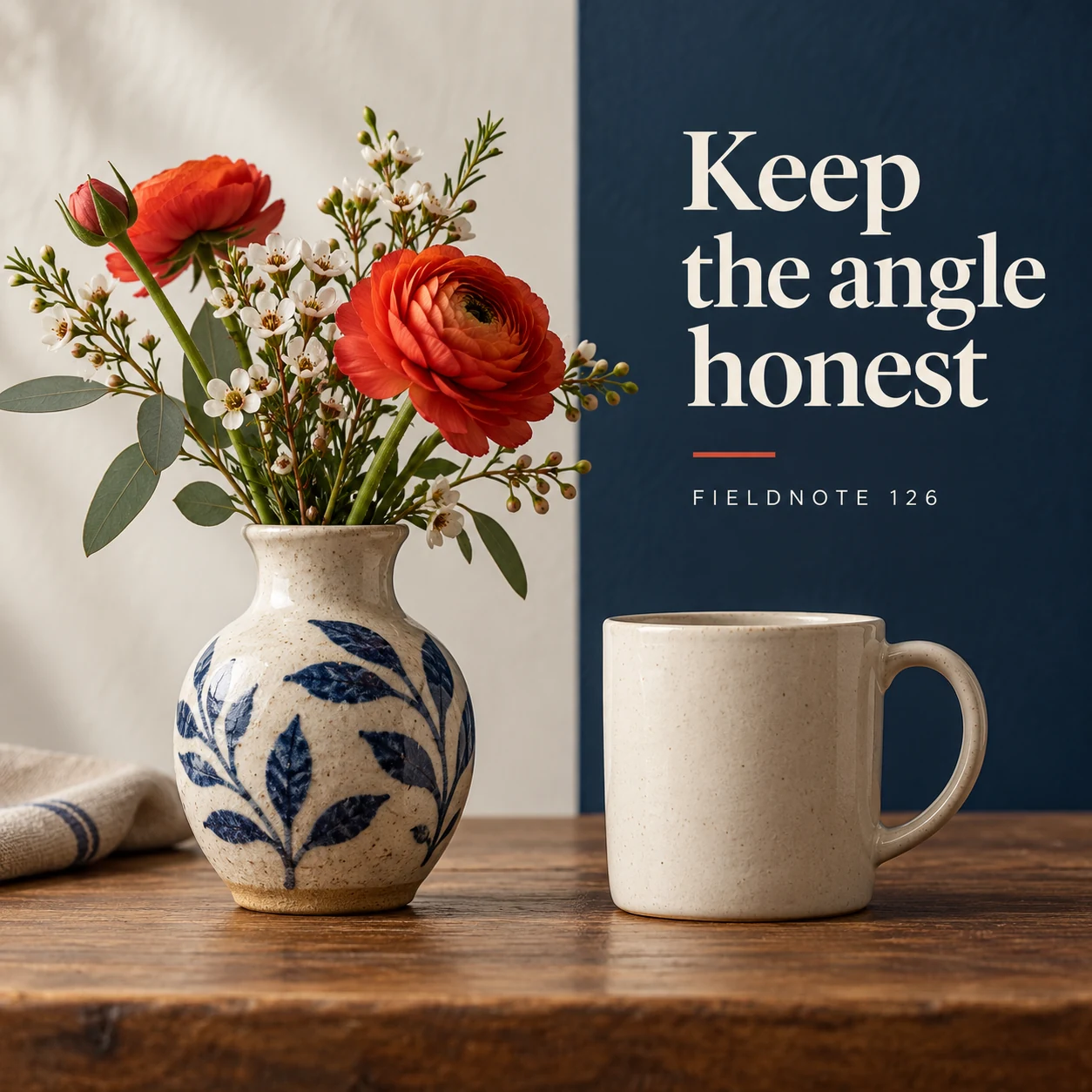
Original AI-generated fictional campaign concept. No real customer or measured result is represented.
Finished example caption — A level view can show proportion without making the object look unusually large.
Why use this post — A level viewpoint reduces the temptation to use a dramatic angle that changes perceived proportion. The actual product should remain comparable with its other views.
Make it your own — Compare the export with the original product photograph. Correct perspective that makes the item appear larger or smaller than intended.
Image brief to adapt
Generate one complete polished square campaign image, 1080×1080. The exact scene is: vase photographed straight on beside a plain mug. Context: a fictional small ceramic vase with table, adult hand and original flowers. The message is “Keep the angle honest”; support this finished caption: “A level view can show proportion without making the object look unusually large.”. Natural eye-level composition with a restrained side panel for type. Preserve the exact stated scene; do not add a person to an object-only scene. If the scene includes people, use adult models and the explicit stated action only. Art direction: art-directed studio campaign photography with strong shape, disciplined typography and useful visual hierarchy; palette ink blue, cream and vermilion; refined natural lighting, deliberate depth and texture, commercially credible proportions, clean edges and ample breathing room. Use exactly this headline: “Keep the angle honest”. Add the small fictional wordmark “FIELDNOTE 126”. Headline must be immediately readable at a phone size, with high contrast and a safe inset of at least8% from every edge. The scene is the main visual, not a text-only card. No additional text, UI screenshot, testimonial, metrics, sale badge, fake website, QR code or placeholder field. No watermarks or unrelated logos. Use real dimensions only when supplied; no misleading scale. Produce finished actual raster artwork ready to download and inspect; no wireframe, simple geometric substitute or diagram.
4. Put the facts nearby
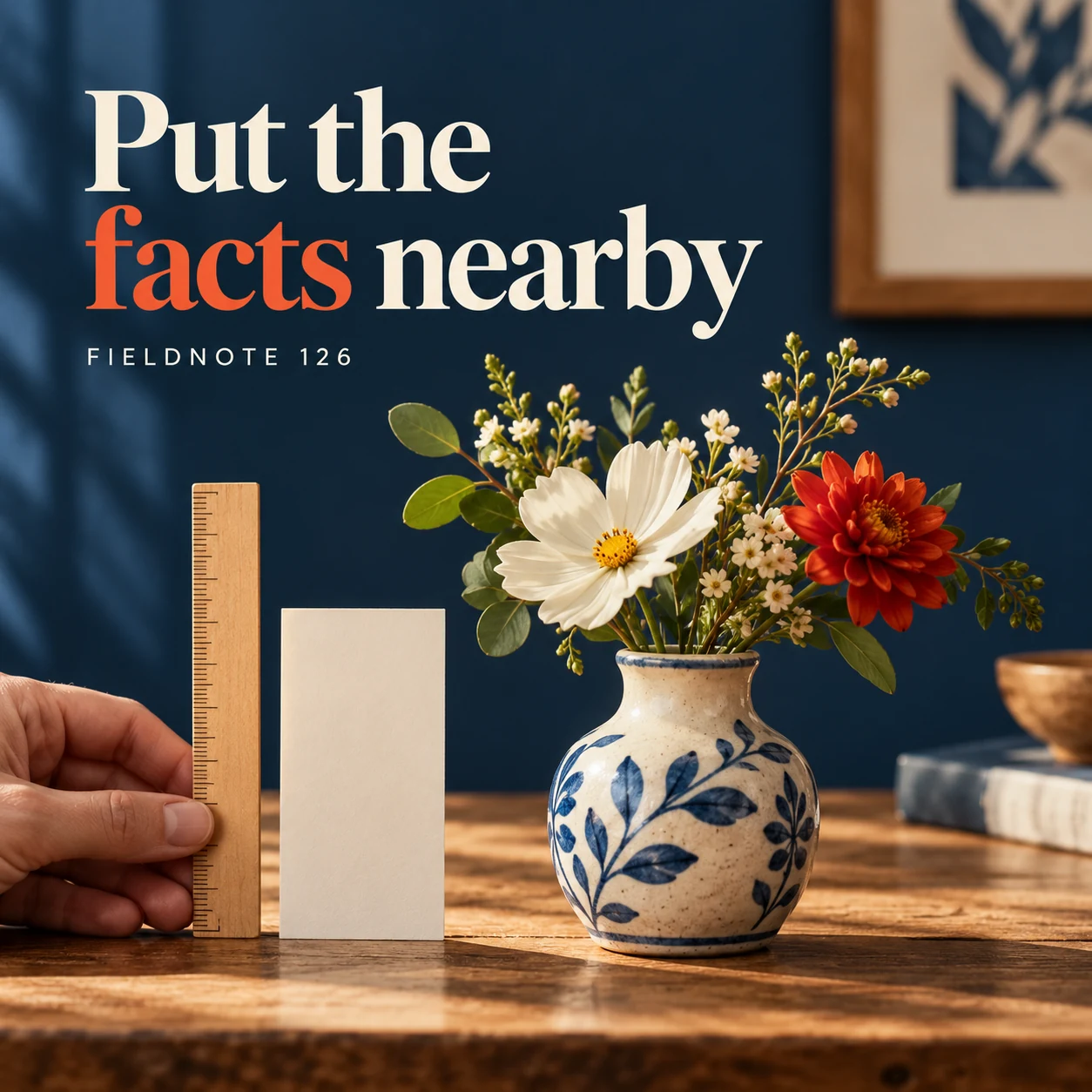
Original AI-generated fictional campaign concept. No real customer or measured result is represented.
Finished example caption — Confirmed dimensions belong with the product information when a buyer needs precision.
Why use this post — The post can invite the reader to the confirmed dimensions rather than filling the image with invented ruler values. That keeps the source of precision visible.
Make it your own — Add only supplied verified dimensions to the real product page or approved caption. The fictional example deliberately supplies no numeric measurement.
Image brief to adapt
Generate one complete polished square campaign image, 1080×1080. The exact scene is: vase beside an unnumbered measurement card and ruler. Context: a fictional small ceramic vase with table, adult hand and original flowers. The message is “Put the facts nearby”; support this finished caption: “Confirmed dimensions belong with the product information when a buyer needs precision.”. Confident final hero composition using a clear foreground subject and supporting background context; close the sequence with a purposeful visual invitation. Art direction: art-directed studio campaign photography with strong shape, disciplined typography and useful visual hierarchy; palette ink blue, cream and vermilion; refined natural lighting, deliberate depth and texture, commercially credible proportions, clean edges and ample breathing room. Use exactly this headline: “Put the facts nearby”. Add the small fictional wordmark “FIELDNOTE 126”. Headline must be immediately readable at a phone size, with high contrast and a safe inset of at least8% from every edge. The scene is the main visual, not a text-only card. No additional text, UI screenshot, testimonial, metrics, sale badge, fake website, QR code or placeholder field. No watermarks or unrelated logos. Use real dimensions only when supplied; no misleading scale. Produce finished actual raster artwork ready to download and inspect; no wireframe, simple geometric substitute or diagram.
Put it into practice
Build a useful four-image scale brief
Select one actual item and write the size question a shopper asks. Record the verified dimensions and the exact model. Plan a familiar-reference shot and a room-context shot, then capture the real object or use an authorized reference. Place the two views side by side and check whether perspective changes the apparent size. Make the matching product destination easy to find. If you use Studio for a conceptual background, compare the product against the source and reject a result that alters proportions.
Common questions
Does a hand or ruler in an AI image prove size?
No. Treat it as an illustrative composition only. Use a measured real object and verified dimensions for claims about the product's size.
Should I show two size options?
Only when both options and their dimensions are real and confirmed. Match the angle and context so one option is not made to look different through perspective alone.
How is this different from a lifestyle image?
A lifestyle view supplies a use setting. A scale image has a specific size question to answer. It should connect its visual reference with the confirmed product information.
Turn the brief into your own creative
Choose the example that answers your customer's question. Copy the brief into Studio, supply your own approved facts and authorized references, and review the resulting image before using it.
Your starter brief
Replace the brackets with your own details.
Generate one complete polished square campaign image, 1080×1080. The exact scene is: adult hand gently holding a small ceramic vase. Context: a fictional small ceramic vase with table, adult hand and original flowers. The message is “A hand gives context”; support this finished caption: “A familiar hand can help someone picture the vase without replacing its dimensions.”. Environmental wide shot with the key subject in the lower right and generous clean upper-left negative space. Art direction: art-directed studio campaign photography with strong shape, disciplined typography and useful visual hierarchy; palette ink blue, cream and vermilion; refined natural lighting, deliberate depth and texture, commercially credible proportions, clean edges and ample breathing room. Use exactly this headline: “A hand gives context”. Add the small fictional wordmark “FIELDNOTE 126”. Headline must be immediately readable at a phone size, with high contrast and a safe inset of at least8% from every edge. The scene is the main visual, not a text-only card. No additional text, UI screenshot, testimonial, metrics, sale badge, fake website, QR code or placeholder field. No watermarks or unrelated logos. Use real dimensions only when supplied; no misleading scale. Produce finished actual raster artwork ready to download and inspect; no wireframe, simple geometric substitute or diagram.
Copy your adapted brief, open Studio, and paste it into your creative workflow. Review the result before using it.
Create your version in Studio