
Industry playbooks
8 Ecommerce Ad Ideas That Show Why the Product Matters
By Memes.ai
Updated September 6, 2026 · 4 min read

An ecommerce ad should help a shopper understand what the product is, where it fits, and what to do next. These eight original concepts focus on product evidence and purchase questions. Use your real product imagery for demonstrations and treat generated scenes as concepts, not proof.
What you’ll take away
- Show a use case before listing every feature.
- Answer one purchase uncertainty per creative.
- Keep the product and offer consistent after the click.
1. The capacity demonstration
The idea — Show the items that fit inside a bag, case, or organizer.
Why it helps — A shopper can compare the product with their own daily needs.
Make it your own — Use real items with stated dimensions. Keep the packing process visible and avoid generated capacity evidence.
2. The close-up detail
The idea — Focus on a clasp, texture, pocket, or adjustment mechanism.
Why it helps — A detail shot can answer a question a catalog overview leaves open.
Make it your own — Show the exact model and material. Explain why the detail matters in use.
3. The size comparison
The idea — Place two sizes in the same setting with a familiar scale reference.
Why it helps — Scale is easier to judge when the comparison is consistent.
Make it your own — Use matching angles and disclose dimensions. Do not distort one option to make another look preferable.
4. The routine scene
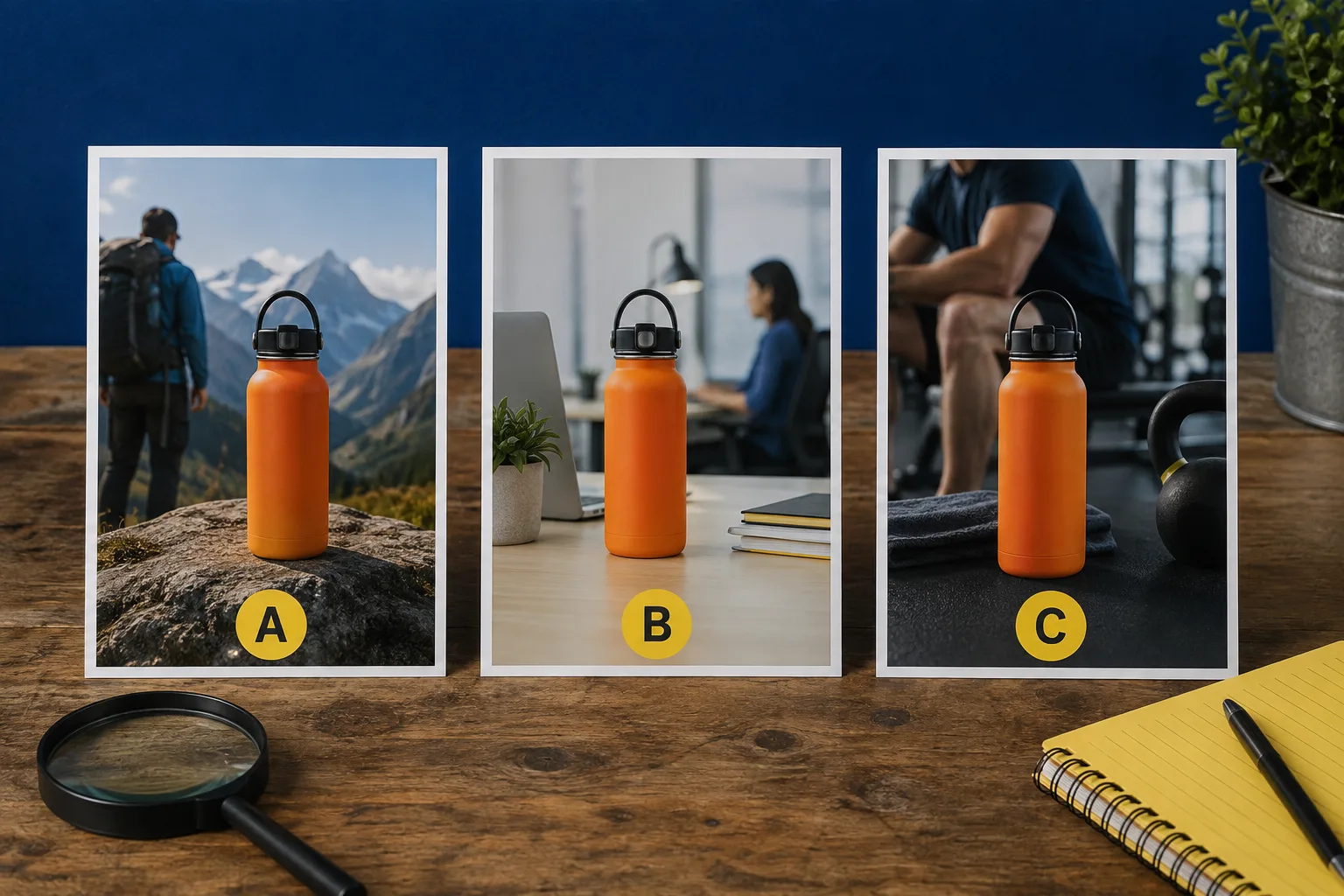
The idea — Place the product at the moment it is used, such as a lamp beside an evening book.
Why it helps — Context helps shoppers imagine an ordinary role for the item.
Make it your own — Keep the scene feasible and the actual product recognizable. Label conceptual imagery when it is not a real photograph.
5. The included-items layout
The idea — Arrange the complete package contents on a plain surface.
Why it helps — The shopper can distinguish the main item from accessories.
Make it your own — Show exactly what ships now. Mark optional extras separately.
6. The care tutorial
The idea — Demonstrate a maintenance step that protects the product.
Why it helps — Useful care information supports a more informed purchase.
Make it your own — Follow the actual care instructions and avoid showing methods that could damage the item.
7. The objection response
The idea — Address a recurring question such as assembly, storage, or compatibility.
Why it helps — One clear answer may be more relevant than a broad brand promise.
Make it your own — Choose a question from real support conversations and link to the complete specification.
8. The complementary bundle
The idea — Show items used together for one task.
Why it helps — The bundle has a purpose beyond putting several products in one frame.
Make it your own — Explain what is included and why. State savings only when the price comparison is current and accurate.
Put it into practice
Make a product evidence list
For one item, write the three questions a shopper must answer before buying. Next to each, list the photo or demonstration that would answer it. For a backpack: fit a laptop, reach small items, and judge size on a person. These become three separate creative briefs with the same product destination.
Common questions
How do I choose which idea to start with?
Start with the question customers ask most often and the evidence you can show accurately. A useful answer is a stronger starting point than a format you cannot maintain.
Can I use the illustrated example as an actual product or service photo?
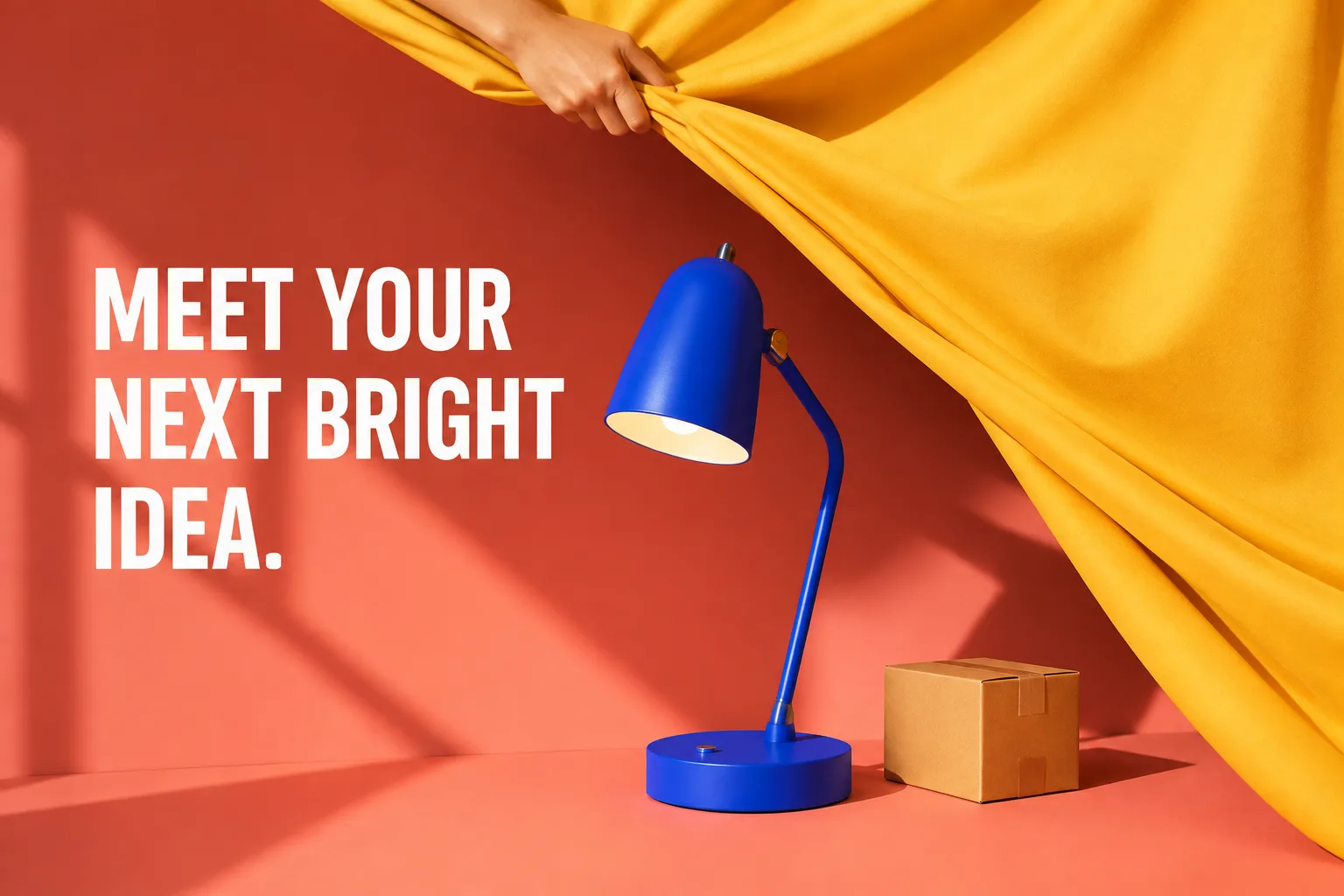
The artwork is a fictional concept. Use accurate photos and verified details when representing a real property, facility, product, or customer experience.
Turn the brief into your own creative
Use the guide’s brief and your actual business details to develop an original visual and a clear next step.
Your starter brief
Replace the brackets with your own details.
Create three ecommerce ad briefs for [product] answering [three purchase questions]. Verified specifications: [facts]. For each include a shot list, short headline, supporting copy, CTA, and what must be demonstrated with real product footage.