
Ad creative
Meme Ads vs Product Ads: Side by Side Creative Examples
By Memes.ai
Updated October 6, 2026 · 5 min read
A useful social post starts with a specific situation your reader recognizes. This guide gives you 8 worked examples and practical steps, plus image references and instructions for making each one your own. Start with “pair one: a product choice,” then choose a second idea that serves a different purpose. Use the reference image for inspiration, or copy its brief into Studio to create a version with your business details.
What you’ll take away
- Choose one useful information post, one everyday moment, and one introduction from the examples.
- Pair the caption with the actual subject it describes, using an authorized photograph or an explicitly illustrative creative.
- Change one idea at a time and use actual replies, visits, or enquiries to decide which direction to develop.
1. Pair one: a product choice
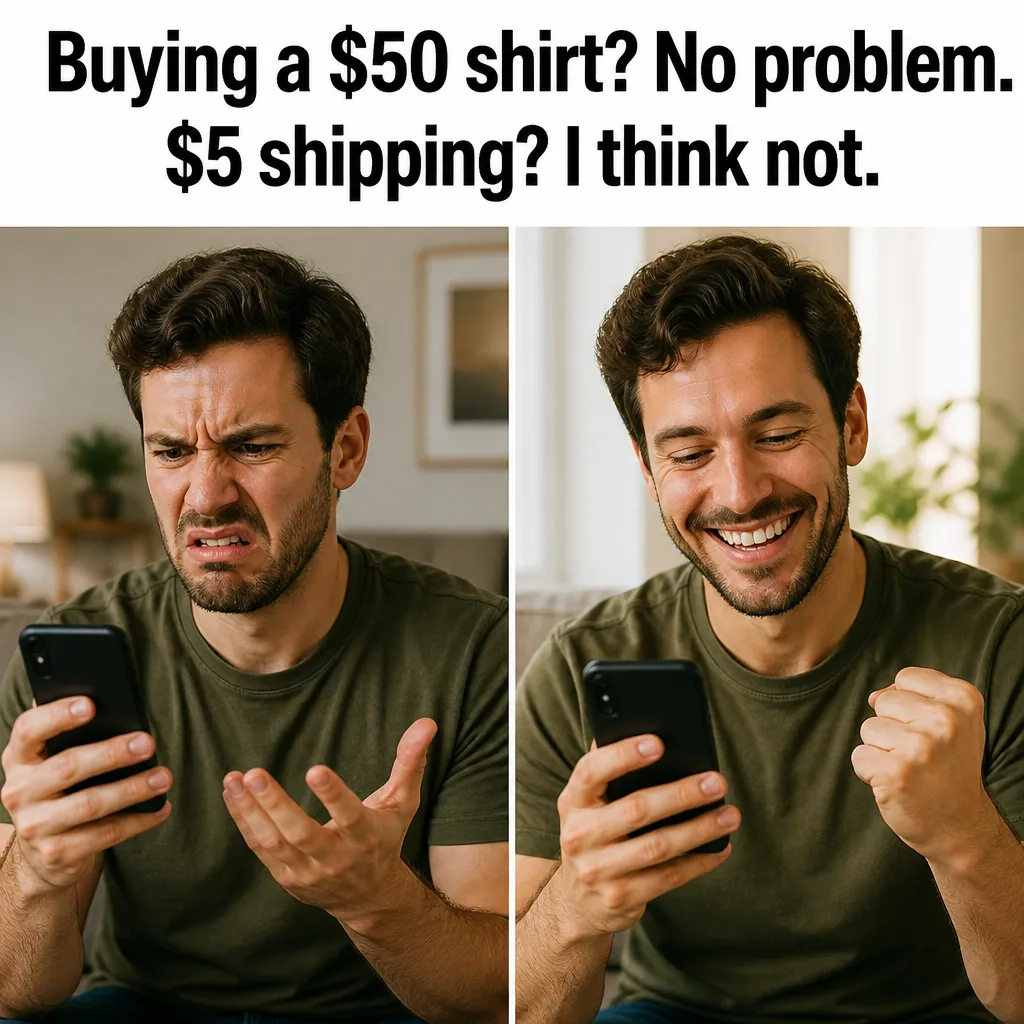
Visual reference: The Shipping Paradox. The caption and brief below are an adaptation; replace any business details with your own.
Worked example — Meme caption: I narrowed it down. To the entire shelf. Product caption: Compare [actual product A] and [actual product B] using these verified details: [facts].
Why it helps — Both captions address a shopper comparing options. The meme opens with recognition; the product version leads with information.
Make it your own — Hold the audience and actual products constant. Use the same accurate visual reference when comparing the two drafts.
Image brief to adapt
Create an original illustrative social image for your business. Concept: Pair one: a product choice. Visual direction: Both captions address a shopper comparing options. The meme opens with recognition; the product version leads with information.. Adaptation: Hold the audience and actual products constant. Use the same accurate visual reference when comparing the two drafts. Use fictional scenes unless I supply authorized photographs. Keep all product, service, and business details exactly as supplied. Use [brand colors] and leave room for [business name]. Return one version with clear, short text.
2. Pair one: what changes
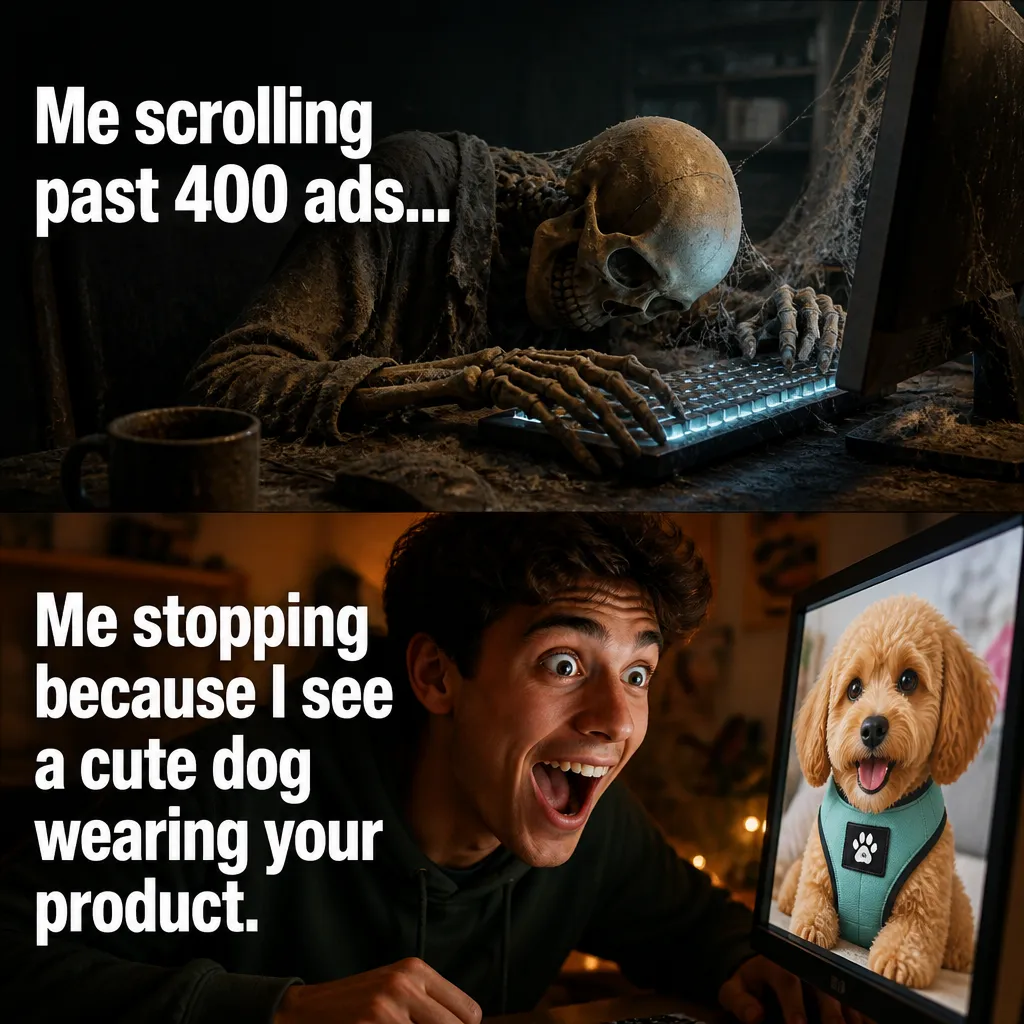
Visual reference: The Infinite Scroll. The caption and brief below are an adaptation; replace any business details with your own.
Worked example — The meme version asks which item makes the shortlist. The product version directs the reader to the actual specifications.
Why it helps — The useful comparison is the job each creative does, not a prediction that one style wins.
Make it your own — Choose the version that supplies information your reader needs at that stage.
Image brief to adapt
Create an original illustrative social image for your business. Concept: Pair one: what changes. Visual direction: The useful comparison is the job each creative does, not a prediction that one style wins.. Adaptation: Choose the version that supplies information your reader needs at that stage. Use fictional scenes unless I supply authorized photographs. Keep all product, service, and business details exactly as supplied. Use [brand colors] and leave room for [business name]. Return one version with clear, short text.
3. Pair two: an unboxing moment
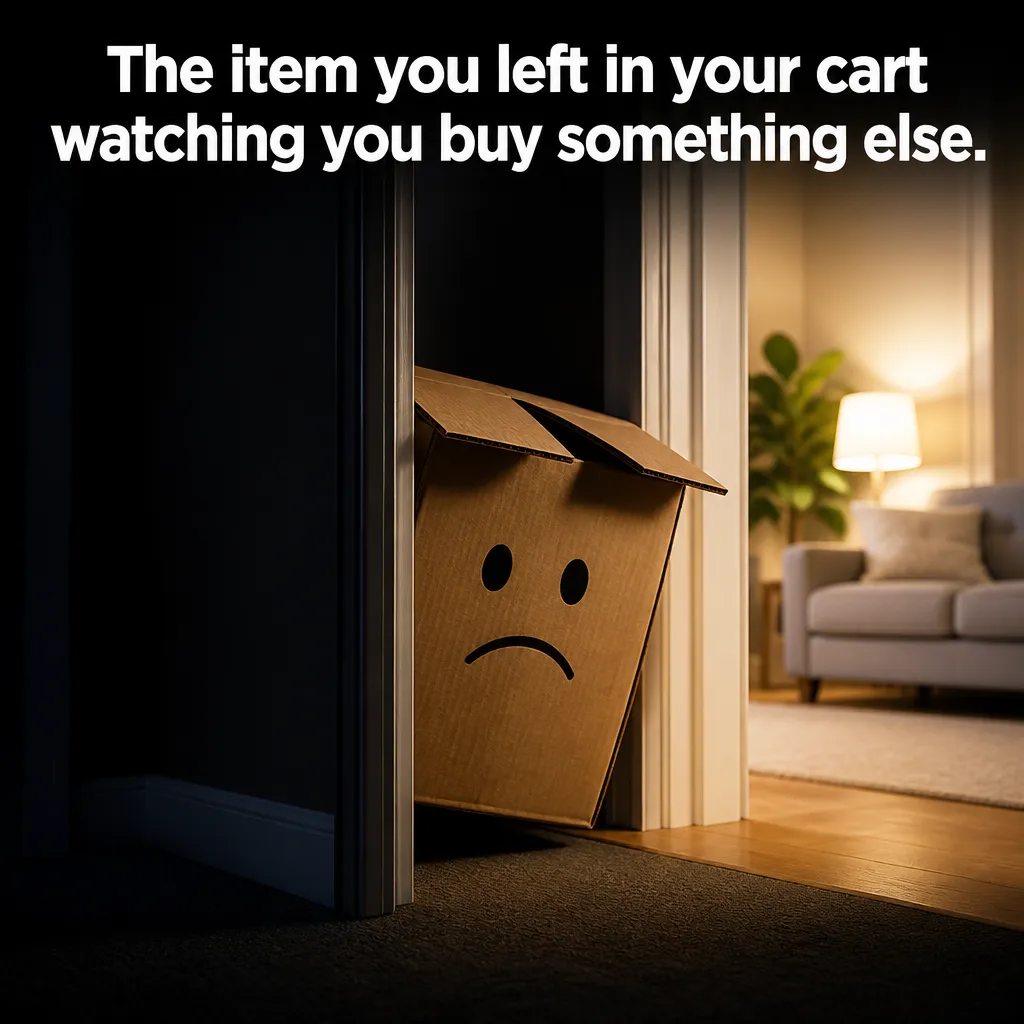
Visual reference: The Retargeting Ghost. The caption and brief below are an adaptation; replace any business details with your own.
Worked example — Meme caption: The product is for me. The box has been claimed by the cat. Product caption: Here is what is included with [actual product]: [verified contents].
Why it helps — The same delivery context can support either a light brand moment or a precise contents explanation.
Make it your own — Keep labels, package contents, and included accessories accurate.
Image brief to adapt
Create an original illustrative social image for your business. Concept: Pair two: an unboxing moment. Visual direction: The same delivery context can support either a light brand moment or a precise contents explanation.. Adaptation: Keep labels, package contents, and included accessories accurate. Use fictional scenes unless I supply authorized photographs. Keep all product, service, and business details exactly as supplied. Use [brand colors] and leave room for [business name]. Return one version with clear, short text.
4. Pair two: what changes
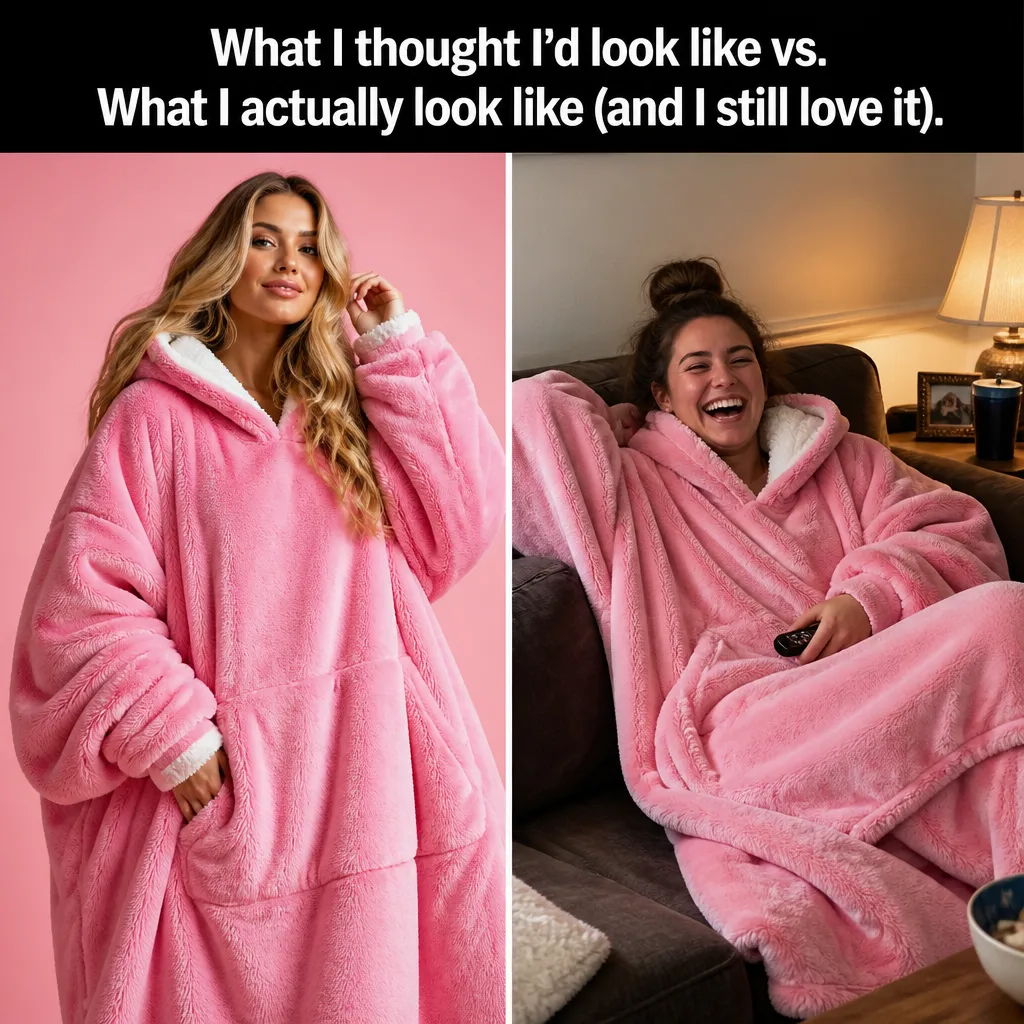
Visual reference: Product vs. Reality. The caption and brief below are an adaptation; replace any business details with your own.
Worked example — The meme invites a familiar story about packaging. The product version helps a buyer understand the order.
Why it helps — A useful information post can be the better choice when a question remains unanswered, even if a joke is entertaining.
Make it your own — Do not call an illustration a review or assume it proves an unboxing experience.
Image brief to adapt
Create an original illustrative social image for your business. Concept: Pair two: what changes. Visual direction: A useful information post can be the better choice when a question remains unanswered, even if a joke is entertaining.. Adaptation: Do not call an illustration a review or assume it proves an unboxing experience. Use fictional scenes unless I supply authorized photographs. Keep all product, service, and business details exactly as supplied. Use [brand colors] and leave room for [business name]. Return one version with clear, short text.
5. Pair three: a use context

Visual reference: The Deconstructed Box. The caption and brief below are an adaptation; replace any business details with your own.
Worked example — Meme caption: Packed one bag. The bag has requested a second bag. Product caption: [Actual product] in [verified intended context], with [accurate feature detail].
Why it helps — The setting stays familiar while the caption changes the focus from a routine to a product fact.
Make it your own — Use your actual reference photo and avoid inventing capacity or durability.
Image brief to adapt
Create an original illustrative social image for your business. Concept: Pair three: a use context. Visual direction: The setting stays familiar while the caption changes the focus from a routine to a product fact.. Adaptation: Use your actual reference photo and avoid inventing capacity or durability. Use fictional scenes unless I supply authorized photographs. Keep all product, service, and business details exactly as supplied. Use [brand colors] and leave room for [business name]. Return one version with clear, short text.
6. Pair three: what changes
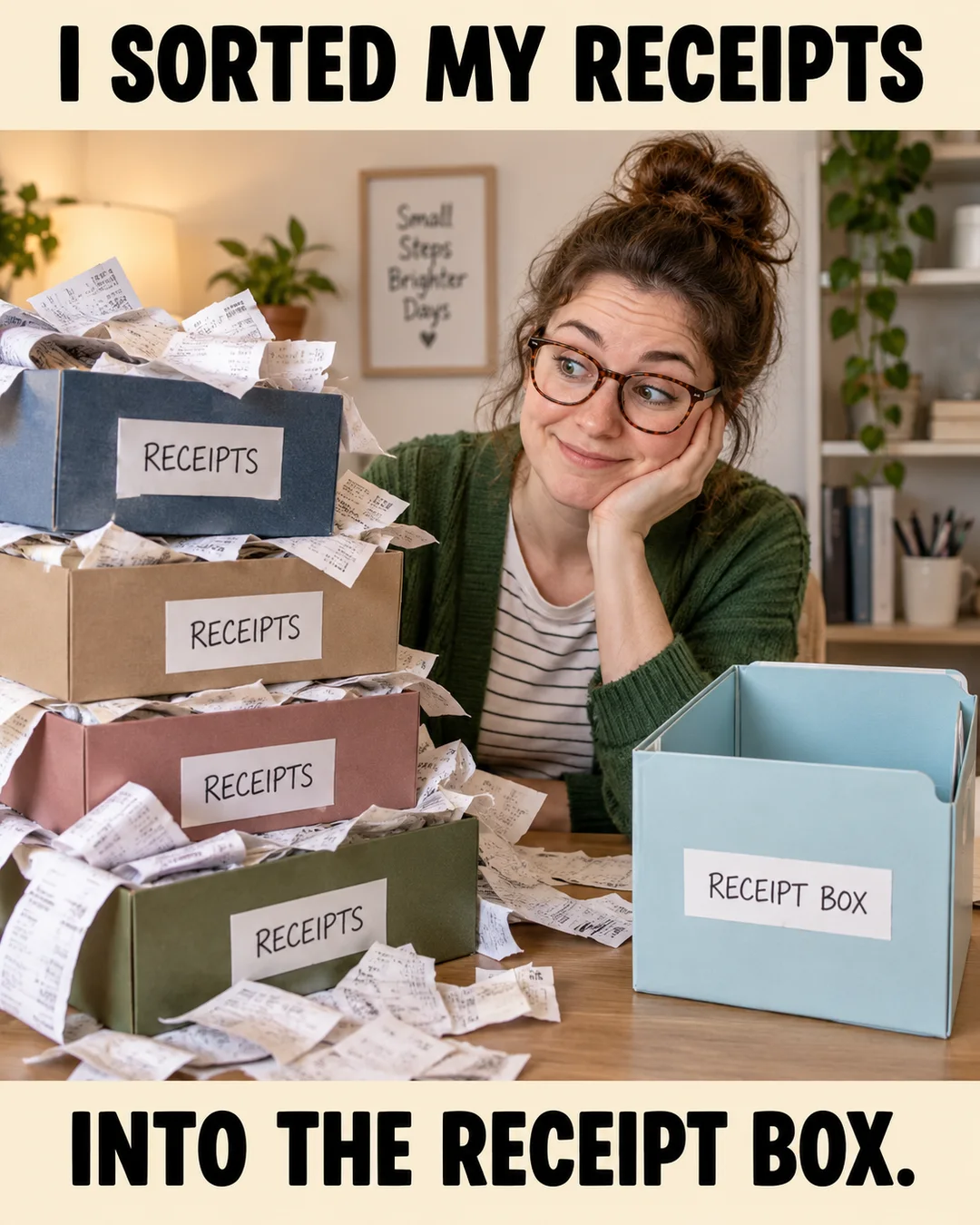
Illustrative creative reference. Use the specific image brief below to create a version for this example.
Worked example — The meme recognizes over-packing. The product version explains a real feature. Both need an appropriate destination.
Why it helps — A matched destination lets a reader continue the task started by the creative.
Make it your own — Link to a real product page for details, or use a simple discussion question for a brand post.
Image brief to adapt
Create an original illustrative social image for your business. Concept: Pair three: what changes. Visual direction: A matched destination lets a reader continue the task started by the creative.. Adaptation: Link to a real product page for details, or use a simple discussion question for a brand post. Use fictional scenes unless I supply authorized photographs. Keep all product, service, and business details exactly as supplied. Use [brand colors] and leave room for [business name]. Return one version with clear, short text.
7. Write a fair experiment brief
Worked example — Use the same audience, product, offer, placement, and dates. Change the creative approach and record the actual measured result.
Why it helps — Keeping other factors stable makes the comparison more interpretable. The examples above are drafts, not campaign evidence.
Make it your own — Choose the outcome you need to measure before publishing; a click alone is not a sale.
Image brief to adapt
Create an original illustrative social image for your business. Concept: Write a fair experiment brief. Visual direction: Keeping other factors stable makes the comparison more interpretable. The examples above are drafts, not campaign evidence.. Adaptation: Choose the outcome you need to measure before publishing; a click alone is not a sale. Use fictional scenes unless I supply authorized photographs. Keep all product, service, and business details exactly as supplied. Use [brand colors] and leave room for [business name]. Return one version with clear, short text.
8. Choose the useful version
Worked example — If the reader lacks product information, lead with accurate details. If the offer is already understood, test whether a recognizable moment helps introduce it.
Why it helps — The decision follows the reader's question rather than a universal claim about meme performance.
Make it your own — Review both drafts for clarity, product truth, and a relevant next step.
Image brief to adapt
Create an original illustrative social image for your business. Concept: Choose the useful version. Visual direction: The decision follows the reader's question rather than a universal claim about meme performance.. Adaptation: Review both drafts for clarity, product truth, and a relevant next step. Use fictional scenes unless I supply authorized photographs. Keep all product, service, and business details exactly as supplied. Use [brand colors] and leave room for [business name]. Return one version with clear, short text.
Put it into practice
Run a fair creative comparison
Choose one meme direction and one product direction from the paired examples. Keep the real offer, audience, destination, and measurement window consistent. Decide which outcome matters before reviewing results. These examples show different ways to frame a message; they do not contain measured campaign performance. Retain both versions if they serve different reader tasks.
Common questions
Can I use these examples as written?
Treat the copy as a starting point. In “Pair one: a product choice,” keep the central situation, replace any bracketed details with your actual information, and choose a next step that your business can fulfill. Read the caption alongside the image so the two tell the same story.
Which image should I pair with “Pair one: what changes”?
Use the visual direction and adaptation note beside that example. The displayed image is an illustrative reference. For a post about an actual person, product, location, or completed job, use an authorized real photograph or clearly label a conceptual illustration.
How should I choose the first few examples?
Start with “Pair one: a product choice” and a contrasting idea such as “Choose the useful version.” Choose examples that answer real reader questions or show something specific about your work. Keep the first batch small enough to revise after reviewing actual responses.
Can I customize these images in Studio?
Save a reference image or copy the image brief, then create your own version in Studio with your business details and visual direction. A downloaded WebP is a finished image; the brief gives you a way to develop a new variation. Review generated text and factual details before publishing.
Turn the brief into your own creative
Use these concepts to build a creative for your actual business. Browse the related example collection for more visual directions, then bring your caption and image brief into Studio.
Your starter brief
Replace the brackets with your own details.
Create an original illustrative social image for your business. Concept: Pair one: a product choice. Visual direction: Both captions address a shopper comparing options. The meme opens with recognition; the product version leads with information.. Adaptation: Hold the audience and actual products constant. Use the same accurate visual reference when comparing the two drafts. Use fictional scenes unless I supply authorized photographs. Keep all product, service, and business details exactly as supplied. Use [brand colors] and leave room for [business name]. Return one version with clear, short text.