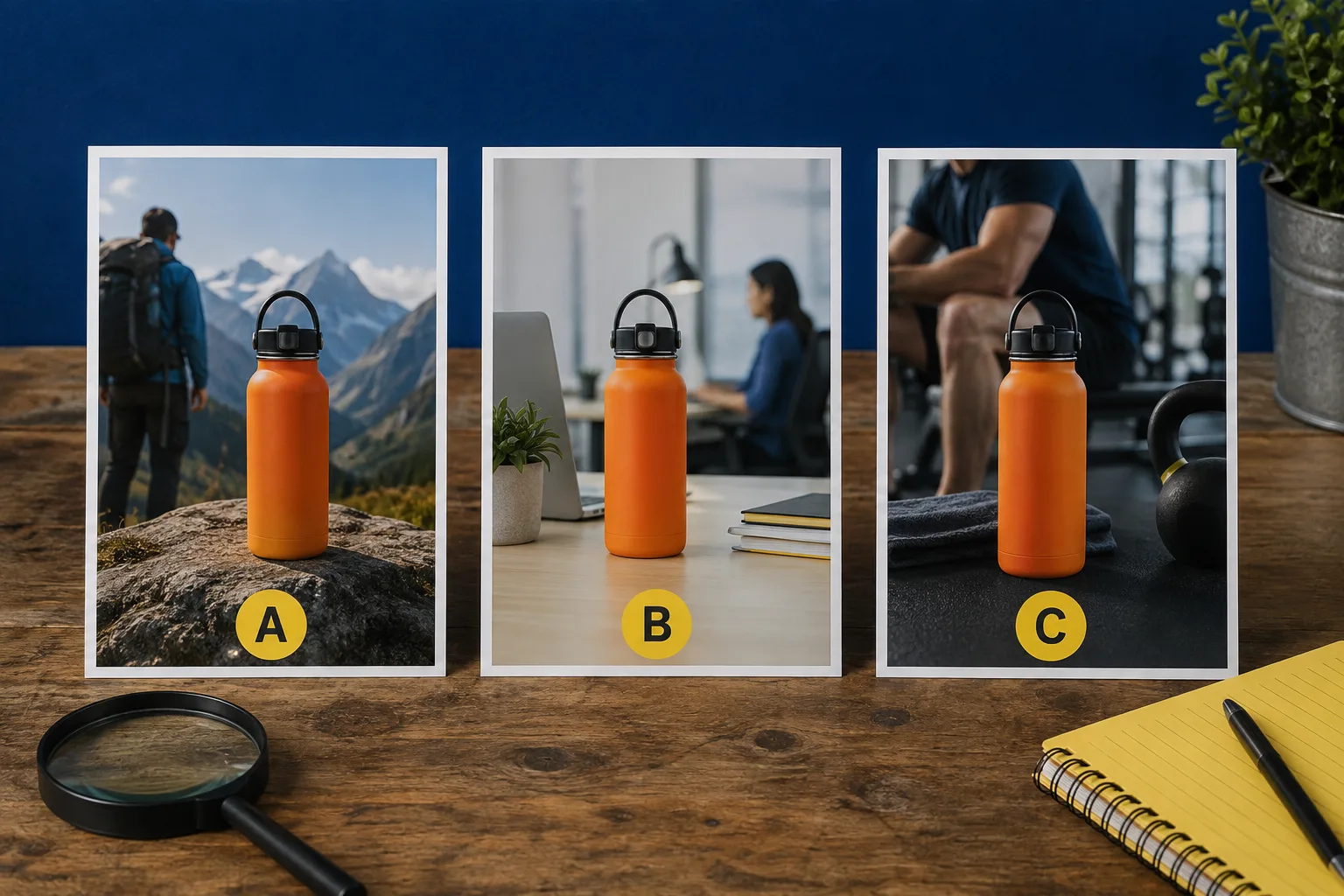

Ad creative
6 UGC Ad Examples With Practical Creator Briefs
By Memes.ai
Updated September 6, 2026 · 4 min read

UGC-style ads use the language of everyday demonstrations and personal explanation. A paid creator performance is different from an unsolicited customer review. The examples here are fictional production concepts: use real product evidence, clear commercial disclosure where required, and no invented personal experience.
What you’ll take away
- Brief the action and evidence, not a fabricated testimonial.
- Let the product appear in a believable use case.
- Agree on usage permission and accurate claims before publishing.
1. The first-use demonstration
The idea — The creator opens the package, identifies the parts, and completes one normal task.
Why it helps — A viewer can see what using the product involves.
Make it your own — Write a shot list for the real product. Let the creator describe what they actually observe, including any setup needed.
2. The question-led explanation
The idea — Opening: ‘Here is what fits in this bag.’ The creator packs a laptop, notebook, and charger.
Why it helps — A practical question gives the video a clear reason to exist.
Make it your own — Specify the actual item sizes. Keep the packing visible and do not imply that every laptop fits.
3. The routine integration
The idea — Show where a coffee grinder fits between measuring beans and brewing.
Why it helps — The product gets context without requiring a dramatic transformation story.
Make it your own — Ask for the real sequence and ordinary setting. Avoid scripting an untrue claim that the creator has used it for months.
4. The feature close-up
The idea — A creator shows how a clasp opens and closes, then explains the mechanism.
Why it helps — A close view can communicate a detail that is hard to judge in a catalog photo.
Make it your own — Capture both hands and the complete action. Avoid fast cuts that conceal difficulty.
5. The balanced choice
The idea — The creator compares two sizes and explains which situation suits each.
Why it helps — A useful recommendation acknowledges that needs differ.
Make it your own — Provide the accurate specifications, then allow a truthful explanation of the tradeoff.
6. The objection answer
The idea — The creator responds to ‘Does it take long to set up?’ with the actual setup process.
Why it helps — A demonstration can address uncertainty directly.
Make it your own — Record a representative process. If the footage is shortened, do not present the edit as an exact elapsed-time result.
Put it into practice
Write a brief a creator can actually use
Include the audience question, actual product, three must-show shots, verified facts, prohibited unsupported claims, intended placements, and the next step. Leave room for the creator’s own wording. Review the finished piece for accuracy and permission, not just energy or visual polish.
Common questions
Are these examples from real campaigns?
No. They are original fictional concepts intended to demonstrate a creative structure. They are not evidence of measured campaign performance.
Can I use these ideas for my business?
Adapt the structure to your actual product, audience, and destination. Replace illustrative claims and visuals with accurate material before publishing an advertisement.
Turn the brief into your own creative
Turn a focused brief into an original concept using your own product facts, then review the message and destination before testing.
Your starter brief
Replace the brackets with your own details.
Draft a creator brief for [product] answering [customer question]. Include an opening, three demonstration shots, verified facts [facts], a natural CTA to [destination], and room for the creator’s truthful observations. Do not write a fake review, personal history, or guaranteed result.